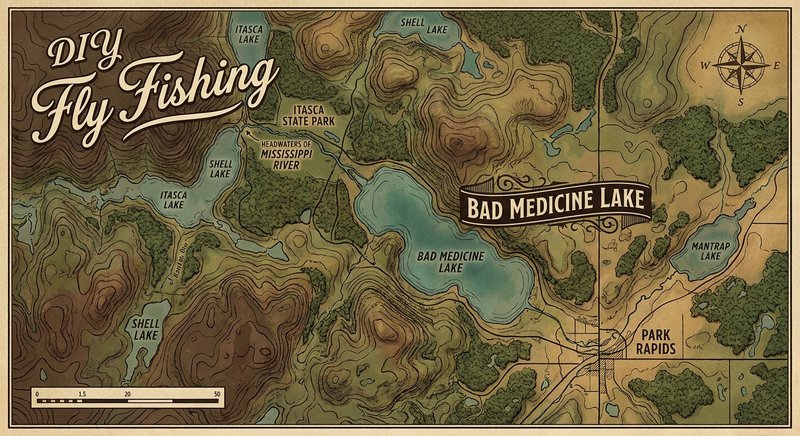
Bad Medicine Lake
Fly fishing in Minnesota · Intermediate · Best seasons: Spring, Fall
Target Species
Rainbow Trout
About This Water
One of the few glacial lakes in Minnesota managed for rainbow trout, offering gin-clear water and technical stillwater fly fishing.
Fishing Recommendations
Bad Medicine Lake is a true "bucket list" destination for fly anglers in the Midwest. Located in the glacial hills of Becker County, Minnesota, it is widely considered one of the best inland rainbow trout lakes in the state. Its exceptionally clear water and dramatic depths give it a mountain-lake feel right in the heart of the Northwoods.
🎣 Location Overview
Bad Medicine is a deep, cold, and incredibly clear spring-fed lake. Unlike many murky Midwestern lakes, it offers visibility up to 20+ feet. It is characterized by steep drop-offs, underwater ridges, and pristine shorelines.
What makes it special is its oligotrophic nature—it is low in nutrients and high in oxygen, which allows stocked Rainbow Trout to thrive and even "over-summer" in the deep, cold layers. Anglers love it because it offers a "stalking" experience where you can often see the fish before you cast, a rarity in Minnesota.
🐟 Target Species & Behavior
The primary draw here is the Rainbow Trout. The MN DNR stocks this lake heavily with yearlings and fingerlings.
- Behavior: These trout act more like "roamers" than river trout. They cruise the drop-offs where the shallow flats meet the deep basins (the "blue line").
- Diet: They are opportunistic. Their diet consists of scuds (freshwater shrimp), midge larvae, leeches, and various mayflies and caddis. Because the water is so clear, they are extremely "leader shy"—they have excellent vision and will spook if your presentation is sloppy.
📅 Best Times to Fish
- Optimal Seasons:
- Spring (May - June): This is the prime window. After ice-out, trout are in the shallows (5–15 feet) searching for food as the water warms.
- Fall (September - October): As water temperatures drop, trout move back up from the depths into the littoral zones to feed heavily before winter.
- Best Times of Day: Early morning (dawn until 9:00 AM) and late evening (dusk) are the magic hours. On overcast days, the "bite window" can stay open all day.
- Conditions: A light "trout chop" (small ripples on the water) is your best friend. It breaks up the surface and makes the fish less wary of your leader and boat shadow.
🪰 Recommended Flies & Techniques
Because of the clarity, stealth and long leaders (12–15 feet) are mandatory.
Top Fly Patterns
- Nymphs/Scuds: Olive or Gray Scuds (#14-16), Zebra Midges (Black or Red, #18-20), Pheasant Tails (#16).
- Streamers: Woolly Buggers (Olive or Black with a bit of flash, #8-10), Pine Squirrel Leeches.
- Dry Flies: Parachute Adams (#16-18), Elk Hair Caddis (if a hatch is present), and terrestrial patterns like Ants or Beetles in late summer.
Techniques
- The "Slow Strip" Streamer: Use an intermediate sinking line. Cast parallel to the drop-offs, let it sink for 10–15 seconds, and use very slow, 2-inch strips.
- Indicator Rigging: Suspend a midge or scud 6–10 feet below a small, inconspicuous indicator. Let the wave action provide the movement.
- Sight Casting: On calm mornings, look for "rings" on the surface. Quietly paddle/row within casting distance and place a dry fly or lightly weighted nymph 3 feet ahead of the fish's cruising path.
💡 Pro Tips & Local Knowledge
- The "Edge" Strategy: Focus your efforts where the bottom transitions from light tan (sand/shallow) to dark blue (deep). Trout use this edge as a highway.
- Go Light: Use 5x or even 6x fluorocarbon tippet. In this water, 4x looks like a rope to a trout.
- The "Bad Med" Scud: The lake is teeming with scuds. If you aren't catching fish, switch to an olive scud and fish it near submerged vegetation or woody debris.
- Boat Stealth: Avoid using a trolling motor if possible when you are in the "zone." Use a kayak, canoe, or oars. Sound travels incredibly well in this deep, clear basin.
⚠️ Important Information
- Access: There is a well-maintained public boat ramp on the south end of the lake.
- Regulations: Bad Medicine is managed as a trout lake. A Minnesota Trout Stamp is required in addition to your fishing license.
- Special Rules: Note that there are specific possession limits and gear restrictions for inland trout lakes. Always check the current MN DNR Fishing Regulations booklet, as "designated trout lake" rules often prohibit the use of certain live baits to prevent the introduction of invasive species.
- Safety: The lake is deep and can get rough quickly if a north wind picks up. Ensure your vessel is seaworthy and you have all required safety gear.
Bug Hatches & Matching Flies
| Hatch | Type | Peak months | Time of day | Hook sizes | Matching flies |
|---|---|---|---|---|---|
| Chironomids (Midges) Chironomidae | midge | May, September | All Day | #14-22 | Zebra Midge #16-20, Ice Budie #14-18, Griffith's Gnat #18-22 |
| Blue-Winged Olive Baetis | mayfly | May, September, October | Afternoon | #18-22 | RS2 #20-22, Parachute Adams #18-22, Pheasant Tail Nymph #18-20 |
| Grannom Caddis Brachycentrus | caddis | May | Morning/Evening | #14-16 | Elk Hair Caddis #14-16, Deep Sparkle Pupa #14-16 |
| Brown Drake Ephemera simulans | mayfly | June | Evening/Night | #10-12 | Brown Drake Spinner #10-12, Burrowing Mayfly Nymph #10-12 |
| Hexagenia (Hex) Hexagenia limbata | mayfly | June, July | Late Evening/Night | #6-10 | Hexagenia Cripple #6-8, Hex Parasol #8-10 |
| Spotted Sedge Hydropsyche | caddis | June, July, August | Evening | #14-18 | LaFontaine's Emergent Pupa #14-16, X-Caddis #14-18 |
| Trico Tricorythodes | mayfly | July, August | Early Morning | #20-24 | Trico Spinner #22-24, Drowned Trico #20-22 |
| Grasshoppers Orthoptera | terrestrial | August, September | Afternoon | #8-12 | Hopper Juan #10-12, Dave's Hopper #8-12 |
| Damselfly Enallagma | other | June, July | Afternoon | #10-12 | Marabou Damsel Nymph #10-12, Adult Damsel #12 |
| White Winged Curse Caenis | mayfly | July, August | Morning | #22-26 | Caenis Spinner #24-26 |