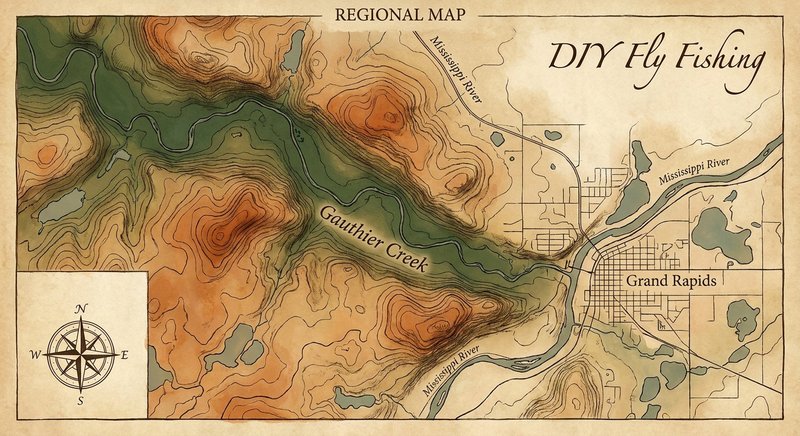
Gauthier Creek
Fly fishing in Minnesota · Advanced · Best seasons: Summer
Target Species
Brook Trout
About This Water
A remote North Shore gem known for its rugged terrain and wild brook trout populations tucked away in the Superior National Forest.
Fishing Recommendations
Gauthier Creek is a hidden gem of the Minnesota North Shore. Located in Cook County, near Hovland, this is a classic "Bohemian" brook trout stream. It is rugged, intimate, and offers a true wilderness experience for anglers who prefer stealth and scenery over easy access.
🎣 Location Overview
Gauthier Creek is a small, cold-water tributary to the Lake Superior watershed. What makes it special is its high gradient and pristine water quality. Unlike the larger, muddy rivers further south, Gauthier remains relatively clear and cold even in the heat of summer, thanks to heavy canopy cover and forest spring seeps.
The water characteristics are typical of the Arrowhead region: dark, tannin-stained (the color of weak tea) with a mix of volcanic basalt ledge rock, plunge pools, and short gravel runs. Anglers love it because it feels untouched; you are more likely to see a moose or a spruce grouse than another fisherman.
🐟 Target Species & Behavior
The primary draw here is the Wild Brook Trout. These are not stocked fish; they are colorful, native-strain jewels with vivid blue halos and ivory-edged fins.
- Behavior: These fish are opportunistic but extremely spooky. Because the water is clear and the stream is narrow, they have a "strike first, ask questions later" mentality due to the short growing season.
- Where they hold: Look for "the bubbles." In Gauthier, Brookies love the foam lines at the base of small waterfalls and the deep undercut banks beneath cedar roots.
- Feeding: Their diet consists mainly of caddis larvae, stoneflies, and terrestrial insects (ants and beetles) that fall from the dense overhanging brush.
📅 Best Times to Fish
- Optimal Season: June through August. This is prime "dry fly" season. Earlier in the spring, the water is often too high and dangerous from snowmelt.
- Best Time of Day: Mid-morning to Late Afternoon. Unlike big rivers where you want the "evening hatch," the North Shore canopy is so thick that the water stays cool all day. The best light for spotting fish is between 10:00 AM and 4:00 PM.
- Prime Windows: Following a light rain. A slight rise in water level gives the fish more confidence to leave their overhead cover and feed aggressively.
🪰 Recommended Flies & Techniques
Top Fly Patterns
- Dry Flies: Royal Wulff (#14-16), Stimulator (Orange or Yellow, #14), and Parachute Adams (#16).
- Terrestrials: Black Foam Ants (#16) and Beetles (#14). These are "secret weapons" in mid-summer.
- Nymphs: Bead-head Pheasant Tail (#16) or a Gold-ribbed Hare’s Ear (#14).
- Streamers: Small Black or Olive Woolly Buggers (#10-12) for the larger pools near the mouth.
Effective Techniques
- The "Bow-and-Arrow" Cast: The brush is incredibly thick. Traditional overhead casting is often impossible. Master the bow-and-arrow cast to flick your fly into tight pockets.
- Dry-Dropper: Run a bushy dry fly (like a Stimulator) with a small nymph tied 12-18 inches below it. This covers both bases in the deeper plunge pools.
- Upstream Stealth: Always fish moving upstream. Brook trout face into the current; if you approach from behind them, you are less likely to be seen.
💡 Pro Tips & Local Knowledge
- Wear Dull Colors: Because the stream is small, wearing a bright white or red hat will spook fish from 20 feet away. Wear greens, browns, or greys to blend into the forest.
- Check the Mouth: If you are fishing near the confluence where Gauthier enters a larger system, keep an eye out for "Coasters"—Lake Superior brook trout that occasionally move into the lower reaches.
- Focus on the "Slow Water" Pockets: In high-gradient sections, fish don't want to fight the heavy current. Look for the tiny "dead spots" behind boulders no bigger than a dinner plate.
⚠️ Important Information
- Access: Much of the creek is within the Superior National Forest, but there are patches of private land. Always check a GPX map (like OnX) to ensure you are on public ground. Access is best found off forest roads near Hovland.
- Regulations: Minnesota DNR trout regulations apply. Most of these streams have a specific "North Shore" season. Check the current MN Fishing Regulations booklet for bag limits and lure restrictions (typically single-hook only is best practice for catch and release).
- Safety/Gear:
- Bugs: The mosquitoes and black flies are legendary. Bring high-DEET repellent or a head net.
- Gear: A short rod is mandatory. A 7-foot to 7.5-foot 3-weight or 4-weight rod is the perfect tool for this water.
- Footing: The rocks are incredibly slippery. Felt soles (where legal) or studded rubber boots are highly recommended.
Bug Hatches & Matching Flies
| Hatch | Type | Peak months | Time of day | Hook sizes | Matching flies |
|---|---|---|---|---|---|
| Midges Chironomidae | midge | January, February, March, April | Late Morning/Afternoon | #18-24 | Zebra Midge #18-22, Griffith's Gnat #20-24 |
| Little Brown Stoneflies Capniidae/Leuctridae | stonefly | March, April | Mid-day | #14-18 | Early Brown Stone #14-16, Pheasant Tail #14-18 |
| Blue Winged Olive Baetis | mayfly | April, May, September, October | Afternoon | #18-22 | RS2 #20-22, BWO Sparkle Dun #18-22 |
| Hendrickson Ephemerella invaria | mayfly | May, June | Afternoon | #12-14 | Hendrickson Dark #12-14, Hare's Ear #12-14 |
| Spotted Sedge Hydropsyche | caddis | June, July | Evening | #14-18 | Elk Hair Caddis #14-16, LaFontaine's Deep Sparkle Pupa #14-16 |
| Light Cahill Stenacron interpunctatum | mayfly | June, July | Evening | #12-14 | Light Cahill #12-14, Gold Ribbed Hare's Ear #12-14 |
| Terrestrials (Ants and Beetles) Formicidae/Coleoptera | terrestrial | July, August | Mid-day/Afternoon | #12-18 | Black Foam Ant #16-18, Chernobyl Ant #12-14 |
| Giant Salmonfly Pteronarcys dorsata | stonefly | June | All Day | #4-8 | Pat's Rubber Legs #6-8, Stimulator #8-10 |
| Trico Tricorythodes | mayfly | August, September | Early Morning | #20-24 | Trico Spinner #22-24, Micro Mayfly #20-22 |
| October Caddis Dicosmoecus | caddis | September, October | Late Afternoon/Evening | #8-12 | Orange Sedge #10-12, Peeping Caddis #8-10 |