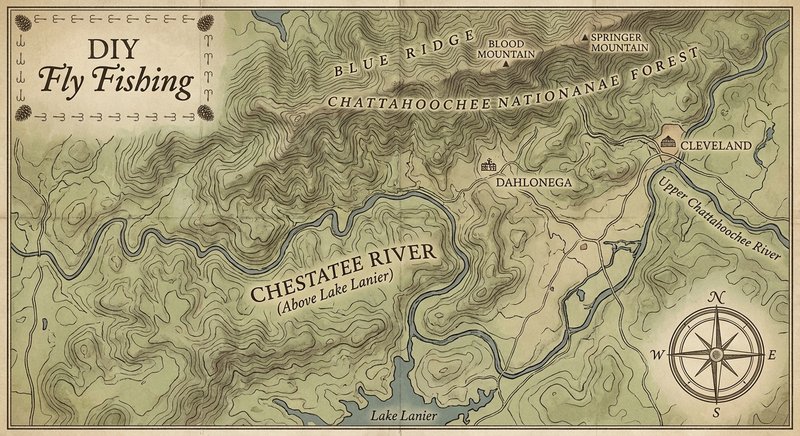
Chestatee River (Above Lake Lanier)
Fly fishing in Georgia · Intermediate · Best seasons: Spring, Fall
Target Species
Rainbow Trout, Brown Trout
About This Water
The upper Chestatee River is a scenic option for fly fishing. It offers a mix of stocked and wild trout in a mountainous setting.
Fishing Recommendations
🎣 Location Overview
The Chestatee River above Lake Lanier is one of North Georgia’s most underrated gems. Located primarily in Lumpkin County, this river transitions from a high-gradient mountain stream in the Blue Ridge Mountains to a larger, meandering river as it approaches Dahlonega.
What makes the Chestatee special is its diversity. While the upper reaches are characterized by classic "pocket water," plunging pools, and rhododendron-lined banks, the middle sections offer wide runs and long glides. Anglers love it because it offers a more "wild" feel than the heavily pressured Chattahoochee, providing a mix of stocked "DH" (Delayed Harvest) water and remote stretches where wild fish thrive.
🐟 Target Species & Behavior
The Chestatee is primarily a Rainbow and Brown Trout fishery in its upper reaches.
- Rainbow Trout: These are the most active feeders. In the stocked sections, they hold in the main current and at the heads of pools. Wild rainbows in the headwaters are smaller (6–10 inches) but incredibly vibrant and opportunistic, often holding in fast, oxygenated pocket water.
- Brown Trout: The "ghosts" of the Chestatee. The river holds some surprisingly large browns, particularly in the deep, woody undercut banks of the lower-trout sections. They are nocturnal and predatory; they prefer deep, dark holes and slow-moving water near heavy cover.
- Feeding Habits: They primarily target stoneflies, caddis, and small midges. In the fall, they become highly aggressive toward terrestrial insects (grasshoppers/beetles) and small baitfish.
📅 Best Times to Fish
- Optimal Seasons:
- Spring (March–May): This is the "Golden Era" on the Chestatee. High insect activity and manageable water levels make for excellent dry fly fishing.
- Fall (October–December): The Delayed Harvest (DH) season begins in November, providing high catch rates. The spawning colors of the wild browns in October are spectacular.
- Best Times of Day:
- Early Morning: Best for streamer fishing for big browns.
- Late Afternoon/Dusk: During the spring and summer, the "evening rise" can be prolific as caddis and mayflies hatch.
- Prime Conditions: Look for a falling barometer just before a rain, or 24–48 hours after a rain once the water has "greened up" but isn't "chocolate milk" muddy.
🪰 Recommended Flies & Techniques
Top Fly Patterns
- Nymphs:
- Pheasant Tail (size 14–18): The gold standard for mimicking mayflies.
- Pat’s Rubber Legs (size 8–12): Essential for the larger Stoneflies found in the swifter runs.
- Sexy Walt’s Worm: Deadly in the DH sections.
- Dry Flies:
- Elk Hair Caddis (Tan or Olive, size 14–16): The primary hatch on this river.
- Yellow Stimulator (size 12–14): Great for high-visibility "dry-dropper" rigs.
- Streamers:
- Woolly Bugger (Olive or Black): Mimics crayfish and sculpins.
Effective Techniques
- Tight-Line/Euro Nymphing: In the rocky, upper stretches, this is the most effective way to reach fish in deep pockets without dealing with complex surface currents.
- Dry-Dropper: Use a buoyant dry fly (like a Stimulator) with a small midge or pheasant tail suspended 18-24 inches below. This covers two water columns simultaneously.
- Streamer Stripping: Cast toward undercut banks or fallen logs and use erratic strips to trigger a "flight or fight" response from big Browns.
💡 Pro Tips & Local Knowledge
- The "DH" Section: The Delayed Harvest section (near GA-60/Copperhead Lodge area) is heavily stocked from Nov 1 to May 14. If you want high numbers, go here. If you want solitude, hike into the Chestatee Wildlife Management Area (WMA).
- Stealth is Key: The water can get very clear in the late spring. Wear drab clothing (greens/browns) and avoid "lining" the fish (casting your fly line directly over their heads).
- Look for Confluences: Where small, cold feeder streams enter the main stem, the water is more oxygenated. These are "honey holes" during the warmer weeks of early June.
- The "Dahlonega Twitch": When fishing a dry fly, a tiny, subtle twitch of the rod tip can often trigger a strike from a trout that is inspecting your fly but hasn't committed.
⚠️ Important Information
- Access:
- Public Access: Bridge crossings and the Chestatee WMA offer the best access. Much of the river runs through private property; always respect "Posted" signs.
- Wading: The river is generally wadeable, but the rocks are incredibly slick. Felt soles or studs are highly recommended.
- Regulations:
- A Georgia Fishing License AND a Trout Supplement are required.
- Delayed Harvest Rules: From Nov 1 to May 14, the DH section is Catch and Release ONLY and restricted to single-hook, artificial lures only.
- Safety: This is black bear and timber rattlesnake country. Be mindful of your surroundings, especially when hiking into the more remote WMA sections. Cell service is spotty at best once you leave the main roads.
Bug Hatches & Matching Flies
| Hatch | Type | Peak months | Time of day | Hook sizes | Matching flies |
|---|---|---|---|---|---|
| Blue Winged Olive Baetis | mayfly | February, March, October, November | Midday | #18-22 | Parachute Adams #18-22, Pheasant Tail Nymph #18-20, RS2 #20-22 |
| Quill Gordon Epeorus pleuralis | mayfly | March | Midday | #12-14 | Quill Gordon #12-14, Dark Hendrickson #14, Hare's Ear Nymph #12-14 |
| March Brown Maccaffertium vicarium | mayfly | April, May | Afternoon | #10-14 | March Brown #10-12, Gold Ribbed Hare's Ear #10-14 |
| Sulphur Ephemerella invaria | mayfly | May, June | Evening | #14-18 | Sulphur Parachute #14-16, Pupa-style Sulphur Emerger #16-18 |
| Cinnamon Caddis Hydropsyche | caddis | May, June, September | Evening | #14-18 | Elk Hair Caddis (Tan/Cinnamon) #14-16, Holy Grail #14-16, Pupa #16 |
| Golden Stonefly Acroneuria | stonefly | June, July | Morning/Evening | #6-10 | Pat's Rubber Legs #6-10, Stimulator (Yellow) #8-12 |
| Terrestrials (Ants/Beetles) Formicidae/Coleoptera | terrestrial | July, August, September | All Day | #12-18 | Black Foam Ant #16-18, Chernobyl Ant #8-12, Fat Albert #10-14 |
| Zebra Midge Chironomidae | midge | January, December | All Day | #18-24 | Zebra Midge (Black/Silver) #18-22, Griffith's Gnat #20-22 |
| Light Cahill Stenacron interpunctatum | mayfly | June, July | Evening | #12-16 | Light Cahill #12-14, Cream Usual #14-16 |