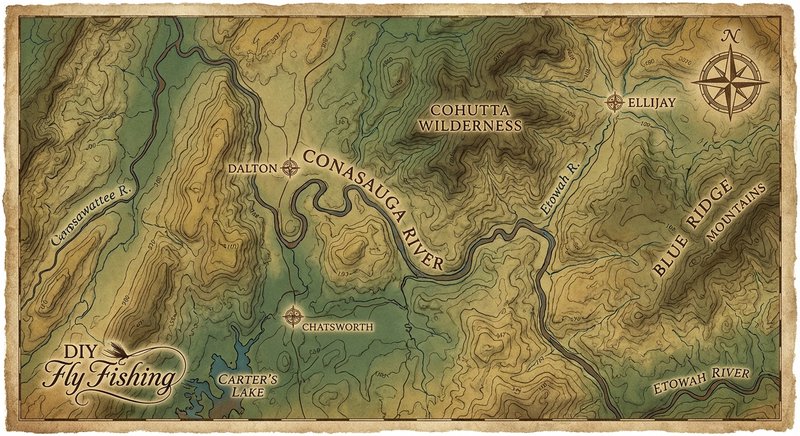
Conasauga River
Fly fishing in Georgia · Intermediate · Best seasons: Spring, Fall
Target Species
Rainbow Trout, Brown Trout, Smallmouth Bass
About This Water
Located in Northwest Georgia, the Conasauga River offers a more remote and unique fly fishing experience, known for its diverse fish population.
Fishing Recommendations
The Conasauga River is one of the crown jewels of the Southeast. Flowing through the rugged Cohutta Wilderness in North Georgia and stretching into Tennessee, it is one of the most biologically diverse rivers in North America. For the fly angler, it offers a "dual-personality" experience: wild trout fishing in its high-elevation headwaters and hard-fighting smallmouth bass in its lower reaches.
🎣 Location Overview
What makes the Conasauga special is its isolation. Much of the best water is located within the Cohutta Wilderness, meaning you have to hike to get to the fish. The water is exceptionally clear, cold, and flows over a substrate of rock, ledge, and cobblestone.
- Upstream: You’ll find classic freestone mountain stream conditions—tight canopies, plunge pools, and high-gradient runs.
- Downstream: As the river drops in elevation, it widens and slows slightly, transitioning into a premier Smallmouth Bass and Redeye Bass fishery.
- The Appeal: It is the ultimate "solitude" river. If you are willing to walk three to five miles, you will likely have miles of pristine water all to yourself.
🐟 Target Species & Behavior
The Conasauga is unique because you can catch trout and bass in the same river system, sometimes just a few miles apart.
- Rainbow & Brown Trout: Found primarily in the upper reaches (above the Jacks River confluence). These are wild, wary fish. They hold in oxygenated "pocket water" behind boulders and in the deep pools beneath waterfalls. They are opportunistic feeders but have a very small window of vision due to the turbulent water.
- Smallmouth Bass: Located in the lower stretches as the water warms. They are incredibly aggressive in the Conasauga. Look for them in the "tail-outs" of long pools or tight against submerged logs and rocky ledges.
- Redeye (Coosa) Bass: A local treasure. They behave like a mix between a trout and a smallmouth, often holding in faster current than you'd expect for a bass.
📅 Best Times to Fish
Optimal Seasons
- Spring (March – May): The absolute prime time. Insect hatches (Quill Gordons, Hendricksons, and March Browns) are at their peak. Water levels are usually high but clear.
- Fall (October – November): The water cools down, and the Brown Trout become aggressive as they prepare to spawn. The fall foliage in the Cohuttas is world-class, and the Smallmouth are bulking up for winter.
Best Times of Day
- Spring: Mid-day (11:00 AM – 3:00 PM) as the sun warms the water and triggers insect activity.
- Late Summer/Early Fall: Early morning and late evening (low light) are essential to avoid spooking fish in the low, clear water.
🪰 Recommended Flies & Techniques
For Trout (Upper River)
- Dry Flies: Yellow Stimulators (Size 12-16), Parachute Adams (14-18), Elk Hair Caddis (14-16).
- Nymphs: Pheasant Tail Nymphs, Prince Nymphs, and rubber-legged stones.
- Technique: High-sticking/Euro-nymphing. Because of the varying currents, keeping your fly line off the water is crucial to avoid drag.
For Bass (Lower River)
- Streamers: Woolly Buggers (Olive or Black, Size 6-8), Gamechangers, or Clouser Minnows.
- Topwater: Boogle Bugs or small poppers in yellow or white.
- Technique: The "Swing and Strip." Cast quartering downstream toward a ledge, let the fly swing into the soft water, and give it erratic strips.
💡 Pro Tips & Local Knowledge
- The "Hike-In" Rule: The further you walk from the trailheads (like Betty Gap or Chestnut Lead), the better the fishing gets. Most casual anglers stop within the first mile; the pros push to mile three.
- Stealth is Mandatory: The water is gin-clear. If you can see the fish, they have likely already seen you. Wear earthy tones (olive/brown), stay low, and cast from behind boulders.
- The "Jacks River" Connection: The confluence of the Jacks and the Conasauga is a legendary spot. It’s a long hike, but the mixing of the two waters creates a nutrient-rich environment where the largest fish in the system often reside.
- Wading Safety: The rocks in the Conasauga are notoriously slick. Felt-soled boots with studs are highly recommended.
⚠️ Important Information
Access
- Chestnut Lead Trail: One of the most popular access points to reach the main stem of the Conasauga.
- Betty Gap: Accesses the very headwaters (best for small, wild Rainbows).
- Cottonwood Patch: Better for those looking for the transition into Bass water.
Regulations
- Georgia Fishing License: Required for all anglers 16 and older. A trout stamp is required for the upper sections.
- Wild Trout Regulations: Much of the upper river is under "Wild Trout" regulations—check the current GA DNR handbook for specific lure/bait restrictions (generally artificial only in the wilderness).
- Wilderness Ethics: This is a Leave No Trace area. Cell service is non-existent. Carry a physical map, a first aid kit, and let someone know your itinerary.
Special Considerations
- Bear Country: The Cohutta Wilderness has a high density of Black Bears. Store food properly if camping.
- Water Levels: Check the USGS gauges before heading out. If there has been heavy rain, the river rises quickly and becomes dangerous to wade.
Bug Hatches & Matching Flies
| Hatch | Type | Peak months | Time of day | Hook sizes | Matching flies |
|---|---|---|---|---|---|
| Blue Winged Olive Baetis | mayfly | February, March, October, November | Mid-day | #18-22 | Parachute BWO #18-20, RS2 #20-22, Pheasant Tail #18-20 |
| Quill Gordon Epeorus pleuralis | mayfly | March | Afternoon | #12-14 | Quill Gordon #12-14, Gold Ribbed Hare's Ear #12-14 |
| March Brown Maccaffertium vicarium | mayfly | April, May | Afternoon | #10-14 | American March Brown #12-14, March Brown Emerger #12-14 |
| Light Cahill Stenacron interpunctatum | mayfly | May, June | Evening | #12-16 | Light Cahill #12-16, Cream Variant #14-16 |
| Golden Stonefly Acronuria | stonefly | May, June, July | Morning/Evening | #6-10 | Pats Rubber Legs #8-10, Stimulator (Yellow) #8-12 |
| Tan Caddis Hydropsyche | caddis | April, May, September | Morning/Evening | #14-18 | Elk Hair Caddis #14-16, Holy Grail #14-16, Frenchie #14-18 |
| Yellow Sally Isoperla | stonefly | June, July | Late Afternoon/Evening | #14-16 | Yellow Sally #14-16, Little Yellow Stone Nymph #14-16 |
| Terrestrials Formicidae/Gryllidae | terrestrial | July, August, September | All Day | #10-18 | Black Foam Ant #16-18, Green Weenie #12-14, Cricket #10-14 |