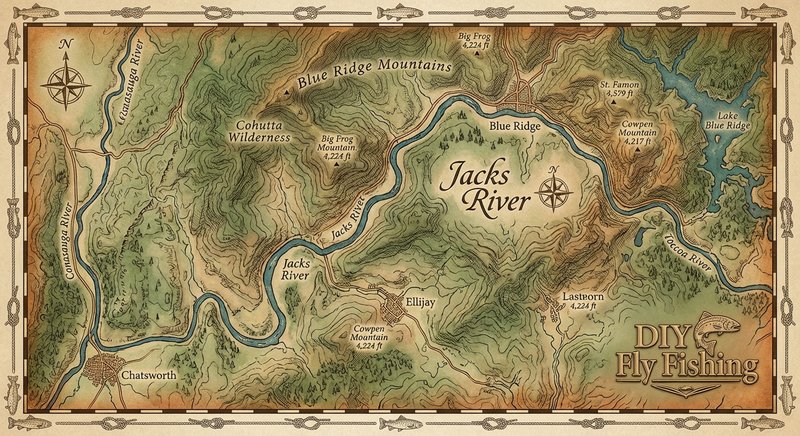
Jacks River
Fly fishing in Georgia · Intermediate · Best seasons: Spring, Fall
Target Species
Rainbow Trout, Brook Trout
About This Water
Located in the Cohutta Wilderness, Jacks River offers a secluded and challenging fly fishing experience for wild trout enthusiasts.
Fishing Recommendations
🎣 Location Overview
The Jacks River, nestled deep within the Cohutta Wilderness of North Georgia, is arguably the most remote and rugged trout fishery in the Southeast. This isn't your roadside, stocked-trout stream; this is a wild, freestone river that requires a "backcountry" mindset.
What makes the Jacks special is its pristine, tea-colored water and the sheer solitude it offers. The river tumbles through ancient canyons, featuring deep emerald pools, heavy pocket water, and dramatic falls (notably Jacks River Falls). Anglers love it because it represents a true wilderness experience where the fish are 100% wild and the scenery is prehistoric.
🐟 Target Species & Behavior
The Jacks is primarily a Wild Rainbow Trout fishery. You will also find Wild Brown Trout in the lower reaches and Native Brook Trout in the high-elevation headwaters and tiny tributaries.
- Wild Rainbows: These fish are vibrant, incredibly strong for their size, and highly opportunistic. They are "spooky" but aggressive.
- Behavior: Because the Jacks is a low-nutrient environment, the fish cannot afford to be overly picky, but they are extremely sensitive to vibration and shadows. They hold in the "cushion" in front of boulders, the bubbly heads of pools, and under overhanging rhododendron banks.
- Feeding: Their diet consists mainly of stoneflies, caddis, and terrestrial insects (ants, beetles, and grasshoppers).
📅 Best Times to Fish
Optimal Seasons
- Spring (Late March – May): This is the "Golden Era" on the Jacks. Water levels are usually stable, and the first major hatches (Quill Gordons and March Browns) trigger aggressive feeding.
- Fall (October – November): As water temperatures drop, the fish become active again after the summer heat. This is also the best time to find large, territorial Brown trout moving.
Best Times of Day
- Spring: Mid-morning to late afternoon (10 AM – 4 PM) as the water warms.
- Summer/Early Fall: First light and the final "magic hour" before dark.
Prime Conditions
Look for a "falling barometer" or a few days of stable, clear weather after a light rain. If the river is "blown out" (muddy), it is dangerous and unfishable; wait for it to clear to a "tannin" stain.
🪰 Recommended Flies & Techniques
Top Fly Patterns
- Dry Flies: Yellow Stimulator (#12-16), Parachute Adams (#14-18), Elk Hair Caddis (#14-16), and the Chernobyl Ant (summer).
- Nymphs: Pheasant Tail (#14-18), Prince Nymph (#12-14), and Golden Stonefly nymphs.
- Streamers: Black or Olive Wooly Buggers (#8-10) for the deeper pools.
Effective Techniques
- Dry-Dropper: This is the bread and butter of the Jacks. Use a high-visibility Stimulator as your indicator and hang a small Pheasant Tail 18–24 inches below it.
- High-Sticking/Tight-Line Nymphing: In the heavy pocket water, skip the indicator and keep as much fly line off the water as possible to avoid "drag" from the complex currents.
Presentation Tips
Sneak and Peek. Because the water is so clear, you must fish upstream. Approach pools from behind boulders and stay low. If you can see the fish, they have likely already seen you.
💡 Pro Tips & Local Knowledge
- The "Rough" Factor: The Jacks River Trail crosses the river dozens of times. To find the best fishing, get at least 2–3 miles away from the trailheads (Dally Gap or Rice Camp). The further you hike, the less pressured the fish.
- Focus on the Tail-outs: In the evening, wild rainbows move to the very back of the pools (the tail-out) to feed on emergers. Cast delicately to these spots before you walk past them.
- The "Jacks River Special": In the summer, don't be afraid to throw a large, foam beetle pattern right against the rock walls. The "plop" of the fly mimics a terrestrial falling in and often triggers an instinctual strike.
⚠️ Important Information
Access
The Jacks River is located within the Cohutta Wilderness. Access is via Forest Service roads that can be rough; a high-clearance vehicle is recommended. Common trailheads include Dally Gap (upper river) and Rice Camp (middle river).
Regulations
- Georgia Fishing License: A valid GA fishing license and trout permit are required.
- Wild Trout Water: Most of the Jacks is under general trout regulations, but check the current GA DNR handbook for any seasonal changes.
- Artificial Only: It is highly recommended (and in some areas required) to use single-hook artificial lures/flies to protect the wild population.
Special Considerations
- Safety: This is true wilderness. Cell service is non-existent. Carry a physical map, a first aid kit, and tell someone your itinerary.
- River Crossings: The Jacks River Trail involves many waist-deep crossings. During heavy rain, these crossings become lethal. If the water is high and brown, do not attempt to cross.
- Bears: The Cohuttas have a high density of Black Bears. Use bear-proof canisters if camping.
Bug Hatches & Matching Flies
| Hatch | Type | Peak months | Time of day | Hook sizes | Matching flies |
|---|---|---|---|---|---|
| Quill Gordon Epeorus pleuralis | mayfly | March, April | Mid-day | #12-14 | Quill Gordon #12-14, Gold Ribbed Hare's Ear #12-14 |
| Blue Quill Paraleptophlebia | mayfly | March, April | Late morning | #16-18 | Blue Quill #16-18, Pheasant Tail #16-18 |
| March Brown Maccaffertium vicarium | mayfly | April, May | Afternoon | #10-14 | March Brown #10-12, March Brown Spun Dun #12-14 |
| Light Cahill Stenacron interpunctatum | mayfly | May, June | Evening | #12-16 | Light Cahill #12-14, Cream Variant #14-16 |
| Golden Stonefly Acronuria | stonefly | May, June, July | Evening/Night | #6-10 | Golden Stone Nymph #6-10, Stimulator (Yellow) #8-12 |
| Sulphur Ephemerella invaria | mayfly | May, June | Evening | #16-18 | Sulphur Parachute #16-18, Sulphur Emerger #16 |
| Cinnamon Caddis Hydropsyche | caddis | May, June, September | Evening | #14-18 | Elk Hair Caddis (Cinnamon) #14-16, Holy Grail #14-16 |
| Terrestrials (Ants/Beetles) Formicidae/Coleoptera | terrestrial | June, July, August, September | All day | #12-18 | Chernobyl Ant #10-14, Black Foam Beetle #14-18 |
| Blue Winged Olive Baetis | mayfly | October, November, February | Mid-day/Overcast | #18-22 | BWO Parachute #18-20, RS2 #20-22 |
| Midges Chironomidae | midge | December, January, February | Anytime | #20-26 | Griffith's Gnat #20-22, Zebra Midge #18-24 |