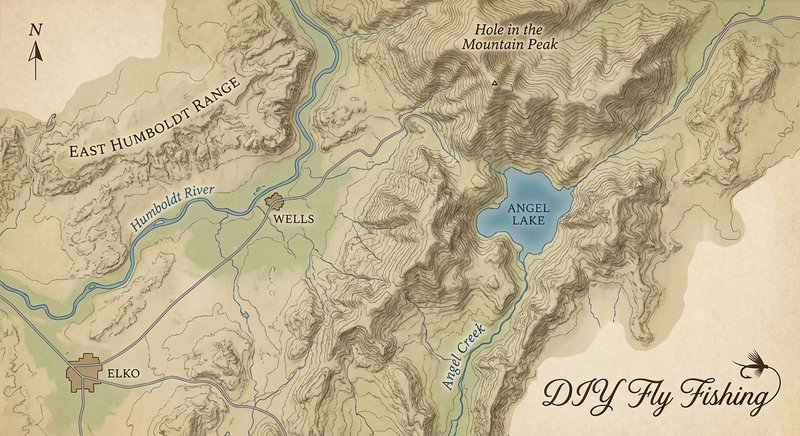
Angel Lake
Fly fishing in Nevada · intermediate · Best seasons: summer, fall
Target Species
Brook Trout, Rainbow Trout
About This Water
High alpine lake in East Humboldt Range. Spectacular scenery with brook trout.
Fishing Recommendations
As an expert guide who has spent significant time in the high-elevation basins of the Great Basin, I can tell you that Angel Lake is one of Nevada's true alpine gems. Perched at 8,400 feet in the East Humboldt Range near Wells, Nevada, this glacial cirque lake offers a stunning backdrop and surprisingly productive trout fishing for those who appreciate high-altitude stillwater.
🎣 Location Overview
Angel Lake is a classic alpine cirque, characterized by steep, jagged granite walls that rise dramatically above the water. Because it is accessible by a paved road (a rarity for such high-elevation lakes), it is approachable, yet it retains a wild, "top of the world" feel.
The water is crystal clear and cold, typical of a snow-fed basin. The lake features a mix of shallow shelf areas near the dam and steep drop-offs along the cliff sides. What makes it special is the accessibility paired with the scenery—it feels like a slice of the Sierra Nevada dropped into the middle of the Nevada desert.
🐟 Target Species & Behavior
- Rainbow Trout: These are the most common residents, often stocked by the Nevada Department of Wildlife (NDOW), but many carry over and become "wild-acting." They tend to cruise the shoreline drop-offs and are very active during midge hatches.
- Brook Trout: The "Brookies" here are stunning, displaying vibrant oranges and reds. They tend to hang closer to the rocky talus slopes and the bottom of the lake. They are opportunistic and will often strike aggressively at smaller streamers or terrestrials blown onto the water.
- Tiger Trout: Occasionally stocked in recent years, these sterile hybrids are aggressive predators and can be found lurking near structure or where smaller baitfish/fry might congregate.
📅 Best Times to Fish
- Summer (Late June – August): This is the prime window. Because of the high elevation, the lake is often frozen or inaccessible until June. Summer brings consistent insect activity.
- Time of Day: Early morning (dawn to 10:00 AM) and "the magic hour" before sunset are best. The water is often glass-calm then, making for perfect dry-fly sight casting.
- Fall (September – October): This is my favorite time. The Brook Trout move into their spawning colors and become very aggressive. The crowds thin out, and the air is crisp.
- Conditions: Look for "Ant Falls"—on windy September days, ants and beetles are blown off the surrounding brush into the water, triggering a feeding frenzy.
🪰 Recommended Flies & Techniques
Top Fly Patterns
- Dry Flies:
- Parachute Adams (#16-20): The gold standard for midge and mayfly hatches.
- Ants and Beetles (#14-16): Essential for summer afternoons. Foam patterns with a hi-viz post work best.
- Griffith’s Gnat (#18-22): For the frequent midge clusters on the surface.
- Nymphs:
- Zebra Midge (#18-20) in Red or Black: Hang these 3–5 feet under a small indicator.
- Pheasant Tail (#16-18): A great generalist for the lake’s bottom-dwellers.
- Streamers:
- Woolly Bugger (#10-12) in Olive or Black: Use a slow, jerky retrieve along the rocky edges.
Techniques
- The "Indicator Drop": Since the water is so clear, use a very small, sensitive indicator. Suspend a Zebra Midge or a small scud pattern just off the bottom near the drop-offs.
- Sight Casting: On calm mornings, walk the perimeter. You will see fish cruising the shallows. Lead them by 3-5 feet with a dry fly and wait.
- Stripping Streamers: If the wind picks up and creates a "chop" on the water, switch to an intermediate sinking line and strip a Woolly Bugger near the dam or the deeper cliff faces.
💡 Pro Tips & Local Knowledge
- The "West Shore Walk": Most people fish near the parking lot and the dam. For the best experience, hike around to the western/back side of the lake where the talus slopes meet the water. The Brookies love the cold, deep water right off the rocks here.
- Watch the Wind: The wind can whip through the canyon suddenly. If the surface gets too rough for dries, don't leave—that's when the bigger fish lose their caution. Switch to a weighted nymph or streamer.
- The Inlet: There are small trickles of snowmelt that enter the lake at the back. These "micro-inlets" bring in oxygen and food; fish will often stack up there, especially in mid-summer.
⚠️ Important Information
- Access: Take SR 231 (Angel Lake Road) from Wells, NV. It’s a steep, winding 12-mile paved climb. Note: The road is seasonally closed during winter and usually opens in late May or early June.
- Regulations: A valid Nevada Fishing License is required. Check the current NDOW regulations for bag limits, though catch-and-release is highly encouraged to maintain the quality of the fishery.
- Special Considerations: This is high-altitude country. Bring sunscreen, plenty of water, and a rain shell. Thunderstorms can roll in quickly in the afternoons.
- Environment: This is a fragile alpine ecosystem. Please pack out all trash and discarded tippet to keep this Nevada treasure pristine.
Enjoy the "Island in the Desert"—Angel Lake is a place that stays with you long after you've hiked back to the truck. Tight lines!
Bug Hatches & Matching Flies
| Hatch | Type | Peak months | Time of day | Hook sizes | Matching flies |
|---|---|---|---|---|---|
| Callibaetis (Speckled Duns) Callibaetis spp. | mayfly | June, July, August | Late Morning/Early Afternoon | #12-16 | Parachute Adams #14-16, Hare's Ear Nymph #12-14, Callibaetis Spinner #14-16 |
| Chironomids (Midges) Chironomidae | midge | May, June, September | All Day | #18-24 | Zebra Midge #18-22, Griffith's Gnat #20-22, Ice Bud #18-20 |
| Damselfly Enallagma spp. | other | June, July | Morning/Afternoon | #10-14 | Marabou Damsel Nymph #10-12, Adult Damsel #12-14 |
| Spotted Sedge Hydropsyche | caddis | July, August | Evening | #14-18 | Elk Hair Caddis #14-16, LaFontaine's Sparkle Pupa #16 |
| Carpenter Ants Camponotus | terrestrial | August, September | Afternoon | #10-16 | Black Foam Ant #12-16, Amy's Ant #10-12 |
| Scuds (Freshwater Shrimp) Gammarus | other | May, June, October | All Day | #12-16 | Ray Charles #14-16, Olive Scud #12-16 |
| Water Boatman Corixidae | other | September, October | Afternoon | #14-18 | Prince Nymph #14-16, Water Boatman #14-18 |
| Black Beetles Coleoptera | terrestrial | July, August | Mid-day | #14-18 | Foam Beetle #14-18 |