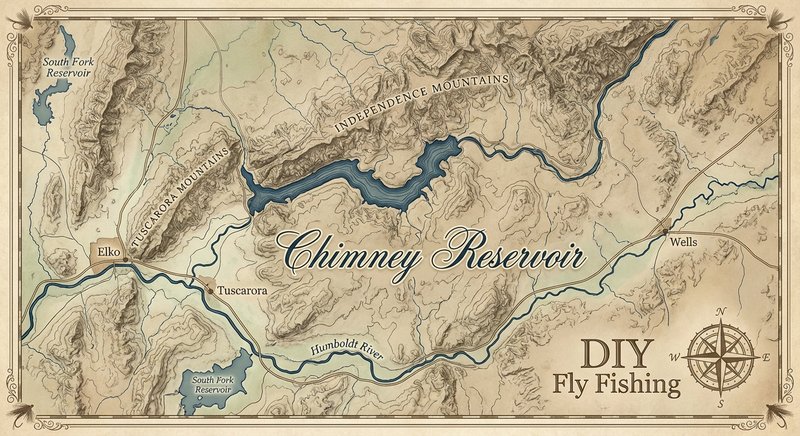
Chimney Reservoir
Fly fishing in Nevada · intermediate · Best seasons: spring, summer, fall
Target Species
Rainbow Trout
About This Water
Elko County reservoir with stocked trout. Remote high desert fishing.
Fishing Recommendations
Welcome to the high desert of Northern Nevada. As your guide, I’m excited to break down Chimney Reservoir. Located about 45 miles north of Winnemucca in Humboldt County, this is a "hidden gem" in the truest sense. It is a man-made irrigation reservoir fed by the Little Humboldt River, sitting in a starkly beautiful, sagebrush-covered volcanic landscape.
Chimney Reservoir is famous among local fly anglers for producing "football-shaped" trout. Because the water is rich in nutrients and boasts a high alkalinity, the growth rates here are explosive.
🎣 Location Overview
Chimney Reservoir is a classic high-desert impoundment. It is relatively shallow, with a maximum depth of around 25–30 feet when full, though it fluctuates significantly based on irrigation needs.
What makes it special is the biomass. The reservoir is an "aquatic factory." The silt-bottomed bays and rocky shorelines are teeming with midge larvae, scuds, and damselfly nymphs. For the fly angler, this isn't "pretty" mountain stream fishing; it’s technical, stillwater stalking where the rewards are heavy-shouldered Rainbows that fight with surprising stamina in the cool desert air.
🐟 Target Species & Behavior
While there are some Walleye and Crappie in these waters, the Rainbow Trout are the main attraction for fly fishers.
- Behavior: These are not your typical "pool-dwelling" fish. In Chimney, trout cruise the transition zones—where the shallow flats drop off into deeper water.
- Feeding: They are opportunistic but lean heavily on subsurface insects. In the spring, they hug the shorelines looking for leeches and scuds. As the water warms, they move to the "Chironomid (midge) highway," hovering just inches off the bottom in 10–15 feet of water.
- Size: Expect fish in the 14–18 inch range, with "trophy" fish pushing 22+ inches and 4–5 pounds.
📅 Best Times to Fish
- Spring (March – May): This is Prime Time. As the ice recedes and the water hits 45–50°F, the trout move into the shallows to feed aggressively after winter. This is when you'll find the biggest fish within casting distance of the bank.
- Summer (June – Early July): Fishing remains good, but you’ll need to focus on the early morning (sunrise to 10:00 AM) and late evening. As the heat of July peaks, the fish move to the deepest parts of the reservoir near the dam to find oxygenated water.
- Fall (September – November): As the water cools, the "Second Season" begins. The trout move back into the shallows to bulk up for winter. The crowds are nonexistent, and the fish are at their heaviest weight of the year.
🪰 Recommended Flies & Techniques
Top Fly Patterns
- Chironomids: Ice Cream Cones, Zebra Midges (Size 12–16) in black/silver, red/black, or olive.
- Balanced Leeches: Bruised (purple/black) or olive with a hot bead head. These are essential for fishing under an indicator.
- Scuds: UV Olive or Pink (Size 14–16). The reservoir is carpeted in these.
- Streamers: Thin Mints, Woolly Buggers (Olive or Black), and Autumn Splendors for aggressive fall fish.
- Dries: During summer evenings, look for a modest midge hatch. Use a Griffith’s Gnat or a Parachute Adams (Size 18).
Effective Techniques
- Indicator Rigging (The "Standard"): Use a long leader (10–15 feet) to suspend a Balanced Leech or Chironomid. The key is to keep your fly 12–18 inches off the muddy bottom.
- The "Strip and Pause": Using an intermediate sinking line, cast a Woolly Bugger or a Scud pattern toward rocky points. Use a slow, rhythmic retrieve with long pauses—the fish often hit on the drop.
- Float Tube/Kayak: While bank fishing is possible, a personal watercraft is a game-changer here, allowing you to reach the drop-offs that the big cruisers patrol.
💡 Pro Tips & Local Knowledge
- Watch the Wind: The Nevada desert is notorious for wind. At Chimney, a "light breeze" is a gale. If the wind picks up from the West, it can stir up the silt and turn the water murky. Look for protected coves on the windward side to find clearer water.
- The "Inlet" Secret: In the spring, focus your attention on the north end where the Little Humboldt River enters. The moving water brings in extra oxygen and food, stacking fish up in the channel.
- Color Palette: In the high desert sun, "flash" can be too much. Stick to natural, earthy tones (olive, brown, black) unless the water is murky, then switch to "hot-bead" patterns to help the fish track the fly.
- The "Chironomid Shake": If your indicator is sitting still, give it a tiny twitch. This mimics the natural movement of a midge pupa struggling to the surface and often triggers a "sympathetic" strike.
⚠️ Important Information
- Access: Access is via NV-290 N from Paradise Valley. The roads can be washboarded and dusty. High-clearance vehicles are recommended, especially after rain, as the "playa" mud around the reservoir can become impassable for 2WD vehicles.
- Regulations: Nevada Department of Wildlife (NDOW) regulations apply. You need a valid Nevada Fishing License. There are usually no special gear restrictions (bait is allowed), so fly anglers share the water with gear fishers. Check the current NDOW seasons and limits before heading out.
- Supplies: This is a remote area. The nearest town for significant supplies is Winnemucca. Ensure you have a full tank of gas, plenty of water, and a spare tire. There is very little shade at the reservoir; bring sun protection.
- Primitive Camping: There are primitive camping spots around the reservoir, but facilities are minimal (vault toilets only).
Guide’s Final Word: Chimney Reservoir isn't for those who want a manicured experience. It’s for the angler who loves solitude, vast horizons, and the chance to hook a trout that looks like it swallowed a grapefruit. Tight lines!
Bug Hatches & Matching Flies
| Hatch | Type | Peak months | Time of day | Hook sizes | Matching flies |
|---|---|---|---|---|---|
| Chironomids Chironomidae | midge | March, April, May, October | All Day | #12-22 | Zebra Midge #16-20, Ice Midge #14-18, Griffith's Gnat #18-22 |
| Callibaetis Callibaetis nigritus | mayfly | May, June, September | Late Morning | #12-16 | Callibaetis Spinner #14-16, Hares Ear Nymph #12-16, Pheasant Tail #14-16 |
| Damselfly Enallagma | terrestrial | June, July | Afternoon | #10-14 | Marabou Damsel Nymph #10-12, Adult Damsel #12-14 |
| Grasshoppers Acrididae | terrestrial | July, August, September | Afternoon | #8-12 | Dave's Hopper #8-12, Parachute Hopper #10-12 |
| Water Boatmen Corixidae | midge | September, October | All Day | #14-18 | Boatman Pattern #14-16, Prince Nymph #14-18 |
| Caddisflies Trichoptera | caddis | May, June | Evening | #12-16 | Elk Hair Caddis #14-16, LaFontaine's Emerger #14-16 |
| Scuds Gammarus | midge | April, May, September | All Day | #12-18 | Ray Charles #14-18, Scud (Olive or Orange) #12-16 |
| Dragonfly Nymphs Anisoptera | terrestrial | June, July, August | All Day | #6-10 | Woolly Bugger (Olive) #6-10, Dragonfly Nymph #8-10 |