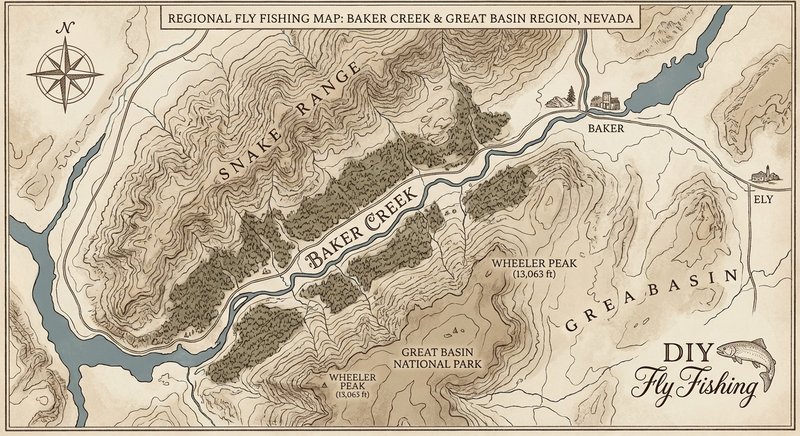
Baker Creek
Fly fishing in Nevada · advanced · Best seasons: summer, fall
Target Species
Bonneville Cutthroat Trout
About This Water
Great Basin stream with Bonneville cutthroat restoration. Remote wilderness fishing.
Fishing Recommendations
As an expert guide who has spent significant time in the high-desert basins and alpine reaches of the Silver State, I can tell you that Baker Creek is a crown jewel of the Great Basin. Located within the boundaries of Great Basin National Park, this is a small-stream enthusiast’s paradise and one of the best places on earth to check the native Bonneville Cutthroat Trout off your bucket list.
🎣 Location Overview
Baker Creek is a quintessential high-gradient mountain stream. It originates from the snowmelt and springs beneath the shadows of Wheeler Peak and Baker Peak, tumbling through limestone canyons and groves of aspen and mountain mahogany.
What makes this water special is its remoteness and purity. This isn't a place for drift boats or long casts; it is "blue line" fishing at its finest. The water is gin-clear, cold, and highly oxygenated. Anglers love it because it offers a "step back in time" experience. You are fishing for a native species in a landscape that looks exactly as it did hundreds of years ago. The scenery—ranging from desert sagebrush at the lower end to sub-alpine forests at the upper reaches—is breathtaking.
🐟 Target Species & Behavior
The primary draw here is the Bonneville Cutthroat Trout (BCT).
- Behavior: These fish are opportunistic feeders due to the short growing season and nutrient-poor alpine water. They aren't particularly "picky" compared to pressured tailwater fish, but they are extremely spooky.
- Where they hold: Look for them in the "textbook" spots: the pocket water behind large boulders, the undercut banks beneath overhanging willows, and the tail-outs of small plunge pools.
- Feeding: Their diet consists mainly of aquatic insects (mayflies, caddis) and terrestrial insects that fall from the dense bank vegetation. In late summer, grasshoppers and ants are high-protein staples.
📅 Best Times to Fish
While the park is open year-round, the fishing window for Baker Creek is defined by snowpack and runoff.
- Summer (Late June – August): This is the prime window. Once the spring runoff subsides (usually by late June), the water becomes clear and fishable. July is arguably the best month for dry fly action.
- Fall (September – October): My personal favorite. The aspens turn gold, the air is crisp, and the fish are aggressively feeding to bulk up for winter. The water levels are lower, requiring a stealthier approach.
- Time of Day: In the heat of summer, mid-morning (9 AM) to early afternoon is excellent. In the fall, the "golden hour" before sunset can trigger a frantic dry fly bite.
🪰 Recommended Flies & Techniques
Top Fly Patterns
- Dry Flies:
- Royal Wulff or Royal Coachman (#14-18): The classic attractor. Easy to see in broken water.
- Parachute Adams (#16-20): Matches almost any gray mayfly hatch.
- Elk Hair Caddis (#14-16): Tan or olive; great for skating across the surface.
- Stimulators (#12-16): Orange or yellow; mimics large stoneflies or grasshoppers.
- Terrestrials:
- Black Ants or Foam Beetles (#16-18): Essential for late summer.
- Nymphs (Droppers):
- Bead-head Pheasant Tail (#16-18): A universal producer.
- Hare’s Ear (#16): Great for the deeper plunge pools.
Techniques
- Dry-Dropper Rig: This is the "gold standard" here. Use a high-visibility dry fly (like a Stimulator) and hang a small Pheasant Tail nymph 12–18 inches below it.
- The "Dap": In many spots, the brush is so thick you won't be able to cast. Simply poking your rod through the willows and "dapping" your fly on the surface is a legitimate and effective local tactic.
- Upstream Approach: Always fish moving upstream. Because the water is clear and shallow, if the fish see your silhouette or your line landing above them, the pool is "blown."
💡 Pro Tips & Local Knowledge
- The Stealth Factor: Wear earthy tones (greens, browns, grays) to blend in with the brush. Kneel when approaching a pool. If you can see the fish, they have likely already seen you.
- Focus on the Baker Creek Campground area: The stretch of water running through and just above the campground offers excellent access and consistent pocket water.
- The "Timberline" Secret: If you are willing to hike, take the Baker Lake trail. The further you get from the road, the smaller the fish might get, but the more eager they become.
- Light Tackle: Leave your 5-weight or 6-weight at home. A 2-weight or 3-weight rod (7' to 8' length) is the perfect tool for these small mountain gems.
⚠️ Important Information
- Access: Access is via the Great Basin National Park entrance near Baker, NV. A well-maintained gravel road follows Baker Creek.
- Regulations:
- A valid Nevada Fishing License is required.
- Great Basin National Park allows fishing in accordance with state law, but be sure to check the current Compendium for any seasonal closures or specific lure restrictions (generally, artificial lures/flies only are recommended to protect the BCT).
- Wildlife: This is high-altitude backcountry. Be aware of mountain lions and rattlesnakes at lower elevations.
- Leave No Trace: These native Bonneville Cutthroats are a sensitive population. Use barbless hooks, practice quick catch-and-release, and keep the fish in the water as much as possible.
Guide’s Final Word: Baker Creek isn't about trophy sizes; it's about the beauty of the fish and the solitude of the high desert. Take your time, watch your shadow, and enjoy one of Nevada’s greatest natural treasures.
Bug Hatches & Matching Flies
| Hatch | Type | Peak months | Time of day | Hook sizes | Matching flies |
|---|---|---|---|---|---|
| Blue-Winged Olive Baetis spp. | mayfly | April, May, September, October | Midday | #18-22 | Parachute Adams #18-22, RS2 #20-22, Pheasant Tail Nymph #18-20 |
| Pale Morning Dun Ephemerella excrucians | mayfly | June, July | Late Morning to Early Afternoon | #14-18 | PMD Sparkle Dun #16-18, Pale Morning Dun Nymph #14-16, Quigley Cripple #16 |
| Golden Stonefly Hesperoperla pacifica | stonefly | June, July | Morning/Evening | #8-12 | Chubby Chernobyl #8-12, Pat's Rubber Leg Stone #8-10, Golden Rogue Stone #10-12 |
| Little Yellow Stonefly (Yellow Sally) Isoperla spp. | stonefly | June, July, August | Afternoon/Evening | #14-16 | Yellow Sally Dry #14-16, Iron Lotus #16, Stimulator #14-16 |
| Spotted Sedge Hydropsyche spp. | caddis | July, August, September | Evening | #14-16 | Elk Hair Caddis (Tan) #14-16, LaFontaine's Deep Sparkle Pupa #14-16, Godzilla Caddis #14 |
| Western March Brown Rhithrogena morrisoni | mayfly | May, June | Midday | #12-14 | March Brown Dry #12-14, Gold Ribbed Hare's Ear #12-14 |
| Terrestrials (Ants and Beetles) Formicidae / Coleoptera | terrestrial | July, August, September | All Day | #12-18 | Cinnamon Ant #16-18, Foam Beetle #14-16, Amy's Ant #12-14 |
| American Grannom Brachycentrus occidentalis | caddis | May | Afternoon | #14-16 | Peacock Caddis #14-16, Z-Wing Caddis #14-16 |
| Midges Chironomidae | midge | March, April, October, November | All Day | #20-24 | Zebra Midge #20-22, Griffith's Gnat #20-22 |