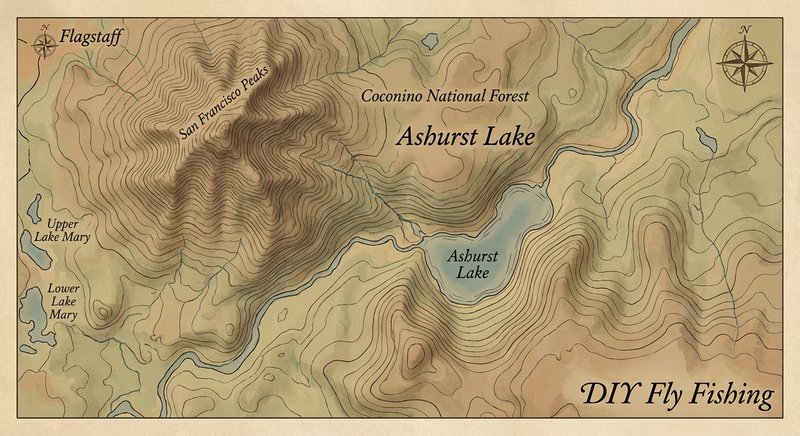
Ashurst Lake
Fly fishing in Arizona · beginner · Best seasons: spring, summer, fall
Target Species
Rainbow Trout
About This Water
High country lake near Flagstaff. Stocked rainbow trout in scenic pine forest setting.
Fishing Recommendations
As an expert guide who has spent many seasons navigating the high-country lakes of the Mogollon Rim and Coconino Plateau, I can tell you that Ashurst Lake is a crown jewel of Northern Arizona stillwater fishing. Located about 20 miles southeast of Flagstaff, it sits at roughly 7,000 feet and offers some of the most consistent trout action in the state.
Here is your comprehensive guide to fly fishing Ashurst Lake.
🎣 Location Overview
Ashurst Lake is a natural basin lake that, unlike many "tanks" in Arizona, holds water remarkably well even during dry spells. It is characterized by its wide-open exposure, alkaline-rich water, and extensive weed beds.
What makes Ashurst special is its productivity. The water chemistry supports a massive biomass of aquatic insects and crustaceans. This isn't a "put-and-take" puddle where fish starve; these rainbows grow quickly and develop deep orange flesh and incredible fight. The scenery—with views of the San Francisco Peaks in the distance—is the quintessential Arizona high-country experience.
🐟 Target Species & Behavior
The primary target here is Rainbow Trout. While the Arizona Game and Fish Department (AZGFD) stocks the lake regularly, the "holdover" fish are the real prize.
- Cruising Patterns: Ashurst rainbows are "edge hunters." They patrol the transition zones where the volcanic rocky bottom meets the submerged vegetation.
- Feeding Habits: They are opportunistic but have a refined palate for scuds (freshwater shrimp) and midges (chironomids).
- Summer Behavior: As the water warms in July, fish move toward the center of the lake where it is deeper (around 12–18 feet) and hold near the bottom during the heat of the day.
📅 Best Times to Fish
Seasons
- Spring (April – June): This is the prime window. Immediately after ice-out, the trout are ravenous. The "Callibaetis" (mayfly) hatches begin in late May.
- Summer (July – August): Fishing remains good but requires a tactical shift. You must fish early (dawn to 10:00 AM) or late (6:00 PM to dark).
- Fall (September – October): My personal favorite. As the water cools, the trout move back into the shallows (3–5 feet of water) to bulk up for winter.
Prime Windows
- The Witching Hour: The 60 minutes before sunset is legendary at Ashurst. The wind usually dies down, and the lake surface can "boil" with rising fish.
- Overcast Days: Because the lake is shallow, bright sun can make fish spooky. A cloudy, slightly breezy day is often the most productive.
🪰 Recommended Flies & Techniques
Top Fly Patterns
- Simi Seal Leech: (Size 10-12) In Blood Leech, Peacock, or Olive. This is the "Gold Standard" for Arizona stillwater.
- Zebra Midge: (Size 16-20) Red or Black with a silver bead.
- Scuds: (Size 14-16) Olive or Pink. Ashurst is thick with freshwater shrimp.
- Chironomids: (Size 12-16) "Ice Man" or "Tiger" patterns with white gill tufts.
- Callibaetis Spinners: (Size 14-16) For when the evening hatch occurs.
Effective Techniques
- The "Naked" Midge: Fish a long leader (12-15 feet) with a Zebra Midge or a Scud. Use a slow, hand-twist retrieve. No indicator—watch the tip of your fly line for the slightest hesitation.
- Indicator Rigging: Suspend a midge 12 inches off the bottom. This is the most effective way to fish when the wind is creates a "chop" on the water, as the waves give the fly a natural dancing motion.
- Intermediate Sinking Line: If you are in a float tube, troll a Simi Seal Leech slowly behind you. This covers water and finds the schools.
💡 Pro Tips & Local Knowledge
- The Wind Factor: Ashurst is notoriously windy. If the wind is blowing hard from the Southwest, head to the North Shore. There are some rocky points there that provide a bit of a windbreak and concentrate the bait.
- The "Flagstaff Strip": Local sticks use a very specific retrieve: three short, fast strips followed by a long 3-second pause. Most hits come on the pause.
- Float Tubes are Mandatory: While you can catch fish from the bank near the boat ramps, the weed beds often extend 30 feet out. To really fish the "drop-off" where the big rainbows hide, you need a float tube, kayak, or small boat.
- Color Confidence: If the water is slightly murky (common after a windstorm), switch to a bright orange scud or a black leech with a hot bead. In clear water, stick to olive and natural tones.
⚠️ Important Information
- Access: Access is via Forest Road 82. It is paved most of the way and accessible by any vehicle. There are two main campgrounds: Ashurst Lake and Pine Grove.
- Regulations:
- An Arizona Fishing License is required for those 10 and older.
- Standard trout limits apply (usually 4 per day), but check the latest AZGFD Fishing Regulations as rules can change.
- Safety: This is a high-altitude lake. Weather can change in minutes. If you see lightning over the Peaks, get off the water immediately. The wind can also pick up suddenly, making it difficult to paddle back to the ramp—always fish into the wind first so you have a tailwind for the return trip.
Guide’s Final Word: Bring a heavy jacket even in June, a good pair of polarized sunglasses to see the weed lines, and a handful of Simi Seal Leeches. You’ll have a world-class day. Tight lines!
Bug Hatches & Matching Flies
| Hatch | Type | Peak months | Time of day | Hook sizes | Matching flies |
|---|---|---|---|---|---|
| Callibaetis (Speckled Duns) Callibaetis ferrugineus | mayfly | May, June, September | Late Morning/Early Afternoon | #12-16 | Callibaetis Spinner #14-16, Hare's Ear Nymph #12-16, Mercer's Poxyback Callibaetis #14-16 |
| Chironomids (Midges) Chironomidae | midge | April, May, October | All Day | #14-22 | Zebra Midge #16-20, Ice Cream Cone #14-18, Griffith's Gnat #18-22 |
| Damselflies Enallagma spp. | terrestrial | June, July | Late Morning/Afternoon | #10-14 | Marabou Damsel Nymph #10-12, Adult Braided Damsel #12-14 |
| Traveling Sedge Hesperophylax occidentalis | caddis | June, July | Evening/Dusk | #8-12 | Goddard Caddis #8-12, Mikulak Sedge #10 |
| Blood Midges Chironomus plumosus | midge | April, October | Morning/Evening | #10-14 | Blood Worm #12-14, San Juan Worm #12-14 |
| Cinnamon Caddis Hydropsyche spp. | caddis | July, August | Late Afternoon/Evening | #14-18 | Elk Hair Caddis #14-16, LaFontaine's Deep Sparkle Pupa #14-18 |
| Water Boatmen Corixidae | terrestrial | September, October | Afternoon | #14-18 | Prince Nymph #14-18, Water Boatman Pattern #16 |
| Terrestrial Ants and Beetles Formicidae / Coleoptera | terrestrial | July, August | Afternoon | #12-18 | Black Foam Ant #14-18, Chernobyl Ant #10-14, Crowe Beetle #14-16 |