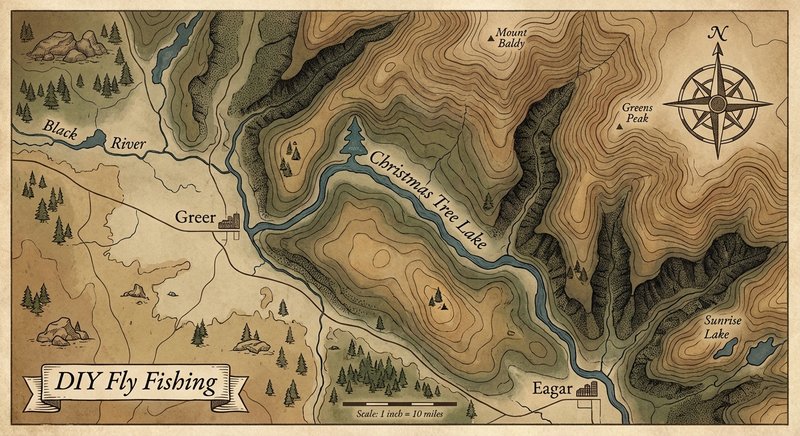
Christmas Tree Lake
Fly fishing in Arizona · intermediate · Best seasons: summer, fall
Target Species
Brook Trout
About This Water
Small high country lake with brook trout. Scenic alpine meadow setting.
Fishing Recommendations
Welcome to the "Crown Jewel" of the White Mountains. As your guide, I can tell you that Christmas Tree Lake is one of the most storied and exclusive fly fishing destinations in the Southwest. Located on the Fort Apache Indian Reservation at an elevation of approximately 9,000 feet, it offers a high-alpine experience that feels more like the wilds of Canada than the desert of Arizona.
While the lake is world-famous for being the primary sanctuary of the Apache Trout (Arizona's state fish), it also holds a healthy population of Brook Trout.
🎣 Location Overview
Christmas Tree Lake is a high-altitude, 40-acre impoundment nestled in a dense forest of spruce, fir, and aspen. What makes it special is its exclusivity and preservation. The White Mountain Apache Tribe limits the number of anglers per day (usually only 20), which prevents the fish from becoming overly pressured and maintains a "wilderness" feel.
The water is remarkably clear but incredibly fertile. Massive weed beds line the perimeter, creating a massive "bio-factory" for aquatic insects. This isn't just a place to catch fish; it’s a place to catch trophy fish in a setting where you might not see another soul all day.
🐟 Target Species & Behavior
While you are targeting Brook Trout, you will inevitably encounter the Apache Trout. Both species here grow to impressive sizes, often exceeding 18–20 inches.
- Brook Trout Behavior: The Brookies in Christmas Tree Lake are opportunistic but can be wary in the clear water. They love the transition zones—the edges where the deep water meets the thick weed beds.
- Feeding Habits: They are highly focused on the lake's massive populations of scuds (freshwater shrimp), damselflies, and chironomids. In the fall, they become more aggressive and territorial as they prepare for their spawning cycle, often moving into the shallower inlets.
📅 Best Times to Fish
Optimal Seasons
- Summer (June – August): This is prime time for insect activity. The damselfly hatch in June and July is legendary. However, be prepared for "Monsoon Season" in July and August—afternoon thunderstorms are daily occurrences.
- Fall (September – October): This is arguably the best time for Brookies. As the water cools, the Brook Trout dawn their spectacular spawning colors (vibrant oranges and reds). They become more aggressive towards streamers.
Best Times of Day
- First Light to 10:30 AM: The water is calmest, and fish are often cruising the shallows.
- The "Evening Rise": The hour before sunset offers spectacular dry fly action as midges and caddis emerge.
🪰 Recommended Flies & Techniques
Top Fly Patterns
- Scuds: This is the #1 food source. Use patterns in Olive, Orange, or Pink (Size 12-16). A "Flashback" scud is particularly effective.
- Damselflies: During the summer, an Olive Damsel Nymph with a lot of movement (marabou tail) is a must.
- Chironomids: "Snowcone" midges in black/silver or red (Size 14-18) under a slip-indicator.
- Dry Flies: Parachute Adams, Elk Hair Caddis, and terrestrial patterns like Beetles or Ants in late summer.
- Streamers: For the big Brookies, pull a Simi Seal Leech (Blood Leech or Peacock colors) or a Wooly Bugger on a sinking line.
Effective Techniques
- The "Stalk and Cast": Because the water is clear, if you are on the bank, stay low. Spot cruising fish and "interception cast" several feet in front of their path.
- Indicator Nymphing: Suspend a scud or chironomid 4–7 feet below an indicator, right along the edge of the weed lines. Give it the occasional "twitch."
- The "Slow Strip": When using leeches or damsel nymphs, use an intermediate sinking line and a slow, rhythmic pull to mimic the natural swimming motion of the insect.
💡 Pro Tips & Local Knowledge
- Focus on the Inlets: The area where the small creeks enter the lake (specifically Sun Creek) is a magnet for Brook Trout, especially in the fall. The moving water brings in more oxygen and food.
- The "Damsel Migration": In early summer, damselfly nymphs migrate toward the shore to hatch. If you see fish "bulging" near the weeds, they are likely intercepting these nymphs. Strip an olive nymph toward the bank.
- Float Tubes are King: While bank fishing is possible, a float tube or kayak allows you to fish the outside edge of the weed beds back toward the shore—this is where the biggest fish hide.
- Color Transitions: If the bite dies down, switch to something with a "hot spot" (orange or red bead/collar). These Brookies often react to a trigger color when they aren't actively feeding.
⚠️ Important Information
- Permits: This is Sovereign Land. An Arizona State Fishing License is NOT valid here. You must purchase a specific White Mountain Apache Tribal Fishing Permit AND a special Daily Permit for Christmas Tree Lake. These are often sold out weeks in advance; check the WMAT Outdoor website early.
- Access: The road to Christmas Tree Lake is a rugged, dirt logging road. High-clearance vehicles (4x4 or AWD) are strongly recommended, especially after rain when the road turns into "gumbo" mud.
- Regulations: The lake is typically Artificial Fly and Lure ONLY. Most seasons are Catch and Release to protect the Apache Trout, though tribal regulations can change yearly—always verify the current "Special Use" rules when you buy your permit.
- Weather: Even in July, mornings can be freezing. Dress in layers and bring high-quality rain gear for the afternoon storms.
Final Guide Note: Treat these fish with respect. Use a rubber net and keep them in the water. The Brookies are beautiful, but the Apache Trout you’ll catch alongside them are a rare treasure found nowhere else on Earth. Enjoy the silence!
Bug Hatches & Matching Flies
| Hatch | Type | Peak months | Time of day | Hook sizes | Matching flies |
|---|---|---|---|---|---|
| Speckled Dun (Callibaetis) Callibaetis spp. | mayfly | June, July, August | Late Morning to Mid-Afternoon | #12-16 | Parachute Adams #14-16, Callibaetis Spinner #14-16, Hare's Ear Nymph #12-16 |
| Chironomids (Midges) Chironomidae | midge | May, June, September | All Day | #16-22 | Zebra Midge #18-22, Ice Budgie #16-18, Griffith's Gnat #18-20 |
| Damselfly Enallagma spp. | terrestrial | June, July | Morning to Early Afternoon | #10-14 | Marabou Damsel Nymph #10-12, Adult Damsel #12-14 |
| Traveling Sedge Hesperophylax spp. | caddis | July, August | Evening | #10-14 | Goddard Caddis #10-12, Elk Hair Caddis #12-14, Pupa Emerger #12-14 |
| Cinnamon Ant Formicidae | terrestrial | August, September | Afternoon | #14-18 | Cinnamon Ant #14-18, Parachute Ant #16 |
| Water Boatmen Corixidae | terrestrial | September, October | Afternoon | #14-18 | Water Boatman #14-16, Prince Nymph #14-18 |
| Little Western Brown Sedge Glossosoma spp. | caddis | June, July | Late Afternoon | #16-20 | Caddis Larva #18, CDC Caddis #16-18 |
| Grasshoppers Acrididae | terrestrial | August, September | Midday to Evening | #8-12 | Dave's Hopper #10-12, Joe's Hopper #8-12, Amy's Ant #10-12 |