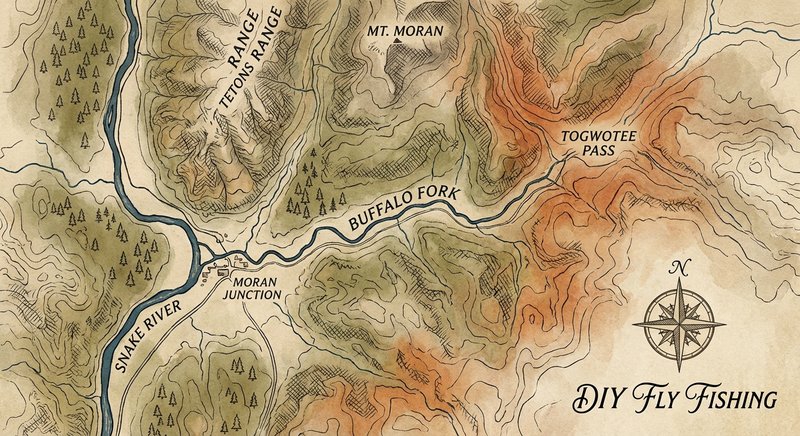
Buffalo Fork
Fly fishing in Wyoming · Beginner · Best seasons: Summer, Fall
Target Species
Cutthroat Trout, Brook Trout
About This Water
Snake River tributary near Moran with cutthroat trout. Scenic Teton views.
Fishing Recommendations
As an expert guide who has spent years navigating the Greater Yellowstone Ecosystem, I can tell you that the Buffalo Fork (a major tributary of the Snake River) is one of the most rugged and rewarding fisheries in Wyoming. It offers a true "wild west" fly fishing experience, characterized by stunning views of the Teton Range, braided river channels, and aggressive, native trout.
Here is your comprehensive guide to fly fishing the Buffalo Fork.
🎣 Location Overview
The Buffalo Fork is a wild, free-flowing river that originates in the Teton Wilderness and flows through the Bridger-Teton National Forest before joining the Snake River near Moran, Wyoming.
What makes it special: Unlike the main stem of the Snake, the Buffalo Fork is largely un-dammed and retains a raw, natural character. It is famous for its "milky" appearance—a result of glacial silt from its headwaters. While this can affect visibility, the fish are well-adapted to it. Anglers love it because it feels more remote than the neighboring Snake or Madison rivers, offering a high-country wilderness vibe without requiring a multi-day pack trip (though those are available in the upper reaches).
Water Characteristics: The river is a classic freestone stream. You’ll find everything from deep, slow-moving bends and undercut banks to fast pocket water and expansive gravel bars. It is highly prone to "braiding," meaning the river often splits into multiple smaller channels.
🐟 Target Species & Behavior
Snake River Fine-Spotted Cutthroat Trout
This is the star of the show. These fish are native only to this drainage. They are known for being exceptionally opportunistic surface feeders.
- Behavior: They hold in "soft" water. Look for them at the tail-outs of pools, behind large woody debris, and right against the grassy banks.
- Feeding: They have a short growing season and are rarely "picky." If it looks like food and is presented naturally, they will usually strike.
Brook Trout
Found primarily in the upper reaches and the smaller, cooler tributaries (like the North and South Forks).
- Behavior: Brookies here are aggressive but shy. They prefer the coldest water and dense cover.
- Feeding: They are suckers for small, colorful attractors and nymphs.
📅 Best Times to Fish
Optimal Seasons
- Summer (Late July – August): This is the prime window. The Buffalo Fork stays high and muddy much longer than other rivers due to snowmelt. It usually doesn't "drop and clear" until mid-July.
- Fall (September – October): This is my favorite time. The water is crystal clear, the crowds vanish, and the Cutthroats are aggressive as they prepare for winter. The cottonwoods turning gold against the Tetons provides the best backdrop in fly fishing.
Best Times of Day
- Summer: 9:00 AM to 4:00 PM. The "Hopper" window—when the sun warms the banks and gets terrestrial insects moving—is the most productive.
- Fall: 11:00 AM to 3:00 PM. Focus on the warmest part of the day when blue-winged olives (BWOs) are hatching.
🪰 Recommended Flies & Techniques
Dry Fly Fishing (Primary Method)
The Buffalo Fork is a dry-fly paradise. The fish are looking up.
- Top Patterns:
- Chernobyl Ant (Tan/Orange) sizes 8-12.
- Chubby Chernobyl (Purple or Gold) sizes 10-14.
- Turck’s Tarantula sizes 10-12.
- Parachute Adams (for clearer water/smaller hatches) sizes 14-18.
Nymphing
If the fish aren't rising, go deep near the undercut banks.
- Top Patterns:
- Pat’s Rubber Leg Stonefly (Brown/Black) sizes 8-12.
- Beadhead Prince Nymph sizes 14-16.
- Pheasant Tail size 16.
Presentation Tips
- The "Twitch": When fishing large terrestrials (hoppers/ants), don’t be afraid to give the fly a tiny skate or twitch. It often triggers a Cutthroat that is undecided.
- Bank Hugging: You must get your fly within 6 inches of the bank. The Cutthroat here love to sit in the "micro-eddy" created by the grass hanging over the water.
💡 Pro Tips & Local Knowledge
- The "Turpin Meadow" Stretch: This is the most popular access point. To find better fishing, hike at least a mile upstream from the bridge to get away from the casual anglers.
- Read the Water Color: If the water looks like "chocolate milk," go home. If it looks like "green tea" or slightly milky, it’s game on. Cutthroats hunt by sight, but a little turbidity actually makes them less spooky.
- Bear Safety is Mandatory: This is prime Grizzly Bear country. Always carry bear spray on your person (not in your pack) and make noise while walking through the willows.
- Braids are Gold: Don't just fish the main channel. Often, the smaller side channels hold the most cooperative fish because they receive less pressure.
⚠️ Important Information
Access
- Turpin Meadow: The primary public access point with a boat launch and trailhead.
- Forest Service Road 30050: Offers several pull-offs for wade fishing access along the river.
- Wilderness Boundary: Be aware that as you go upstream, you will eventually enter the Teton Wilderness. Mechanical transport (including bicycles) is prohibited there.
Regulations & Permits
- License: You need a valid Wyoming Fishing License.
- AIS Decal: If you are using a drift boat or raft, you must have an Aquatic Invasive Species decal.
- Creel Limits: Regulations can change. Always check the current Wyoming Game and Fish Department booklet for the "Snake River Section" specifically. Generally, there are specific limits on Cutthroat to protect the population.
Special Considerations
- Wading Safety: The Buffalo Fork has a very unstable gravel bottom. The rocks can shift under your feet, and "sweepers" (fallen trees) are common. Use a wading staff.
- Moose: You are highly likely to encounter moose in the willows. Give them a wide berth—they are often more dangerous than bears.
Bug Hatches & Matching Flies
| Hatch | Type | Peak months | Time of day | Hook sizes | Matching flies |
|---|---|---|---|---|---|
| Salmonfly Pteronarcys californica | stonefly | June, July | All day | #4-8 | Rogue River Salmonfly #4-6, Pats Rubber Legs #6-8, Chubby Chernobyl (Orange) #6-10 |
| Golden Stonefly Hesperoperla pacifica | stonefly | July | Morning/Evening | #8-12 | Goldie Snitch #10-12, Iron Lotus #12-14, Water Walker (Golden) #8-12 |
| Pale Morning Dun (PMD) Ephemerella excrucians | mayfly | July, August | Late Morning/Afternoon | #16-18 | Sparkle Dun #16-18, RS2 (PMD) #18, Pheasant Tail #16-18 |
| Green Drake Drunella grandis | mayfly | July | Afternoon | #10-12 | Hairwing Green Drake #10-12, Green Drake Cripple #12, 20 Incher Stone #10-12 |
| Blue Winged Olive (BWO) Baetis | mayfly | April, May, September, October | Mid-day | #18-22 | Parachute Adams #18-22, Baetis Barr Emerger #20-22, JujuBaetis #20-22 |
| Yellow Sally Isoperla | stonefly | July, August | Afternoon/Evening | #14-16 | Yellow Sally Foamstone #14-16, Little Yellow Sloan #16, Missing Link (Yellow) #14-16 |
| Spotted Sedge Hydropsyche | caddis | July, August, September | Evening | #14-18 | Elk Hair Caddis (Tan) #14-18, LaFontaine's Deep Sparkle Pupa #16, Godzilla Caddis #14-16 |
| Grasshoppers Acrididae | terrestrial | August, September | Late Morning/Afternoon | #8-12 | Morrish Hopper #8-12, Rainy's Grand Hopper #10-12, Thunder Thighs Hopper #12 |
| Trico Tricorythodes | mayfly | August, September | Early Morning | #20-24 | Trico Spinner #20-24, Trico Dun #22, Zebra Midge #20-22 |
| Mother's Day Caddis Brachycentrus occidentalis | caddis | May | Afternoon | #14-16 | Peacock Caddis #14-16, Holy Grail #14-16, Guide's Choice Hare's Ear #14-16 |