Green River
Fly fishing in Wyoming · Intermediate · Best seasons: Summer, Fall
Target Species
Rainbow Trout, Brown Trout, Cutthroat Trout
About This Water
Headwaters in Wyoming offer excellent fishing for wild trout in remote wilderness settings.
Fishing Recommendations
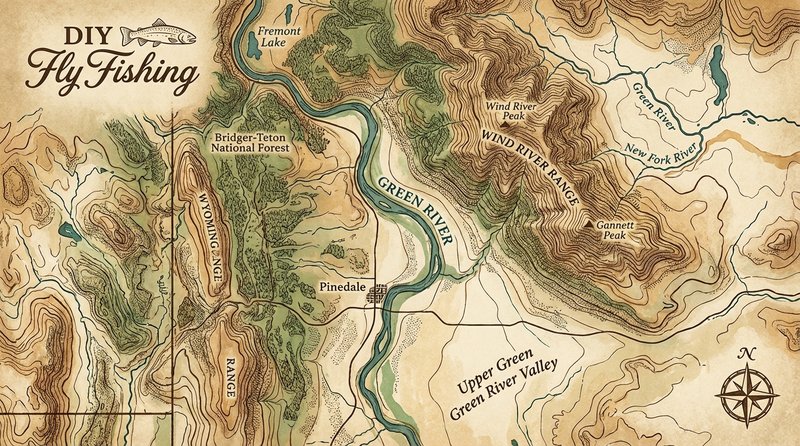
The Green River in Wyoming is a legendary high-desert fishery that offers some of the most scenic and productive trout water in the American West. Flowing from the Wind River Range through the high sagebrush plains, it is a river of contrasts—offering technical dry fly fishing, explosive streamer action, and some of the hardest-fighting brown trout in the state.
🎣 Location Overview
The Wyoming stretch of the Green River is distinct from its famous tailwater neighbor below Flaming Gorge in Utah. In Wyoming, the Green is more of a classic freestone-style river, though its flows are regulated by Fontenelle Dam.
What makes it special is the solitude and the scale. Unlike the crowded rivers of Bozeman or Jackson, the Green offers miles of wide-open water with stunning views of the Wind River Range. The water is generally clear but can take on a classic "green" glacial tint. It features diverse hydraulics—from deep, swirling "bucket" holes and undercut banks to long, glassy flats that require a delicate touch.
🐟 Target Species & Behavior
- Brown Trout: The stars of the show. They are aggressive, territorial, and love structure. Look for them tucked tight against undercut banks or cruising the deep tailouts of pools at dusk.
- Rainbow Trout: Found more often in the faster "riffle-pool-run" water. They are known for their aerial acrobatics and will often hold in the faster water at the head of runs to intercept nymphs.
- Cutthroat Trout (Snake River & Colorado River strains): These are the opportunistic feeders of the river. They are often less "picky" than the browns but are highly prized for their beauty. They tend to hold in slightly slower current seams.
Feeding Behavior: In summer, these fish are "looking up" for terrestrials. In the fall, they transition to a high-protein diet (small fish and large nymphs) to prepare for the spawn and winter.
📅 Best Times to Fish
Summer (Late June – August)
- The Window: Once the spring runoff subsides (usually late June), the river becomes a dry-fly paradise.
- Conditions: Long days and warm weather.
- Time of Day: Early morning for nymphing; midday through evening for terrestrials and hatches.
Fall (September – October)
- The Window: This is "trophy season." The Cottonwoods turn gold, and the big Brown Trout become aggressive as they prepare for the autumn spawn.
- Conditions: Crisp mornings and mild afternoons. Blue Winged Olive (BWO) hatches occur on overcast days.
- Time of Day: 10:00 AM to 4:00 PM is the prime window as water temperatures rise.
🪰 Recommended Flies & Techniques
Dry Flies
- Terrestrials (Summer): PMX (sizes 8-12), Chubby Chernobyls (Gold, Tan, Purple), and Morrish Hoppers.
- Mayflies: Parachute Adams (14-18), Pale Morning Duns (PMDs), and Blue Winged Olives (18-22) for the fall.
- Midges: Griffiths Gnat (18-22) for low-light conditions.
Nymphing
- Attractors: Pat’s Rubber Legs (Tan/Brown) is a staple.
- Droppers: Zebra Midges (Red/Black), Pheasant Tails (14-18), and RS2s.
- Technique: Use a "Hopper-Dropper" rig in the summer to cover two columns of water simultaneously.
Streamers (The Local Favorite)
- Patterns: Sex Dungeon (Olive or Black), Goldie, or Sparkle Minnows.
- Technique: "Pound the banks" from a drift boat. Cast as tight to the shore as possible and use aggressive strips to trigger a reaction strike from large Browns.
💡 Pro Tips & Local Knowledge
- The "Fontenelle to Fearson" Stretch: This is the most popular drift. It offers a great mix of deep holes and riffles. If you want more solitude, head further downstream toward the town of Green River, though the water gets warmer and slower.
- Wind Strategy: Wyoming is famous for wind. If the wind picks up, don't go home—switch to a heavy streamer or a sink-tip line. The chop on the water often makes the fish feel more secure, pushing them out of the deep holes and into feeding lanes.
- The "Caddis Blizzard": In mid-summer, the evening caddis hatches can be intense. Have some Elk Hair Caddis or Spruce Seed patterns ready for the last hour of light.
- The Silt Factor: The Green can get "milky" after a rain because of the high-desert soil. If the visibility is less than 12 inches, use larger, darker flies (Black or Purple) that create a strong silhouette.
⚠️ Important Information
- Access: Much of the river flows through BLM land, but there are significant sections of private property. Use an app like OnX Maps to ensure you are in a legal wading area.
- Drift Boats vs. Wading: While there is good wading access near the bridges and BLM campgrounds, the Green is best experienced via a drift boat or raft to cover the vast distances between public access points.
- Regulations: Wyoming Game & Fish regulations apply. You will need a Wyoming Fishing License and a Conservation Stamp.
- Safety: This is remote country. Cell service is spotty at best. Always carry a spare tire, plenty of water, and bear spray (while less common than in the north, bears do transit these corridors).
Guide’s Final Note: The Green River rewards the persistent angler. It’s not always easy, but when you hook into a 22-inch Wyoming Brown Trout in the middle of the desert, you’ll understand why this river is a bucket-list destination.
Bug Hatches & Matching Flies
| Hatch | Type | Peak months | Time of day | Hook sizes | Matching flies |
|---|---|---|---|---|---|
| Midges Chironomidae | midge | February, March, April | All day | #18-24 | Zebra Midge #18-22, Griffith's Gnat #20-24, Morgan's Midge #20-22 |
| Blue Winged Olive Baetis | mayfly | April, May, September, October | Late Morning/Afternoon | #16-20 | RS2 #18-20, Parachute Adams #16-20, Pheasant Tail Nymph #16-18 |
| Cicada Okanagana hookeri | terrestrial | June, July | All Day | #6-10 | Black Foam Cicada #6-10, Fat Albert #8-10, Mormon Cricket #6-8 |
| Pale Morning Dun Ephemerella dorothea infrequens | mayfly | June, July | Morning/Early Afternoon | #14-18 | PMD Sparkle Dun #16-18, Split Case PMD #16-18, Quigley Cripple #14-16 |
| Spotted Sedge Hydropsyche | caddis | June, July, August | Evening | #14-18 | Elk Hair Caddis #14-16, LaFontaine's Deep Sparkle Pupa #14-18, X-Caddis #16-18 |
| Trico Tricorythodes | mayfly | August, September | Early Morning | #20-24 | Trico Spinner #20-24, Sunken Trico Spinner #20-22 |
| Yellow Sally Isoperla | stonefly | June, July | Afternoon/Evening | #14-16 | Yellow Sally Foam #14-16, Iron Sally #14-16 |
| Grasshoppers Orthoptera | terrestrial | August, September | Late Morning/Afternoon | #8-12 | Morrish Hopper #8-12, Parachute Hopper #10-12, Thunder Thighs Hopper #10-14 |