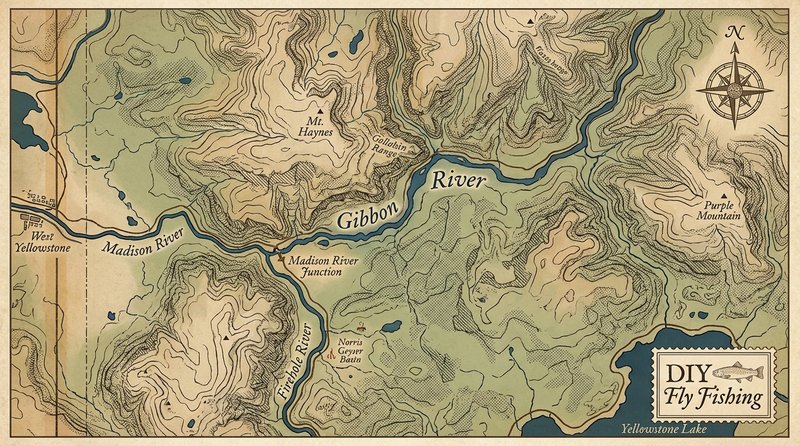
Gibbon River
Fly fishing in Wyoming · Beginner · Best seasons: Summer, Fall
Target Species
Rainbow Trout, Brook Trout
About This Water
Meadow stream in Yellowstone with excellent dry fly fishing. Brook trout in upper sections.
Fishing Recommendations
The Gibbon River is one of the most diverse and captivating fisheries in Yellowstone National Park. Born from the confluence of several small streams in the Grebe Lake area, it flows through alpine meadows, plunges over waterfalls, and winds through geothermal basins before joining the Firehole to form the Madison River. It is a "tale of two rivers"—the upper section is a brook trout paradise, while the lower section is home to larger, migratory rainbows and browns.
🎣 Location Overview
What makes the Gibbon unique is its sheer variety. You can fish a meandering meadow stream in the morning and a rocky, high-gradient canyon in the afternoon.
The river is physically divided by Gibbon Falls.
- Above the Falls: The water is generally cooler and dominated by high-country meadows (Norris and Gibbon Meadows). Here, the water is glassy and slow-moving.
- Below the Falls: The river takes on a classic freestone character with pocket water, riffles, and deep pools as it moves toward the Madison Junction.
Anglers love the Gibbon because it offers a classic "mountain" experience with the added surrealism of fishing past steam-venting fumaroles and through herds of grazing bison.
🐟 Target Species & Behavior
While you requested information on Rainbows and Brookies, it is important to note that Brown Trout are also a major player in the lower reaches.
- Brook Trout: Found primarily in the upper reaches (above Gibbon Falls). These fish are opportunistic but can be spooky in the slow meadow sections. They hold in deep undercut banks and near submerged woody debris.
- Rainbow Trout: Predominantly found below the falls. In the summer, they hold in oxygenated riffles and pocket water. In the fall, larger rainbows often move up from the Madison River to spawn (note: fishing for spawning fish is discouraged; target the deep runs behind them).
- Behavior: Due to the geothermal influence (especially around the Norris Geyser Basin), the water can get quite warm. Fish here are very active in early summer but can become lethargic or seek thermal refuge in late July/August.
📅 Best Times to Fish
Optimal Seasons
- Summer (Late June – August): This is prime time for the upper meadows. The "Green Drake" hatch in late June/early July is legendary.
- Fall (September – October): The lower river becomes the star. As water temperatures drop, big migratory Browns and Rainbows move up from the Madison. This is arguably the best time for a trophy fish.
Best Times of Day
- Summer: Early morning and late evening are critical to avoid the midday heat, especially in the geothermal-influenced stretches.
- Fall: Mid-morning to late afternoon. As the air cools, the "banker's hours" (10 AM – 4 PM) provide the best bug activity.
Prime Windows
Watch for the Caddis hatches in July evenings and the Baetis (BWO) hatches on overcast days in late September.
🪰 Recommended Flies & Techniques
Top Fly Patterns
- Dries:
- Meadows: Parachute Adams (#16-20), Royal Wulff (#14-16), and Ants/Beetles in late summer.
- Hatches: Green Drake (#10-12), Elk Hair Caddis (Tan/Olive #14-18).
- Nymphs:
- Pheasant Tail (#16-20), Zebra Midge (#18-22), and Rubber Legs Stoneflies (#8-12) for the canyon stretches.
- Streamers:
- Woolly Buggers (Black or Olive) and Sparkle Minnows. Essential for the lower river in the fall.
Effective Techniques
- The "Dry-Dropper": Ideal for the lower canyon. Use a buoyant Chubby Chernobyl or Hopper with a small bead-head nymph 18 inches below.
- Stealthy Wading: In the upper meadows (Norris/Gibbon Meadows), the water is like a mirror. Stay low, wear drab clothing, and cast from well back to avoid lining the fish.
- Swing the Streamer: In the lower river during autumn, use a down-and-across swing to entice aggressive migratory fish.
💡 Pro Tips & Local Knowledge
- Check the Temperature: This is the most professional advice for the Gibbon. If the water hits 68°F (20°C), stop fishing. The geothermal heat can push the river into the "danger zone" for trout survival. Focus on the upper, cooler sections during heatwaves.
- The "Secret" Pocket Water: Most people fish the easy-access spots near the road. If you hike a half-mile into the canyon sections below the falls, you’ll find aggressive fish that rarely see a fly.
- Bison Awareness: The Gibbon meadows are prime bison territory. They have the right of way. If a herd is on the bank, move to a different section. Never get between a bison and the water.
⚠️ Important Information
Access
The Gibbon is highly accessible via the Grand Loop Road. There are numerous pullouts between Norris Junction and Madison Junction.
Regulations & Permits
- Yellowstone National Park Fishing Permit: You must have a specific YNP permit. A Wyoming state license is not valid inside the park.
- Barbless Hooks Only: All hooks must be barbless or have barbs pinched down.
- Lead-Free: No lead split shot or lead-weighted flies are allowed.
- No Felt Soles: To prevent the spread of invasive species, felt-soled wading boots are banned in the park.
Safety
- Bear Spray: You are in Grizzly country. Always carry bear spray on your person (not in your pack) and know how to use it.
- Thermal Features: Stay on stable ground. The banks in geothermal areas can be "hollow" or brittle; breaking through into boiling water is a real danger. Use established paths.
Bug Hatches & Matching Flies
| Hatch | Type | Peak months | Time of day | Hook sizes | Matching flies |
|---|---|---|---|---|---|
| Blue Winged Olive Baetis | mayfly | April, May, September, October | Midday | #18-22 | BWO Sparkle Dun #18-20, RS2 #20-22, Pheasant Tail Nymph #18-20 |
| Pale Morning Dun Ephemerella excrucians | mayfly | June, July | Late Morning/Afternoon | #16-18 | PMD Parachute #16-18, Quigley's PMD Hackle Stacker #16-18, Split Case PMD #16-18 |
| Gray Drake Siphlonurus | mayfly | June | Evening | #10-12 | Gray Drake Paradox #10-12, Hare's Ear Nymph #10-12 |
| Salmonfly Pteronarcys californica | stonefly | June, July | All Day | #4-8 | Sofa Pillow #6-8, Pat's Rubber Legs #4-8, Rogue River Stone #6 |
| White Miller Caddis Nectopsyche | caddis | July, August | Late Afternoon/Evening | #14-16 | White Miller CDC #14-16, LaFontaine's Sparkle Pupa #14-16 |
| Golden Stonefly Hesperoperla pacifica | stonefly | June, July | Morning/Afternoon | #8-12 | Goldie Chornobyl #8-10, Golden 20-Incher #10-12 |
| Spotted Sedge Hydropsyche | caddis | July, August | Evening | #14-18 | Elk Hair Caddis (Tan) #14-16, Peacock Caddis #16-18 |
| Midges Chironomidae | midge | March, April, October, November | Morning/Midday | #20-24 | Zebra Midge #20-22, Griffith's Gnat #20-24, Morgan's Midge #22 |
| Grasshoppers | terrestrial | August, September | Late Morning/Afternoon | #8-12 | Parachute Hopper #10-12, Morrish Hopper #8-12 |
| Black Ants Formicidae | terrestrial | July, August | All Day | #14-18 | Cinnamon Ant #16-18, Black Foam Ant #14-18 |