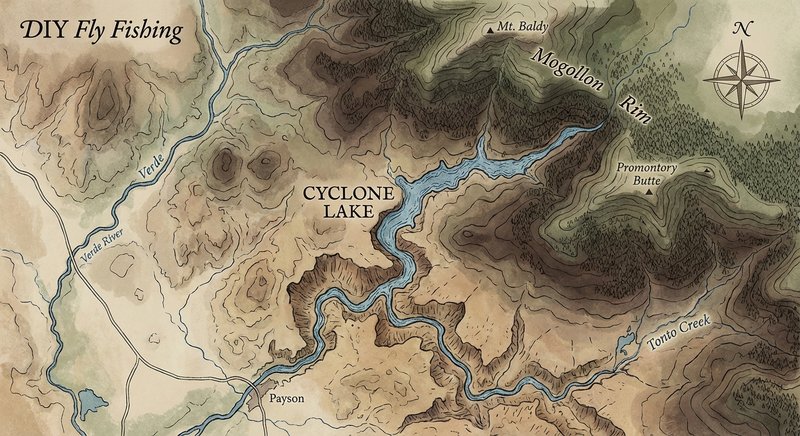
Cyclone Lake
Fly fishing in Arizona · advanced · Best seasons: summer
Target Species
Apache Trout, Brook Trout
About This Water
High elevation lake with Apache trout. Remote wilderness setting.
Fishing Recommendations
Welcome to one of the crown jewels of the Southwest. Cyclone Lake is a high-altitude alpine gem located on the Fort Apache Indian Reservation in the White Mountains of Arizona. At an elevation of approximately 9,200 feet, this is a "bucket list" destination for anglers looking to catch the rare, native Apache Trout in a pristine, wilderness setting.
Here is your comprehensive guide to fishing Cyclone Lake.
🎣 Location Overview
Cyclone Lake is a relatively small, shallow alpine lake tucked into the dense timber and rolling meadows of the White Mountains. What makes it special is its exclusivity and its role as a sanctuary for the Apache Trout, Arizona’s state fish.
The water is remarkably clear and stays cold year-round due to the elevation. Unlike the larger, more pressured reservoirs nearby, Cyclone offers a sense of solitude. It is managed by the White Mountain Apache Tribe (WMAT) Game and Fish, ensuring that the environment remains rugged and the fish populations stay healthy. The lake is surrounded by sub-alpine fir and spruce trees, providing a classic "mountain lake" aesthetic that feels more like the Rockies than the desert Southwest.
🐟 Target Species & Behavior
Apache Trout
The star of the show. These fish are beautiful, characterized by their golden hues and bold black spots.
- Behavior: In Cyclone, they are opportunistic but can be very "spooky" due to the water’s clarity. They often patrol the edges of the weed beds where the drop-off begins.
- Feeding: They are highly keyed into the lake's rich invertebrate life—specifically scuds (freshwater shrimp), damselfly nymphs, and midges.
Brook Trout
Known for their vibrant colors and aggressive strikes.
- Behavior: Brookies in Cyclone tend to congregate near any submerged structure or the cooler inlets if there is snowmelt runoff. They are often more aggressive than the Apache Trout and will strike smaller streamers or flashy nymphs with vigor.
📅 Best Times to Fish
Optimal Seasons
- Summer (June – August): This is the prime window. Because of the high elevation, the "spring" thaw doesn't hit until late May. By July, the insect life is in full swing.
- Late Summer/Early Fall: September is excellent as the Brook Trout begin to color up for spawning and the Apache Trout feed heavily before the high-country winter sets in.
Best Times of Day
- Early Morning (Sunrise to 10:00 AM): The water is usually glass-calm. This is the best time for dry fly action and midge hatches.
- Evening (6:00 PM to Dusk): The "Evening Rise" on Cyclone can be spectacular as caddis and mayflies dance on the surface.
Prime Conditions
Overcast days are a gift here. The clouds cut the glare on the clear water, making the fish less cautious and more likely to cruise the shallows.
🪰 Recommended Flies & Techniques
Top Fly Patterns
- Nymphs/Sub-surface:
- Scuds (Sizes 14-18): Pink, orange, or olive. This is the primary food source in these high lakes.
- Damselfly Nymphs (Sizes 10-14): Olive, slender bodies.
- Zebra Midges (Sizes 18-22): Red or black with a silver bead.
- Hare’s Ear or Pheasant Tail: Standard prospecting nymphs.
- Dry Flies:
- Parachute Adams (Sizes 16-20): The gold standard for matching small mayfly hatches.
- Elk Hair Caddis (Sizes 14-16): Great for evening fishing.
- Terrestrials: Foam Beetles, Ants, and small Hopper patterns (July/August).
- Streamers:
- Woolly Buggers (Sizes 8-12): Olive or black. Fish these slowly near the bottom.
Techniques & Presentation
- The "Stillwater Strip": Use an intermediate sinking line or a long leader with a weighted nymph. Use very slow, rhythmic 2-inch strips to mimic a scud or damselfly crawling through the weeds.
- Dry-Dropper: A favorite for Cyclone. Hang a small Zebra Midge or Scud 18–24 inches below a buoyant foam beetle or Parachute Adams. This covers two zones simultaneously.
- Stealth is Key: Because the water is clear, long leaders (9-12 feet) and light tippet (5X or 6X) are often necessary to avoid spooking fish.
💡 Pro Tips & Local Knowledge
- Work the Weed Edges: The fish rarely sit in the middle of the lake. They cruise the "edge" where the shoreline weeds meet the deeper, darker water. Focus your casts parallel to these edges.
- Float Tubes are King: While you can fish from the bank, a float tube or kick boat allows you to stay off the bank (where you might spook fish) and cast back toward the shore.
- The "Wind Drift": If a light breeze picks up, let the wind drift your flies across the lake. The natural movement often triggers a strike from an Apache Trout that has been eyeing your fly.
- Be Prepared for Weather: At 9,000 feet, a sunny afternoon can turn into a hail storm in 15 minutes. Always pack a high-quality rain jacket and layers.
⚠️ Important Information
Access & Tribal Permits
- Tribal Lands: Cyclone Lake is on the White Mountain Apache Reservation. Arizona State fishing licenses are NOT valid here. You must purchase a specific WMAT Fishing Permit.
- Permits: You can buy permits online (wmatoutdoor.org) or at local vendors in Pinetop, Lakeside, or Hon-Dah.
- Road Conditions: Access roads can be rugged. A high-clearance vehicle is strongly recommended, especially after summer monsoon rains which can turn forest roads into thick mud.
Regulations
- Special Rules: Always check the current WMAT proclamations. Some lakes on the reservation have specific bag limits or are catch-and-release only for Apache Trout to protect the species.
- Leave No Trace: This is a sacred area for the White Mountain Apache people. Please pack out all trash and respect the land.
Special Considerations
- Altitude: If you are coming from sea level, give yourself a day to acclimate in Pinetop/Lakeside before hiking or exerting yourself at Cyclone Lake to avoid altitude sickness.
- Wildlife: This is prime Black Bear and Mexican Gray Wolf country. Keep a clean camp and stay aware of your surroundings.
Tight lines, and enjoy the pursuit of the golden Apache Trout!
Bug Hatches & Matching Flies
| Hatch | Type | Peak months | Time of day | Hook sizes | Matching flies |
|---|---|---|---|---|---|
| Chironomids (Midges) Chironomidae | midge | May, June, September | All Day | #12-22 | Ice Cream Cone #12-18, Zebra Midge #16-20, Griffith's Gnat #18-22 |
| Speckled Duns (Callibaetis) Callibaetis | mayfly | June, July, August | Late Morning/Afternoon | #12-16 | Callibaetis Spinner #14-16, Hare's Ear Nymph #12-16, Parachute Adams #14-18 |
| Damselflies Enallagma | terrestrial | June, July | Morning/Afternoon | #10-14 | Marabou Damsel Nymph #10-14, Adult Damsel #12-14 |
| Traveling Sedge (Caddis) Hesperophylax | caddis | July, August | Evening | #10-14 | Elk Hair Caddis #10-14, Goddard Caddis #10-12, Peacock Caddis #14-16 |
| Scuds (Freshwater Shrimp) Gammarus | terrestrial | April, May, October | All Day | #12-18 | Ray Charles #14-16, Orange Scud #12-18, Olive Scud #14-18 |
| Water Boatmen Corixidae | terrestrial | September, October | Afternoon | #14-18 | Water Boatman #14-16, Prince Nymph #14-18 |
| Terrestrial Ants and Beetles Formicidae / Coleoptera | terrestrial | July, August | Afternoon | #12-18 | Black Foam Ant #14-18, Peach’s Beetle #12-16 |
| Dragonflies Anisoptera | terrestrial | July, August | All Day | #4-10 | Dragonfly Nymph #6-10, Woolly Bugger (Olive) #6-12 |