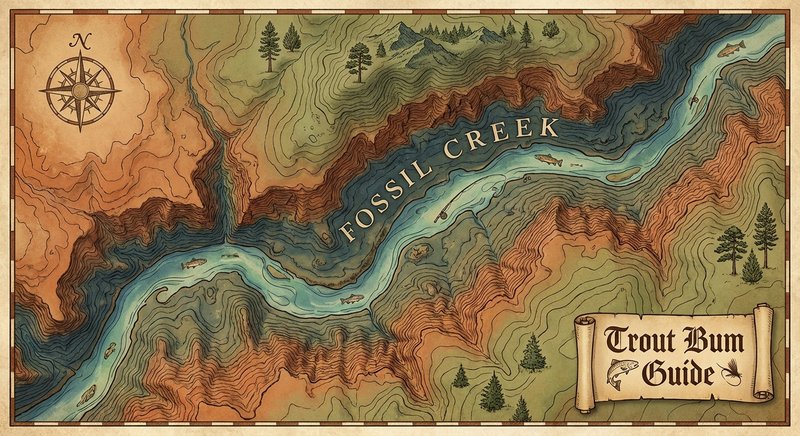
Fossil Creek
Fly fishing in Arizona · intermediate · Best seasons: spring, fall, winter
Target Species
Rainbow Trout, Brown Trout
About This Water
Unique travertine stream with wild trout. Permit system protects this special fishery.
Fishing Recommendations
Fossil Creek is one of Arizona’s most unique and visually stunning fisheries. Located in the high desert between Camp Verde and Strawberry, this "Wild and Scenic River" is fed by a series of springs that gush from the earth at a constant 70 degrees Fahrenheit, discharging roughly 43 million gallons a day. The high mineral content, specifically calcium carbonate, creates incredible travertine formations and gives the water a breathtaking turquoise-blue hue reminiscent of the Caribbean.
For the fly angler, Fossil Creek offers a technical but rewarding experience in a lush, riparian oasis surrounded by arid desert canyon walls.
🎣 Location Overview
Fossil Creek is a gem of the Southwest. After the decommissioning of the Irving Power Plant and the Childs-Irving hydroelectric facilities in 2005, full flows were restored to the creek, and a massive restoration project removed non-native species. Today, it serves as a sanctuary for native fish and a thriving habitat for trout.
The water is characterized by deep, sapphire-blue pools, limestone ledges, and rapid-fire riffles. Because the water is spring-fed, the temperature remains remarkably stable year-round, which keeps the fish active even when other Arizona high-country streams are frozen or too warm. However, the clarity of the water is legendary; the fish can see you long before you see them, making this a "stealth-first" fishery.
🐟 Target Species & Behavior
While Fossil Creek is a recovery area for native Gila Trout, the primary targets for most anglers in the designated reaches are Rainbow Trout and Brown Trout.
- Rainbow Trout: Found primarily in the swifter runs and at the heads of the deep travertine pools. They are opportunistic but wary.
- Brown Trout: These are the "ghosts" of the creek. They tend to hold deep under limestone undercuts or in the shadows of the large boulders. They are more active during low-light conditions and can grow surprisingly large for a desert stream.
- Feeding Behavior: Because the water is mineral-rich, there is a massive biomass of caddisflies, mayflies, and small crustaceans (scuds). The fish are rarely "blind" feeders; they are highly selective and respond best to precise presentations.
📅 Best Times to Fish
- Optimal Seasons:
- Fall (October – November): This is the "Golden Era" on Fossil Creek. The summer crowds have vanished, the sycamores turn bright orange, and the Brown Trout become aggressive as they prepare to spawn.
- Spring (March – May): Excellent insect activity. Be mindful of potential runoff if there is heavy snowmelt from the Rim, though the springs usually keep the water clear.
- Winter (December – February): Unlike the White Mountains, Fossil Creek stays fishable all winter due to the 70-degree spring water. It is a peaceful, solitude-filled time to fish.
- Best Time of Day: Early morning and late evening are critical. During the middle of the day, the high desert sun penetrates the clear water, sending the larger trout into deep cover.
- Prime Windows: Overcast days are rare but are "trophy days" on Fossil Creek, as the lack of shadows emboldens the larger Browns to leave their undercut banks.
🪰 Recommended Flies & Techniques
Top Fly Patterns
- Nymphs:
- Bead-head Pheasant Tail (#16-20): A staple for mimicking the small mayflies.
- Zebra Midge (#18-22) in black/silver or red: Essential for the slow, deep pools.
- Olive or Orange Scuds (#16-18): The travertine carries a lot of crustacean life.
- Dry Flies:
- Parachute Adams (#16-20): The best general prospecting fly.
- Elk Hair Caddis (#14-18): Great for the riffles and pocket water.
- Stimulators (#12-14) in orange or yellow: Effective in late spring and summer during stonefly or hopper season.
- Streamers:
- Woolly Buggers (#10-12) in Olive or Thin Mint: Best fished on a sink-tip in the deepest turquoise pools for big Browns.
Techniques & Presentation
- The "Stealth" Approach: Wear drab clothing (camo, olive, or tan). Kneel when approaching a pool. If you can see the fish clearly, they have likely already spotted your silhouette.
- Long Leaders: Use 9-foot to 12-foot leaders tapered to 5X or 6X fluorocarbon tippet. The water is too clear for heavy gear.
- Nymphing: Use a "High-Stick" method in the riffles. In the still pools, use a very small, sensitive strike indicator (like a New Zealand wool indicator) to detect the subtle takes of Trout hovering in the water column.
💡 Pro Tips & Local Knowledge
- Focus on the "Flats": The shallow, glassy water just above a waterfall or drop-off often holds the most active feeders. Approach these areas from downstream and cast far ahead.
- The Shadow Factor: Look for where the canyon walls or large trees cast shadows on the water. Even at noon, trout will congregate in these "micro-shades."
- Walk Further: Most recreational hikers and casual anglers stay near the parking lots or the "Waterfall." If you hike 2+ miles in either direction from the Irving site, the fishing pressure drops significantly and the fish become much less "educated."
- Travertine Slipperyness: The rocks in Fossil Creek are coated in calcium deposits and are incredibly slick. Studded wading boots or felt are highly recommended. Do not attempt to wade this creek in sandals or standard sneakers.
⚠️ Important Information
- Permit System: CRITICAL. From April 1 to October 1, a parking reservation is required to access Fossil Creek. These must be reserved in advance via Recreation.gov. They sell out weeks in advance. During the winter (Oct 2 - March 31), no permit is required.
- Access: Access is via Fossil Creek Road (FR 708). Note that the road from Strawberry (the "back way") is often closed to vehicles due to rockslides; most visitors must enter through Camp Verde.
- Regulations:
- Fossil Creek is Catch and Release Only for all fish from the waterfall to the confluence with the Verde River.
- Artificial Lures and Flies Only. Barbless hooks are strongly encouraged to protect the delicate fishery.
- Safety: This is a remote desert canyon. There is no cell service. Bring more water than you think you need, and be wary of flash flood warnings during the July-August monsoon season.
Bug Hatches & Matching Flies
| Hatch | Type | Peak months | Time of day | Hook sizes | Matching flies |
|---|---|---|---|---|---|
| Blue Winged Olive (BWO) Baetis | mayfly | February, March, October, November | Late Morning/Afternoon | #18-22 | Parachute Adams #18-22, RS2 #20-22, Pheasant Tail #18-20 |
| Spotted Sedge Hydropsyche | caddis | April, May, June, September | Evening | #14-18 | Elk Hair Caddis #14-16, Hare's Ear Nymph #14-18, LaFontaine's Deep Sparkle Pupa #16 |
| Trico Tricorythodes | mayfly | July, August, September | Early Morning | #20-24 | Trico Spinner #22-24, Trico Dun #20-22 |
| Zebra Midge Chironomidae | midge | December, January, February | All Day | #20-26 | Zebra Midge #18-24, Griffith's Gnat #20-22, Mercury Midge #20-22 |
| Damselfly Enallagma | terrestrial | June, July, August | Afternoon | #10-14 | Marabou Damsel #12-14, Blue Damsel Dry #12-14 |
| Terrestrial Ants Formicidae | terrestrial | June, July, August, September | All Day | #16-20 | Cinnamon Ant #16-18, Black Foam Ant #16-20 |
| Grasshoppers Acrididae | terrestrial | August, September | Afternoon | #8-12 | Dave's Hopper #10-12, Joe's Hopper #8-12 |
| Pale Morning Dun (PMD) Ephemerella excrucians | mayfly | May, June | Morning | #16-18 | PMD Sparkle Dun #16-18, Split Case PMD #16-18 |
| Micro Caddis Leucotrichia | caddis | July, August | Evening | #20-24 | Micro Caddis Pupa #22-24, CDC Caddis #22 |