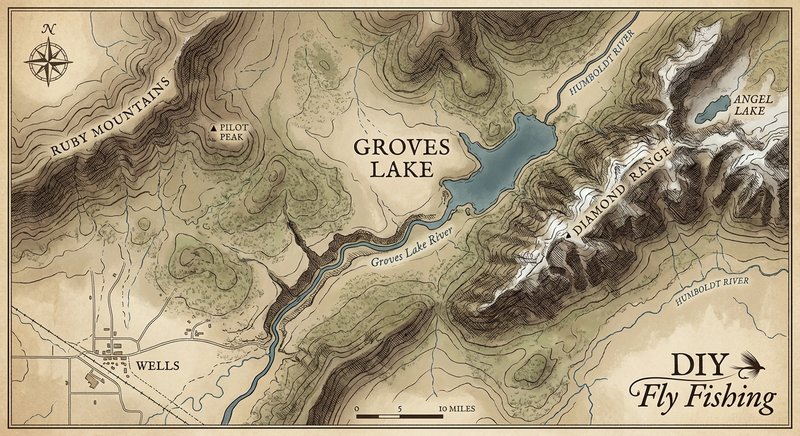
Groves Lake
Fly fishing in Nevada · intermediate · Best seasons: summer, fall
Target Species
Rainbow Trout, Brook Trout
About This Water
White Pine County lake with stocked trout. High elevation mountain lake.
Fishing Recommendations
Groves Lake is a hidden gem tucked away in the rugged Toiyabe Range of central Nevada. Located at an elevation of approximately 8,000 feet within Kingston Canyon, this 16-acre alpine reservoir offers fly anglers a quintessential high-desert mountain experience.
Here is your comprehensive guide to fly fishing Groves Lake, Nevada.
🎣 Location Overview
Groves Lake is a small, scenic impoundment that serves as a sanctuary from the Nevada heat. It is fed by Kingston Creek and is surrounded by steep canyon walls, mahogany brush, and quaking aspens.
What makes it special is its remoteness and tranquility. Unlike the crowded waters near Reno or Vegas, Groves Lake offers solitude. The water is generally clear, though it can develop some weed growth in the late summer. It is a "hike-in or drive-to" destination depending on road conditions, providing a classic "stillwater" challenge where stealth and observation are rewarded.
🐟 Target Species & Behavior
The lake is primarily managed for trout and is regularly stocked by the Nevada Department of Wildlife (NDOW), though "wild" characteristics develop quickly in this environment.
- Rainbow Trout: These are the most active feeders. They patrol the shorelines in the morning and evening, looking for midge hatches or terrestrial insects blown off the canyon walls. They tend to cruise the "drop-offs" where the shallow shelf meets deeper water.
- Brook Trout: Known for their stunning colors, the Brookies in Groves Lake tend to stay closer to the inlet where Kingston Creek enters the lake and near submerged structure or colder spring seeps. They are aggressive hitters but can be spooked easily in the clear water.
- Feeding Habits: In the summer, they focus heavily on Callibaetis mayflies, midges, and damselflies. In the fall, they shift their attention to terrestrials (ants/beetles) and putting on weight for winter by chasing small baitfish or leeches.
📅 Best Times to Fish
Seasons
- Summer (Late June – August): This is prime time. The high elevation keeps the water cool while the valley floor swelters. Morning and evening rises are consistent.
- Fall (September – October): My personal favorite time. The Brook Trout begin to show their spawning colors and become very aggressive. The air is crisp, the aspens turn gold, and the trout are feeding heavily before the lake freezes over.
Time of Day
- First Light: The water is usually glass-calm. This is the best time for dry fly sight-casting to cruising fish.
- Dusk: The "evening rise" at Groves can be spectacular as midges and caddis come off the water.
- Mid-Day: If there is a breeze (common in Nevada canyons), focus on the "windward" shore where insects are being pushed.
🪰 Recommended Flies & Techniques
Top Fly Patterns
- Dry Flies:
- Parachute Adams (Size 16-20) - The ultimate generalist for this water.
- Elk Hair Caddis (Size 14-16) - Great for the evening flutter.
- Chernobyl Ant or Foam Beetle (Size 12-14) - Vital in late summer when the wind blows land insects into the water.
- Nymphs:
- Zebra Midge (Black or Red, Size 18-22) - Effective year-round under a small indicator.
- Hare's Ear or Pheasant Tail (Size 14-16) - Classic "searching" patterns.
- Streamers/Leeches:
- Woolly Bugger (Olive or Black, Size 10-12) - Retrieve slowly along the dam face or near the inlet.
- Balanced Leech - Exceptional when hung 4–6 feet under an indicator.
Techniques
- The "Hanging" Nymph: Use a long leader (9–12 feet) with a tiny Zebra Midge or scud pattern. Suspend it under a yarn indicator and let the natural wave action do the work.
- Sight Casting: Because the water is clear, move slowly along the bank. Look for the "shadow" of a cruising trout, lead the fish by 3 feet with a dry fly, and wait.
- Slow Stripping: Use an intermediate sinking line with an Olive Woolly Bugger. Use short, erratic strips to mimic a fleeing damselfly nymph.
💡 Pro Tips & Local Knowledge
- Focus on the Inlet: Where Kingston Creek enters the lake is the "oxygen station." This area holds the highest concentration of fish, especially Brookies, during the warmer summer months.
- The "Wind Drift": Don't be afraid of a little wind. The "chop" on the water hides your silhouette and pushes insects to one side of the lake. Fish the shore that the wind is blowing into.
- The Dam Face: The deepest water is usually near the dam. If the sun is high and the fish aren't rising, go deep with a sink-tip line.
- Stealth is Key: Because the lake is small, heavy footsteps on the bank send vibrations into the water. Wear earth-toned clothing and keep a low profile.
⚠️ Important Information
Access
- Groves Lake is reached via Kingston Canyon Road (off Hwy 376 south of Austin, NV).
- The road is gravel/dirt. While usually passable by passenger cars in mid-summer, a high-clearance vehicle is recommended, especially after rain or early in the season.
- There is a small campground nearby (Groves Lake Campground) which makes for a perfect "base camp."
Regulations & Permits
- A valid Nevada Fishing License is required for all anglers 12 years and older.
- Check the current NDOW Fishing Seasons and Limits before heading out, as bag limits can change.
- Practice Catch and Release whenever possible to preserve this fragile high-altitude fishery.
Special Considerations
- Weather: Mountain weather changes instantly. Always carry a rain shell and be prepared for lightning—get off the water if a storm rolls over the ridge.
- Wildlife: This is mountain lion and black bear country. Keep a clean camp and stay aware of your surroundings.
- Supplies: Austin is the nearest town, but it is very small. Gas up and grab your groceries in Fallon, Fallon, or Eureka before heading into the canyon.
Bug Hatches & Matching Flies
| Hatch | Type | Peak months | Time of day | Hook sizes | Matching flies |
|---|---|---|---|---|---|
| Callibaetis (Speckled Duns) Callibaetis spp. | mayfly | June, July, August | Morning/Early Afternoon | #14-16 | Parachute Adams #14-16, Callibaetis Spinner #16, Hare's Ear Nymph #14-16 |
| Chironomids (Midges) Chironomidae | midge | May, June, September | All Day | #12-22 | Zebra Midge #16-20, Ice Cream Cone #12-16, Griffith's Gnat #18-22 |
| Blue-Winged Olive Baetis spp. | mayfly | April, May, September, October | Mid-day/Afternoon | #16-20 | BWO Sparkle Dun #18-20, Pheasant Tail Nymph #18-20 |
| Damselfly Enallagma spp. | terrestrial | June, July | Late Morning/Afternoon | #10-14 | Marabou Damsel Nymph #12-14, Adult Damsel #12 |
| Cinnamon Caddis Hesperophylax spp. | caddis | July, August | Evening | #12-16 | Elk Hair Caddis (Amber/Orange) #12-14, LaFontaine's Emerger #14-16 |
| Black Carpenter Ant Camponotus spp. | terrestrial | July, August, September | Afternoon | #12-16 | Black Foam Ant #14-16, Chernobyl Ant #12 |
| Grasshoppers Acrididae | terrestrial | August, September | Late Morning/Afternoon | #8-12 | Hopper Juan #10-12, Dave's Hopper #8-12 |
| Spotted Sedge Hydropsyche spp. | caddis | June, July | Evening | #14-18 | Goddard Caddis #14-16, Soft Hackle Hare's Ear #16 |