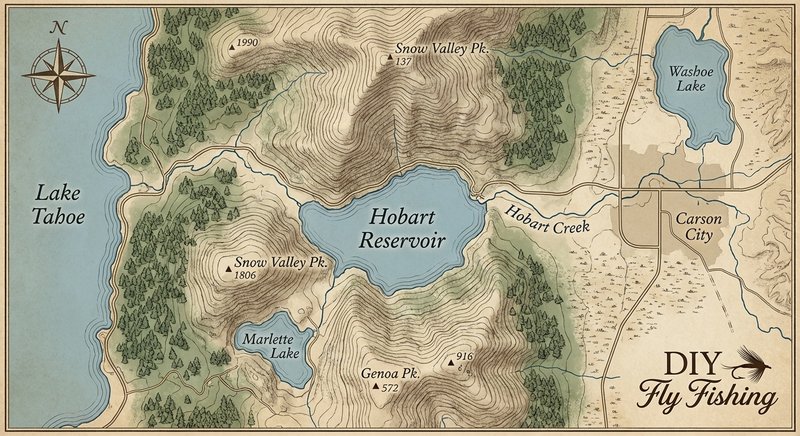
Hobart Reservoir
Fly fishing in Nevada · intermediate · Best seasons: spring, summer, fall
Target Species
Rainbow Trout, Brown Trout
About This Water
Carson Range reservoir with wild trout. Scenic mountain setting near Tahoe.
Fishing Recommendations
Welcome to one of Nevada’s true high-country gems. As an expert guide, I can tell you that Hobart Reservoir is a "destination for the dedicated." Nestled at approximately 7,600 feet in the Carson Range between Lake Tahoe and Carson City, this is not a roadside fishery. It requires effort to reach, but the reward is a pristine alpine experience with eager, wild-tempered fish.
While Hobart is historically famous for its Lahontan Cutthroat Trout and Brook Trout, it does hold Rainbows and occasional Browns. Here is your comprehensive guide to fly fishing Hobart Reservoir.
🎣 Location Overview
Hobart Reservoir is a small, 15-acre alpine lake located within the Lake Tahoe Nevada State Park. It is a high-altitude "hike-in" or "bike-in" fishery, which keeps the crowds thin and the environment serene.
What makes Hobart special is its aquatic biomass. Despite its elevation, the reservoir is rich with weed beds and insect life. The water is generally crystal clear, allowing for exciting sight-fishing opportunities. Anglers love it because it offers a "backcountry" feel within a relatively short distance of Reno and Carson City—provided you have the lungs for the climb.
🐟 Target Species & Behavior
While the reservoir is primarily managed for Lahontan Cutthroat Trout (LCT), Rainbows and Browns are part of the ecosystem.
- Rainbow Trout: These fish are active throughout the water column. They are known for patrolling the weed edges and the deeper channel near the dam. They are less "structure-oriented" than Browns and will often cruise the middle of the lake during hatches.
- Brown Trout: The "ghosts" of Hobart. They tend to hold tight to submerged logs, overhanging brush, and the rocky areas near the dam. They are most active during low-light conditions (dawn/dusk).
- Behavior: In this high-altitude environment, fish have a short growing season. They are opportunistic feeders. They focus heavily on midges, Callibaetis, and damselflies. Because the water is clear, they can be "spooky"—fine tippets (5x or 6x) and stealthy approaches are mandatory.
📅 Best Times to Fish
The fishing window at Hobart is dictated by snowpack and Nevada Department of Wildlife (NDOW) regulations.
- Optimal Seasons:
- Spring (Post-Ice Out): Usually late June to early July. This is prime time. The fish are hungry after a long winter and congregate near the inlets and shallows.
- Summer: July and August. Great for dry fly action, though the midday sun can push fish deeper into the weed beds.
- Fall: September through October 31st. This is when the Brookies spawn and the Browns get aggressive. The cooling water brings big fish back to the shallows.
- Best Times of Day:
- First Light: The water is usually "glassy," perfect for spotting cruising fish.
- Late Afternoon/Evening: The "Magic Hour" at Hobart often features a massive midge or caddis hatch as the sun dips behind the Carson Range.
🪰 Recommended Flies & Techniques
Top Fly Patterns
- Dry Flies: Parachute Adams (#14-18), Callibaetis Cripples (#16), Griffith’s Gnat (#18-22), and Foam Ants or Beetles in late summer.
- Nymphs: Zebra Midges (Black or Red, #18-22), Pheasant Tail Nymphs (#16-18), and Juju Baetis.
- Streamers: Olive or Black Woolly Buggers (#10-12) and Marabou Leech patterns.
Effective Techniques
- The "Hanging" Midge: Use a long leader (12ft+) with a tiny Zebra Midge 2–4 feet under a small indicator or a high-visibility dry fly. Let it sit perfectly still near weed edges.
- The Strip & Pause: Fish a Woolly Bugger or Leech on an intermediate sinking line. Strip slowly with long pauses to mimic a damselfly nymph or a small baitfish.
- Sight Casting: On calm days, walk the bank slowly. Look for "rings" or the dark shapes of cruising fish. Cast 5 feet in front of their path and wait.
💡 Pro Tips & Local Knowledge
- Bring a Float Tube: This is my #1 tip. While you can fish from the bank or the dam, the best fish hold on the far side near the timber and the heavy weed mats. Carrying a lightweight backpacking tube (like a Cumberland or a Packraft) is a game-changer.
- The "Inlet" Secret: There is a small creek that feeds the reservoir. In the early season, fish stack up here to feed on washed-in nutrients.
- Wind Management: The wind usually kicks up around 2:00 PM. If you are bank fishing, try to have the wind at your back to help with casting, or fish the "windward" shore where insects get pushed against the bank.
- Tippet Stealth: Use Fluorocarbon tippet. The water is extremely clear, and these fish see a lot of artificial flies. 5X is the standard, but go to 6X if the bite is tough.
⚠️ Important Information
Access Information
Hobart is remote. There are two primary ways to get there:
- Ash Canyon (Carson City): A very steep, 4WD-only road that requires high clearance. Even with a 4WD, many people choose to mountain bike or hike the last few miles.
- Spooner Lake (State Park): A long hike or bike ride (approx. 6+ miles one way) via North Canyon Road. It is a beautiful trek but requires physical fitness.
Regulations and Permits
- Season: Typically open from June 1 through October 31.
- Limits: Catch and Release Only.
- Gear: Artificial lures and flies only. You must use barbless hooks.
- License: A valid Nevada Fishing License is required.
Special Considerations
- Bear Country: This is active Black Bear territory. Keep your food secured if you are camping at the nearby Hobart walk-in camp.
- Weather: High-altitude weather changes in minutes. Always pack a waterproof shell, even if the forecast calls for sun.
- Leave No Trace: This is a fragile ecosystem. Please pack out everything you pack in.
Guide’s Final Word: Hobart Reservoir isn't about catching 50 fish a day; it’s about the quality of the experience, the beauty of the Lahontan Cutthroats, and the silence of the high Sierra. Treat the fish with care, use a net, and enjoy the thin air!
Bug Hatches & Matching Flies
| Hatch | Type | Peak months | Time of day | Hook sizes | Matching flies |
|---|---|---|---|---|---|
| Chironomids Chironomidae | midge | May, June, September | All Day | #16-22 | Zebra Midge #18-20, Ice Cream Cone #16-18, Griffith's Gnat #18-22 |
| Speckled Duns Callibaetis | mayfly | June, July, August | Late Morning/Afternoon | #12-16 | Adams High Vis #14-16, Callibaetis Spinner #14-16, Hare's Ear Nymph #12-16 |
| Damselfly Enallagma | terrestrial | June, July | Late Morning/Afternoon | #10-12 | Marabou Damsel #10-12, Adult Damsel #12, Sheep Creek Special #10-12 |
| Cinnamon Sedge Hesperophylax | caddis | July, August | Evening | #12-16 | Elk Hair Caddis #14-16, Godzilla Caddis #12-14, LaFontaine's Deep Sparkle Pupa #14-16 |
| Carpenter Ants Camponotus | terrestrial | August, September | Afternoon | #12-16 | Black Foam Ant #12-16, Carpenter Ant #10-14 |
| Scuds Gammarus | terrestrial | May, June, September | All Day | #14-18 | Ray Charles #14-16, UV Scud #16-18 |
| Water Boatmen Corixidae | terrestrial | September, October | Afternoon | #12-14 | Water Boatman #14, Prince Nymph #12-14 |
| Darner Dragonflies Aeshnidae | terrestrial | July, August | Morning/Afternoon | #4-8 | Dragon Slayer #6-8, Woolly Bugger (Olive) #6-10 |