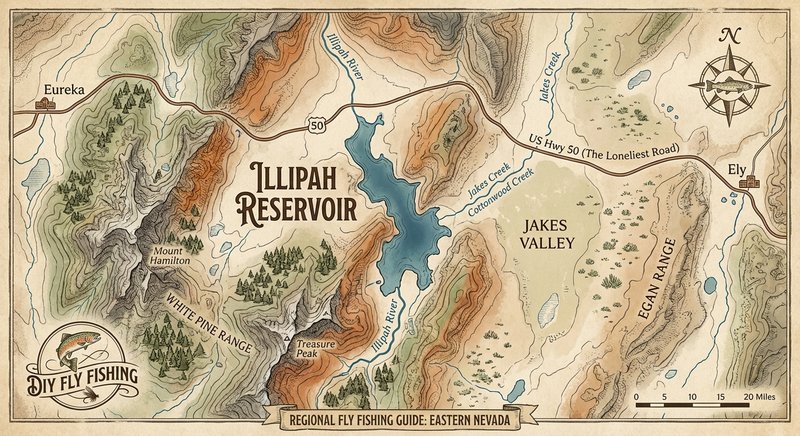
Illipah Reservoir
Fly fishing in Nevada · intermediate · Best seasons: spring, summer, fall
Target Species
Rainbow Trout
About This Water
Remote central Nevada reservoir. Stocked trout with beautiful high desert scenery.
Fishing Recommendations
As an expert guide with years spent navigating the high-desert waters of the Great Basin, I can tell you that Illipah Reservoir is one of Nevada’s most underrated stillwater gems. Located about 35 miles west of Ely off the "Loneliest Road in America" (US-50), this 70-acre reservoir offers a classic high-altitude trout fishing experience in a stunning, stark landscape.
Here is your comprehensive guide to fly fishing Illipah.
🎣 Location Overview
Illipah Reservoir is a high-desert oasis sitting at roughly 6,840 feet in elevation. It was created by damming Illipah Creek to provide irrigation, but it has since become a staple for Nevada anglers.
What makes it special is its productivity. Unlike many sterile desert impoundments, Illipah has extensive weed beds and a rich biomass of scuds, midges, and damselflies. The water clarity is usually excellent, though it can develop algae blooms in the late summer. Because of its size, it is incredibly accessible for float tubers and shore anglers alike. It offers a sense of solitude that you won’t find at the more crowded waters near Reno or Las Vegas.
🐟 Target Species & Behavior
The primary resident here is the Rainbow Trout. The Nevada Department of Wildlife (NDOW) stocks this water heavily, and because of the high nutrient load, these fish grow quickly and fight hard. You may also encounter the occasional Brown Trout or Lahontan Cutthroat.
- Cruising Patterns: These fish are "edge hunters." They patrol the transition zones where the shallow weed beds drop off into deeper water.
- Feeding Habits: Illipah trout are primarily subsurface feeders. They focus on Scuds (freshwater shrimp), Chironomids (midges), and Damselfly larvae. During the summer, they become very opportunistic regarding terrestrial insects blown in from the surrounding sagebrush.
📅 Best Times to Fish
Optimal Seasons
- Spring (April – June): This is the "Golden Age" at Illipah. As the ice thaws and the water warms into the 50s, the trout become highly active in the shallows. The Callibaetis and Damselfly hatches begin in late May.
- Fall (September – November): As the water cools, trout move back into the shallows to gorge themselves before winter. This is the best time to catch the larger "holdover" fish on streamers.
- Summer (July – August): Fishing remains good but requires a shift in strategy. Fish the "edges of the day" (dawn and dusk). Mid-day heat pushes fish into the deeper channels near the dam.
Prime Windows
- Dawn/Dusk: The low-light hours are essential, especially for dry fly action.
- The "Breezy" Window: A light chop on the water is actually your friend here; it breaks up the surface mirrors and makes the trout less wary of your leader and fly line.
🪰 Recommended Flies & Techniques
Top Fly Patterns
- Nymphs/Larvae:
- Scuds: Size 12–16 in Olive, Pink, or Orange (The "Illipah Special").
- Chironomids: Size 16–20 in Zebra Midge (black/silver) or "Ice" patterns (red/silver).
- Damselfly Nymphs: Size 10–14, long and olive with wiggle tails.
- Dry Flies:
- Callibaetis: Size 14–16 Parachute Adams or Cripples.
- Terrestrials: Size 10–14 Foam Ants or Beetles.
- Streamers:
- Woolly Buggers: Size 8–12 in Thin Mint, Black, or Olive.
- Marabou Leech: Size 10 in Wine or Dark Brown.
Effective Techniques
- Indicator Nymphing: Suspend a midge or scud 12–18 inches off the bottom near the weed edges. This is the most consistent producer.
- The "Naked" Midge: Fish a long leader (12–15 ft) with a slow, hand-twist retrieve and no indicator.
- The Strip-and-Pause: Using an intermediate sinking line, pull a Damselfly nymph or small streamer through the gaps in the weed beds. The pause is usually when the strike occurs.
💡 Pro Tips & Local Knowledge
- The "Float Tube" Advantage: While shore fishing is possible near the dam, the best fishing is found by launching a float tube or kayak. This allows you to stay 30 feet off the weed line and cast toward the shore, mimicking a natural insect moving toward deeper water.
- Target the Inlet: The western end where Illipah Creek enters is often shallower and siltier, but it holds fish early in the morning.
- The Dam Face: If the sun is high and the temperature is up, fish the deeper water near the dam with a Type 3 or Type 5 sinking line and a Booby Fly or weighted streamer.
- Wind Management: The Great Basin is famous for wind. If it kicks up, don't leave. Move to the windward shore; the wind pushes microorganisms and insects toward that bank, and the trout follow the food.
⚠️ Important Information
- Access: Access is via a well-maintained dirt road. Most passenger cars can make it in dry weather, but 4WD is recommended if there has been recent rain or snow, as the road can become "greasy" mud.
- Regulations:
- A valid Nevada Fishing License is required.
- The limit is typically 5 trout, but always check the latest NDOW Fishing Guide for emergency closures or regulation changes.
- Camping: There is a developed BLM campground at the reservoir with vault toilets, fire rings, and picnic tables. There is no potable water, so bring more than you think you’ll need.
- Remote Location Warning: Cell service is spotty to non-existent. Ensure your vehicle is in good shape and you have a full tank of gas from Ely or Eureka before heading out.
Guide’s Final Word: Illipah is a place of quiet beauty. Respect the resource, pack out your trash, and watch the sunset over the sagebrush—it's as much a part of the experience as the trout. Tight lines!
Bug Hatches & Matching Flies
| Hatch | Type | Peak months | Time of day | Hook sizes | Matching flies |
|---|---|---|---|---|---|
| Chironomids Chironomidae | midge | April, May, September, October | All Day | #12-22 | Ice Cream Cone #14-18, Zebra Midge #16-20, Griffith's Gnat #18-22 |
| Callibaetis Callibaetis nigritus | mayfly | June, July, August | Morning/Early Afternoon | #12-16 | Parachute Adams #14-16, Callibaetis Spinner #14-16, Hare's Ear Nymph #14-16 |
| Damselfly Enallagma | terrestrial | June, July | Mid-morning/Afternoon | #10-14 | Marabou Damsel Nymph #10-12, Adult Damsel #12-14, Sheep Creek Special #12 |
| Traveling Sedge Hesperophylax | caddis | July, August | Evening | #8-12 | Goddard Caddis #8-12, Mikulak Sedge #10-12, LaFontaine Sparkle Pupa #12-14 |
| Water Boatmen Corixidae | terrestrial | September, October | Afternoon | #14-18 | Water Boatman #14-16, Prince Nymph #14-18, Backswimmer #12-14 |
| Grasshoppers Melanoplus | terrestrial | August, September | Mid-day/Afternoon | #8-12 | Hopper Juan #10-12, Dave's Hopper #8-12, Chernobyl Ant #8-10 |
| Dragonfly Anisoptera | terrestrial | July, August | All Day | #4-10 | Dragonfly Nymph #6-10, Woolly Bugger (Olive) #4-8, Gummi Fly #8-10 |
| Scuds Hyalella azteca | terrestrial | March, April, May | All Day | #12-18 | Ray Charles #14-16, Flashback Scud (Olive/Orange) #12-18, Rainbow Warrior #14-18 |