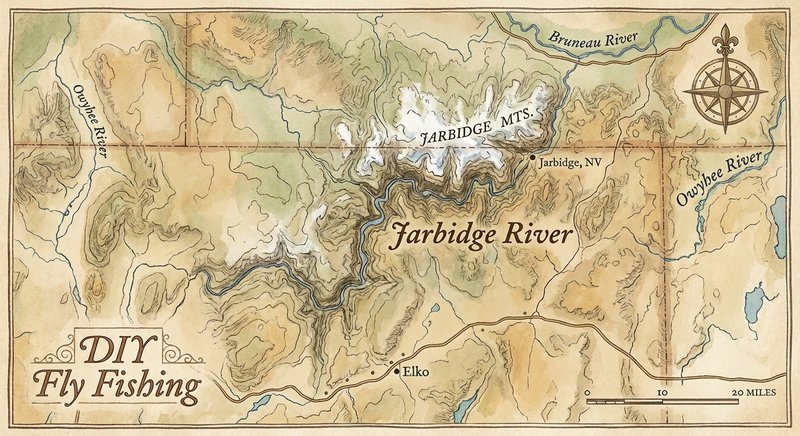
Jarbidge River
Fly fishing in Nevada · advanced · Best seasons: summer, fall
Target Species
Bull Trout, Redband Trout
About This Water
Remote northeastern Nevada stream with wild bull and redband trout. Wilderness fishing experience.
Fishing Recommendations
The Jarbidge River is one of the most remote, rugged, and rewarding fly fishing destinations in the lower 48. Tucked away in the northeastern corner of Nevada near the Idaho border, the Jarbidge flows through a spectacular deep-canyon wilderness. This is "frontier fishing" at its finest—where the pavement ends, the cell service vanishes, and the trout are as wild as the landscape.
🎣 Location Overview
The Jarbidge River is a high-elevation freestone stream characterized by its steep gradients, pocket water, and crystal-clear pools. It is divided into the East and West Forks, which converge near the tiny, historic town of Jarbidge.
What makes this water special is its isolation. It is surrounded by the 10,000-foot peaks of the Jarbidge Mountains, creating a "sky island" ecosystem. The river is famous for being the southernmost habitat for Bull Trout in North America. Anglers love it because the fish are opportunistic, the scenery is alpine-majestic, and you are more likely to see a mountain lion than another fisherman.
🐟 Target Species & Behavior
Redband Trout
These are the native rainbows of the interior West. They are incredibly hardy, sporting brilliant crimson lateral lines and heavy spotting.
- Behavior: They are aggressive surface feeders. Because the growing season is short, they aren't picky.
- Holding Water: They love the "textbook" spots—the heads of pools, behind large boulders (pocket water), and under overhanging brush.
Bull Trout
The Jarbidge is unique for hosting a population of federally protected Bull Trout.
- Behavior: Bull Trout are apex predators. While the smaller ones will eat nymphs and even dries, the "monsters" are piscivorous (fish-eaters). They tend to hold in the deepest, darkest holes or at the very tail-outs of large pools.
- Note: Bull Trout are listed as Threatened under the Endangered Species Act. While you can target them for catch-and-release, they must be handled with extreme care (keep them in the water).
📅 Best Times to Fish
Summer (July – August)
- Window: This is the prime season. Snowpack in the Jarbidge Mountains is heavy, so the river is often too high and dangerous until late June or early July.
- Conditions: Clear water and active hatches. The fish are looking up.
- Time of Day: Late morning through evening. The canyon is deep, so the "bite" often starts once the sun hits the water.
Fall (September – October)
- Window: My personal favorite. The cottonwoods turn gold, and the air gets crisp.
- Conditions: Lower, technical water. Bull Trout begin their spawning migration into the upper reaches and tributaries (be mindful of redds).
- Time of Day: Mid-day becomes the most productive window as water temperatures peak.
🪰 Recommended Flies & Techniques
Dry Flies (The Primary Method)
The Redbands here are not "match-the-hatch" snobs; they want a high-protein meal.
- Patterns: Royal Wulff (#12-16), Stimulators (Orange or Yellow, #10-14), Humpy (#14), and Parachute Adams.
- Terrestrials: In August, don't leave home without Dave’s Hoppers or Fat Alberts.
Nymphing
If the fish aren't rising, go deep in the plunge pools.
- Patterns: Gold-ribbed Hare’s Ear, Copper John (Red or Blue), and Prince Nymphs.
- Technique: Use a high-sticking/Euro-style approach in the pocket water to avoid the complex micro-currents.
Streamers (For Bull Trout)
- Patterns: White or Olive Sculpzilla, Woolly Buggers, and Sex Dungeon-style articulated streamers.
- Technique: Swing them through deep holes or "strip-and-pause" through the slow water at the base of waterfalls.
💡 Pro Tips & Local Knowledge
- The "Stealth" Factor: Because the water is so clear, the fish are easily spooked. Wear earthy tones, stay low, and avoid casting your shadow over the pools.
- Focus on the West Fork: The West Fork along the road offers great access, but if you want the "real" experience, hike into the Jarbidge Wilderness on the East Fork. The further you walk, the better the fishing gets.
- The Bull Trout "Follow": If you are reeling in a small Redband and see a large grey shadow chasing it—that’s a Bull Trout. This is a common occurrence. If you want to target the Bulls specifically, size up your gear to a 6-weight and throw large, white streamers.
- Cripple Patterns: In the slower glides, a "Quigley Cripple" often out-fishes a standard Parachute Adams when the Redbands are being selective.
⚠️ Important Information
- Access: Access is via long, graded dirt roads (from Elko, NV, or Rogerson, ID). A high-clearance vehicle is mandatory, and 4WD is strongly recommended. The roads can become impassable after heavy rain.
- Regulations:
- Catch and Release ONLY for Bull Trout.
- Check current Nevada Department of Wildlife (NDOW) regulations for seasonal closures or specific lure/fly requirements (usually barbless hooks are highly encouraged).
- Safety: This is remote country. There are no services nearby except in the small town of Jarbidge (which has limited fuel and one or two places to eat). Bring a spare tire, extra fuel, and plenty of water.
- Wildlife: This is Bear and Mountain Lion country. Carry bear spray and store food properly if camping.
Guide’s Final Word: The Jarbidge is a "soul-cleansing" river. It’s not about catching 50 fish a day (though you might); it’s about the silence of the canyon and the privilege of holding a native Bull Trout in a place that feels like 1880. Respect the resource, and it will give you a trip you'll never forget.
Bug Hatches & Matching Flies
| Hatch | Type | Peak months | Time of day | Hook sizes | Matching flies |
|---|---|---|---|---|---|
| Salmonfly Pteronarcys californica | stonefly | May, June | All Day | #4-8 | Rogue River Stone #4-6, Pat's Rubber Leg #6-8 |
| Green Drake Drunella doddsii | mayfly | June, July | Afternoon | #10-12 | Hairwing Green Drake #10-12, Quigley's Green Drake Cripple #12 |
| Golden Stonefly Hesperoperla pacifica | stonefly | June, July | Morning/Evening | #8-12 | Chubby Chernobyl (Gold) #8-12, Golden 20-Incher #10-12 |
| Pale Morning Dun (PMD) Ephemerella excrucians | mayfly | June, July, August | Late Morning/Afternoon | #14-18 | Sparkle Dun PMD #16-18, Pheasant Tail #14-18 |
| Tan Caddis Hydropsyche | caddis | June, July, August | Evening | #14-18 | Elk Hair Caddis (Tan) #14-16, LaFontaine's Deep Sparkle Pupa #14-18 |
| Yellow Sally Isoperla | stonefly | July, August | Afternoon/Evening | #14-16 | Yellow Stimulator #14-16, Iron Lotus #16 |
| Blue Winged Olive (BWO) Baetis | mayfly | April, May, September, October | Late Morning/Afternoon | #18-22 | BWO Parachute #18-20, RS2 (Olive) #20-22 |
| Grasshoppers Acrididae | terrestrial | August, September | Mid-day | #8-12 | Morrish Hopper #10-12, Dave's Hopper #8-12 |
| Black Ants Formicidae | terrestrial | July, August | All Day | #16-20 | Cinnamon or Black Parachute Ant #16-18, Carpenter Ant #14 |