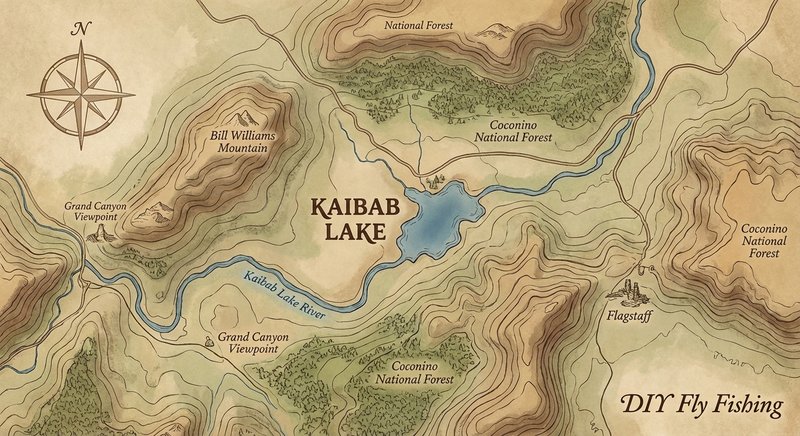
Kaibab Lake
Fly fishing in Arizona · beginner · Best seasons: spring, summer, fall
Target Species
Rainbow Trout
About This Water
High plateau lake near Grand Canyon. Cool summer fishing at 7,000 feet.
Fishing Recommendations
Welcome to the high country of Northern Arizona. As your guide, I’m excited to break down Kaibab Lake. Located just four miles north of Williams, Arizona, within the Coconino National Forest, this lake is a staple for Arizona trout anglers.
While it is a reservoir, its high elevation (6,700 feet) and proximity to the Grand Canyon make it a unique mountain fishing experience. Here is the professional breakdown for finding success on Kaibab.
🎣 Location Overview
Kaibab Lake is a 45-acre mountain impoundment characterized by its pine-fringed shoreline and relatively shallow depths. Unlike the deep, volcanic crater lakes nearby, Kaibab is a "basin" style lake.
What makes it special is its accessibility and consistency. It is one of the most heavily stocked waters in the state. For the fly angler, it offers excellent opportunities for "stillwater stalking." While it can get busy with bait fishermen near the dam, fly anglers who utilize float tubes or focus on the western inlets find a peaceful, productive environment. The water can be slightly turbid (stained) compared to clear mountain streams, which actually works in the fly angler's favor by making fish less leader-shy.
🐟 Target Species & Behavior
The primary draw here is the Rainbow Trout.
- Behavior: These are primarily hatchery-raised fish, but they naturalize quickly. Upon release, they cruise the shorelines in search of food. Because the lake is shallow (averaging 10–15 feet), the trout are often found in the top 6 feet of the water column.
- Feeding: They focus on "midge" (Chironomid) hatches, small damselfly nymphs in the weeds, and terrestrial insects blown off the pines.
- Holding Patterns: In the spring, they hug the shallow banks where the water warms first. In the heat of summer, they retreat to the deeper channel near the dam or congregate near any underwater springs/inflow.
📅 Best Times to Fish
Optimal Seasons
- Spring (April – June): This is the "Golden Era" for Kaibab. As the ice melts and the water warms, the trout become incredibly aggressive. The largest stockings occur during this window.
- Fall (September – November): As temperatures drop, trout move back into the shallows to bulk up for winter. The crowds thin out, and the "holdover" fish from spring have grown significantly.
Best Times of Day
- Early Morning (Sunrise to 10:00 AM): The water is calm, and trout are often rising to midges. This is your best chance for dry fly action.
- Late Evening: The "Power Hour" before sunset often sees a massive midge or caddis hatch.
Prime Conditions
Overcast, slightly breezy days are best. A light "chop" on the water breaks up the surface, making the trout feel secure enough to feed in the shallows.
🪰 Recommended Flies & Techniques
Top Fly Patterns
- Nymphs:
- Zebra Midge (Size 18–22) in Black/Silver or Red/Silver.
- Gold Ribbed Hare’s Ear (Size 14–16).
- Beaded Pheasant Tail (Size 16).
- Streamers:
- Woolly Bugger (Size 10–12) in Olive, Black, or "Arizona Peacock."
- Simi Seal Leech (Size 12) – A local favorite in blood-red or olive/black.
- Dry Flies:
- Parachute Adams (Size 16–20).
- Griffith’s Gnat (Size 18–22) for midge clusters.
- Chernobyl Ant (Size 10–12) in late summer for terrestrial action.
Effective Techniques
- Indicator Nymphing: This is the most productive method. Suspend a Zebra Midge 4–6 feet under a small slip-indicator. Give it a tiny "twitch" every 30 seconds to simulate a midge pupa rising.
- The "Slow Strip": Using an intermediate (slow-sink) line, cast an Olive Woolly Bugger toward the weed edges and use a very slow, 2-inch rhythmic pull.
- Dry-Dropper: In the evenings, fish a Parachute Adams with a small unweighted Pheasant Tail dropped 18 inches below it.
💡 Pro Tips & Local Knowledge
- The West End Secret: Most people fish near the boat ramp and dam. However, the western end of the lake (where the drainage enters) has submerged timber and vegetation. If you have a float tube or kayak, head there. The "wilder" holdover trout prefer the cover of the wood.
- The "Breadline" Effect: Because this is a high-traffic park, fish sometimes get used to seeing activity. Using slightly heavier 4x or 5x tippet is fine when stripping streamers, but if you are nymphing, you must drop down to 6x fluorocarbon to get bites from the wiser fish.
- Watch the Wind: The wind usually blows from the West/Southwest. This pushes insects and warmer surface water toward the dam. If the wind is steady, fish the "windward" shore where the food is being concentrated.
⚠️ Important Information
- Access: Very easy. Located off AZ State Route 64. There is a small fee for day use/parking within the Kaibab Lake Campground area.
- Regulations: Arizona fishing regulations apply. A valid Arizona Fishing License is required for anyone 10 years or older. You can purchase these online via the Arizona Game and Fish Department (AZGFD) website.
- Boating: Gas motors are prohibited. Only electric motors, oars, or paddles are allowed. This makes it a haven for float tubers and kayakers.
- Environmental Note: This lake can experience "turnover" in late summer or heavy weed growth. If the water looks like "pea soup" (algae bloom), the fishing will be tough; move your efforts to deeper water or try the nearby Dogtown Reservoir.
Guide’s Final Word: Kaibab Lake is the perfect place to hone your stillwater skills. It’s forgiving for beginners but offers enough complexity in its midge hatches to challenge a seasoned fly fisher. Tight lines!
Bug Hatches & Matching Flies
| Hatch | Type | Peak months | Time of day | Hook sizes | Matching flies |
|---|---|---|---|---|---|
| Chironomids (Midges) Chironomidae | midge | March, April, May, September, October | All Day | #12-22 | Zebra Midge #16-20, Ice Cream Cone #12-16, Griffith's Gnat #18-22 |
| Callibaetis (Speckled Duns) Callibaetis spp. | mayfly | May, June, August, September | Morning/Early Afternoon | #12-16 | Hares Ear Nymph #14-16, Parachute Adams #14-16, Callibaetis Spinner #16 |
| Damselfly Enallagma spp. | terrestrial | June, July | Morning/Afternoon | #10-14 | Marabou Damsel #10-12, Adult Damsel #12-14 |
| Scuds (Freshwater Shrimp) Gammarus | terrestrial | April, May, October | All Day | #12-18 | Ray Charles #14-18, Flashback Scud #12-16 |
| Dragonfly Nymph Anisoptera | terrestrial | June, July, August | All Day | #6-10 | Damsel/Dragon Nymph #8-10, Woolly Bugger (Olive) #6-10 |
| Water Boatmen Corixidae | terrestrial | September, October | Afternoon | #14-18 | Water Boatman #14-16, Prince Nymph #14-18 |
| Terrestrial Ants Formicidae | terrestrial | July, August | Afternoon | #14-18 | Cinnamon Ant #16-18, Black Foam Ant #14-16 |
| Traveling Sedge (Caddis) Phryganeidae | caddis | June, July | Evening | #10-14 | Elk Hair Caddis #12-14, Mikulak Sedge #10-12 |