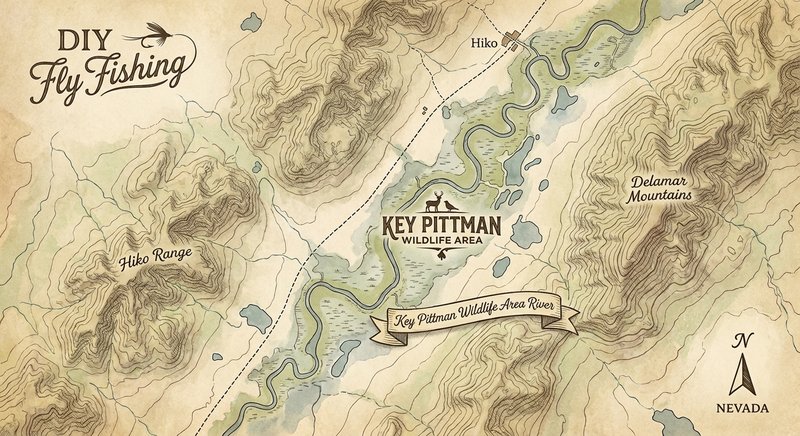
Key Pittman Wildlife Area
Fly fishing in Nevada · beginner · Best seasons: spring, fall
Target Species
Rainbow Trout
About This Water
Lincoln County wetlands with trout ponds. Multiple fishing opportunities.
Fishing Recommendations
Welcome to the high desert oasis of the Key Pittman Wildlife Management Area (WMA). Located in the Pahranagat Valley about 110 miles north of Las Vegas near the town of Hiko, this area is a unique gem in the Nevada desert. While many associate Nevada with arid sagebrush, Key Pittman offers a lush, riparian break that provides surprising opportunities for the dedicated fly angler.
🎣 Location Overview
Key Pittman WMA consists of two primary water bodies: Frenchy Lake and Nesbitt Lake. While Nesbitt is often shallower and prone to heavy vegetation, Frenchy Lake is the primary destination for those targeting Rainbow Trout.
What makes this area special is the juxtaposition of the harsh Mojave/Great Basin transition zone and the fertile, spring-fed wetlands. These lakes are relatively shallow, productive, and surrounded by reeds and waterfowl habitat. Anglers love it because it offers a "stillwater" experience that feels worlds away from the neon of Las Vegas. The water is generally clear but can become "weedy" as the temperature rises, making it a technical but rewarding environment.
🐟 Target Species & Behavior
The primary draw for fly anglers is the Rainbow Trout, which are stocked by the Nevada Department of Wildlife (NDOW), typically during the cooler months.
- Behavior: In these shallow lakes, trout tend to cruise the edges of the bulrushes and cattails looking for aquatic insects. Because the water is shallow, these fish are "spooky." They don't have the safety of deep pools, so they are highly sensitive to vibration on the banks and shadows on the water.
- Feeding: They feed heavily on midge larvae (bloodworms), scuds (freshwater shrimp), and small damselfly nymphs. During the spring, you may also see them keyed into surface midge hatches or the occasional terrestrial blown in from the surrounding desert shrubbery.
📅 Best Times to Fish
- Optimal Seasons:
- Spring (March – May): This is the prime window. Temperatures are moderate, and the trout are highly active before the summer heat causes the weed growth to choke the lake.
- Fall (October – December): As water temperatures drop, NDOW resumes stocking. The fish become aggressive again as they prepare for winter.
- Best Times of Day:
- Early Morning: The water is usually glass-calm, allowing you to see rising fish or "cruisers."
- Late Afternoon/Dusk: The "magic hour" often brings a midge hatch, and the low light provides cover for the trout to move into the shallows.
- Prime Conditions: Overcast days are a gift here. The lack of sun prevents the fish from seeing your leader and shadow, often resulting in much more aggressive takes.
🪰 Recommended Flies & Techniques
Top Fly Patterns
- Midges: Zebra Midges (size 18-22) in black/silver or red/gold. Chironomid patterns with white gills are deadly here.
- Scuds: Olive or Pink Scud patterns (size 14-16). The vegetation is thick with these high-protein snacks.
- Nymphs: Hare’s Ear, Pheasant Tail, and Prince Nymphs (size 14-18).
- Streamers: Woolly Buggers (size 10-12) in olive or black. These represent small leeches or baitfish.
- Dry Flies: Griffith’s Gnat or Parachute Adams (size 18-22) for when fish are sipping on the surface.
Effective Techniques
- Indicator Nymphing: The most effective method. Use a small, sensitive "pinch-on" foam indicator or a New Zealand wool indicator. Suspend a Zebra Midge or Scud 3–5 feet below the indicator.
- The "Slow Strip": If using a Woolly Bugger or a damselfly nymph, use an intermediate sinking line or a long leader on a floating line. Retrieve with very slow, 2-inch "crawls" to mimic the natural movement of lake insects.
- Dry-Dropper: In the spring, a size 14 Hopper or large Adams with a small midge dropper can be very effective along the reed lines.
💡 Pro Tips & Local Knowledge
- Bring a Float Tube: While shore fishing is possible, the banks are often muddy and lined with thick reeds. A float tube or kayak allows you to reach the deeper channels and stay away from the "snag-heavy" shoreline vegetation.
- The "Reed Edge" Strategy: Rainbows in Frenchy Lake love to patrol the exact line where the reeds meet the open water. Cast your fly as tight to the reeds as possible.
- Stealth is Mandatory: If fishing from the bank, do not wear bright colors. Stay low. The water is shallow enough that a tall human silhouette will send every trout in the vicinity to the middle of the lake.
- Check Stocking Reports: Before you drive out, check the NDOW Fish Stocking Post. It will tell you exactly when the last batch of "bows" was dropped in.
⚠️ Important Information
- Access: Access is via Highway 93. Follow the signs for Key Pittman WMA. There is ample parking near Frenchy Lake.
- Regulations:
- A valid Nevada Fishing License is required.
- Key Pittman is a Wildlife Management Area; be aware of Hunting Seasons. During waterfowl season (Fall/Winter), the area is crowded with hunters. Fishing is generally permitted, but you must be respectful of hunters and aware of your surroundings.
- Check for any seasonal closures or specific bag limits on the NDOW website.
- Special Considerations:
- Wind: The Pahranagat Valley can get incredibly windy. If the forecast calls for 20+ mph winds, the lakes will be difficult and potentially dangerous for float tubes.
- Sun Protection: There is zero shade on the water. Bring a wide-brimmed hat, polarized sunglasses (essential for spotting fish), and plenty of water.
Bug Hatches & Matching Flies
| Hatch | Type | Peak months | Time of day | Hook sizes | Matching flies |
|---|---|---|---|---|---|
| Chironomids Chironomidae | midge | March, April, October | All Day | #12-22 | Zebra Midge #16-20, Ice Cream Cone #12-16, Griffith's Gnat #18-22 |
| Speckled Duns Callibaetis spp. | mayfly | May, June, September | Morning/Afternoon | #12-16 | Callibaetis Spinner #14-16, Hare's Ear Nymph #12-16, Pheasant Tail #14-18 |
| Damselflies Enallagma spp. | terrestrial | June, July | Late Morning/Afternoon | #10-14 | Marabou Damsel Nymph #10-12, Adult Damsel #12-14 |
| Cinnamon Caddis Ceraclea spp. | caddis | July, August, September | Evening | #14-18 | Elk Hair Caddis #14-16, LaFontaine's Emerger #16-18 |
| Tricos Tricorythodes spp. | mayfly | August, September | Early Morning | #20-24 | Trico Spinner #20-24, RS2 #20-22 |
| Water Boatmen Corixidae | midge | September, October | Afternoon | #14-18 | Water Boatman #14-16, Prince Nymph #14-18 |
| Grasshoppers Melanoplus spp. | terrestrial | July, August, September | Late Morning/Afternoon | #8-12 | Hopper Juan #10-12, Dave's Hopper #8-12 |
| Dragonflies Anisoptera | terrestrial | May, June, July | All Day | #4-10 | Dragonfly Nymph #6-10, Woolly Bugger (Olive) #4-10 |