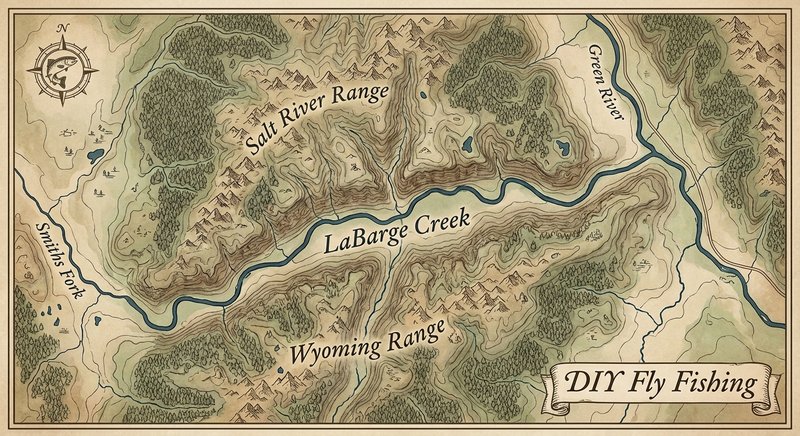
LaBarge Creek
Fly fishing in Wyoming · Intermediate · Best seasons: Summer, Fall
Target Species
Cutthroat Trout
About This Water
Western Wyoming stream with native Colorado River cutthroat. Remote mountain fishing.
Fishing Recommendations
LaBarge Creek is one of the crown jewels of western Wyoming for the dedicated backcountry angler. Located in the Bridger-Teton National Forest, it is a high-elevation freestone stream that offers some of the best habitat for native trout in the entire Green River drainage.
Here is your comprehensive guide to fishing LaBarge Creek, Wyoming.
🎣 Location Overview
LaBarge Creek is a remote, medium-sized mountain stream that flows through a mix of tight canyons and sweeping alpine meadows. What makes this water truly special is its history: it was the site of one of the largest native fish restoration projects in U.S. history. Over 50 miles of the creek and its tributaries were restored to provide a stronghold for pure Colorado River Cutthroat Trout (CRC).
The water is crystal clear and relatively shallow, characterized by classic pool-riffle-run sequences, heavy willow lining, and undercut banks. Anglers love it because it offers a "step back in time" experience—fishing for native fish in a pristine wilderness setting where you are more likely to see a moose than another fisherman.
🐟 Target Species & Behavior
The primary target here is the Colorado River Cutthroat Trout.
- Behavior: These fish are incredibly opportunistic due to the short growing season at high altitudes. They aren't typically "lure shy," but they are extremely "splash shy." If they see you or your line hits the water too hard, they will vanish into the undercut banks.
- Where they hold: Look for them in the "buckets" (deeper pockets behind boulders), along the edges of the thick willow banks, and in the deep bends of the meadow sections.
- Feeding: They are primarily insectivores. While they will eat nymphs, they are known for their willingness to rise to a well-placed dry fly.
📅 Best Times to Fish
- Optimal Months: July, August, and September.
- Late June/Early July: Runoff usually subsides by early July. This is when the "big bug" action starts.
- August: The peak of terrestrial season.
- September: The most beautiful time to be there. The fish are feeding aggressively before winter, and the aspens are turning gold.
- Best Time of Day: Because the water is high-altitude and cold, the fishing usually picks up around 10:00 AM once the sun hits the water and bugs start moving. It remains excellent until dusk.
- Prime Windows: The "Golden Hour" in late August can produce spectacular dry fly action as caddis and small mayflies emerge.
🪰 Recommended Flies & Techniques
You don't need a massive fly box for LaBarge, but you do need the right sizes and a delicate delivery.
Top Fly Patterns
- Dry Flies:
- Stimulators (Orange or Yellow, sizes 12-16) – Great for imitating stoneflies or grasshoppers.
- Chubby Chernobyls (Tan or Pink, sizes 12-14) – The ultimate high-floating attractor.
- Parachute Adams (Sizes 14-18) – The go-to for matching general mayfly activity.
- Royal Wulff (Sizes 12-16) – A classic attractor that Cutthroats simply cannot resist.
- Terrestrials (August-September):
- Amy’s Ant (Size 12-14)
- Black Foam Beetles (Size 16)
- Morrish Hopper (Tan, size 12)
- Nymphs (as droppers):
- Pheasant Tail (Size 16-18)
- Prince Nymph (Size 14-16)
- Copper John (Red or Zebra, size 16)
Effective Techniques
- Dry-Dropper: This is the most effective way to fish LaBarge. Use a buoyant dry fly (like a Stimulator) and hang a small Pheasant Tail or Copper John about 18–24 inches below it.
- The "Willow Dab": In tight sections, you won't be able to cast. Use a "bow-and-arrow" cast or simply dapple your fly into the pockets between willow branches.
- Stealthy Presentation: Use a 7.5ft to 9ft 4x or 5x leader. The fish aren't necessarily leader-shy, but they are very sensitive to the shadow of the fly line.
💡 Pro Tips & Local Knowledge
- Kneel while you fish: The meadow sections offer very little cover for the angler. If you stand tall on the bank, the fish will see your silhouette against the sky and spook before you even pull line off your reel.
- Focus on the Canyons: While the meadows are beautiful, the steeper canyon sections often hold larger fish in the deeper plunge pools. These fish are also slightly less spooky because the broken water hides your approach.
- Move Fast: Don't spend 30 minutes on one hole. If a Cutthroat is going to eat, it usually happens in the first three drifts. Cover a lot of water to find the most active fish.
- The "Bates Creek" Confluence: This area is a local favorite. The mixing of water temperatures and nutrients often congregates fish.
⚠️ Important Information
- Access: Access is via Forest Service Road 10138 (LaBarge Creek Road). It is a long, gravel road. Ensure your vehicle has a spare tire and plenty of gas, as there are zero services once you leave the highway.
- Regulations: Wyoming fishing regulations apply. Native Colorado River Cutthroat areas often have specific Catch and Release rules or limited harvest. Always check the current Wyoming Game & Fish Department regulations before your trip.
- Wildlife Safety: This is Grizzly Bear and Moose country. Always carry bear spray, make noise when walking through thick willows, and keep a clean camp.
- Connectivity: There is no cell service on LaBarge Creek. Download your maps for offline use or carry a satellite communication device (like a Garmin inReach).
- Tread Lightly: Because this is a restoration area, please practice impeccable Catch and Release. Minimize the time the fish is out of the water and use barbless hooks.
Bug Hatches & Matching Flies
| Hatch | Type | Peak months | Time of day | Hook sizes | Matching flies |
|---|---|---|---|---|---|
| Blue Winged Olive Baetis tricaudatus | mayfly | April, May, September, October | Late Morning/Afternoon | #16-22 | BWO Sparkle Dun #18-20, RS2 #18-22, Pheasant Tail Nymph #16-20 |
| Salmonfly Pteronarcys californica | stonefly | June, July | All Day | #4-8 | Rogue Foam Stone #4-6, Pat's Rubber Legs #4-8, Cat Puke #6 |
| Golden Stonefly Hesperoperla pacifica | stonefly | June, July | Morning/Evening | #8-12 | Kaufmann's Stimulator #8-12, 20-Incher Stone #8-12, Golden Chubby Chernobyl #10-12 |
| Pale Morning Dun Ephemerella excrucians | mayfly | July, August | Late Morning/Early Afternoon | #16-18 | PMD Cripple #16-18, Parachute PMD #16-18, Frenchie #16-18 |
| Spotted Sedge Hydropsyche | caddis | July, August | Evening | #14-16 | Elk Hair Caddis #14-16, LaFontaine's Sparkle Pupa #14-16, Z-Wing Caddis #14-16 |
| Yellow Sally Isoperla | stonefly | July, August | Afternoon/Evening | #14-16 | Yellow Stimulator #14-16, Iron Cherry #14-16, Sallie Girl #16 |
| Grasshoppers Orthoptera | terrestrial | August, September | Late Morning/Afternoon | #8-14 | Morrish Hopper #10-12, Parachute Hopper #12-14, Rainy's Grand Hopper #8-10 |
| Trico Tricorythodes | mayfly | August, September | Early Morning | #20-24 | Trico Spinner #22-24, Trico Dun #20-22 |
| Midges Chironomidae | midge | March, April | Mid-day | #18-24 | Zebra Midge #18-22, Griffith's Gnat #20-22, Morgan's Midge #20-24 |