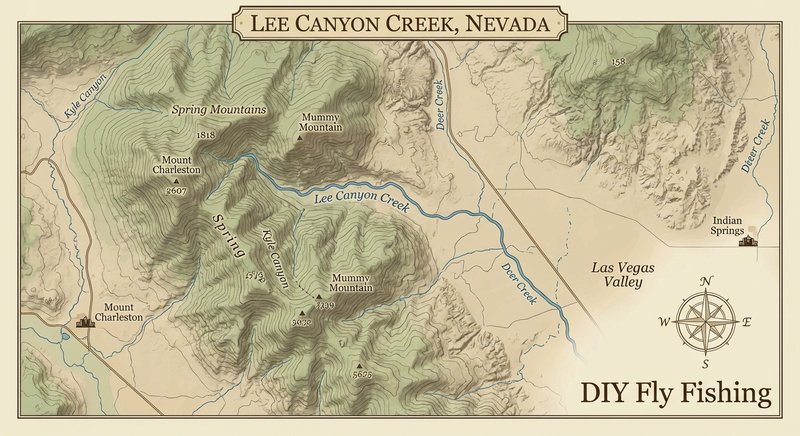
Lee Canyon Creek
Fly fishing in Nevada · beginner · Best seasons: spring, summer, fall
Target Species
Rainbow Trout
About This Water
Mt. Charleston stream with stocked trout. Escape from Las Vegas heat.
Fishing Recommendations
As an expert guide who has navigated the unique high-desert fisheries of the Silver State, I can tell you that Lee Canyon Creek is one of the most unexpected treasures in Southern Nevada. Located within the Spring Mountains National Recreation Area, just a short drive from the neon lights of Las Vegas, this small alpine stream offers a refreshing escape and a "small water" challenge that most anglers don't realize exists in the Mojave.
🎣 Location Overview
Lee Canyon Creek is a small, high-altitude perennial stream fed by snowmelt and springs from the towering Mount Charleston area. What makes it special is the sheer contrast: you can leave 100-degree heat in the valley and, within 45 minutes, be standing in a lush, sub-alpine corridor surrounded by Ponderosa pines and white firs.
The water is crystal clear and generally very small—often no more than 3 to 6 feet wide. It features a classic "staircase" structure with small plunge pools, short riffles, and undercut banks. Because it is one of the few moving water sources in the region, it is a fragile and precious ecosystem that requires a "stealth first" approach.
🐟 Target Species & Behavior
The primary target here is the Rainbow Trout. These are not the massive lunkers of the Truckee or the Walker rivers; these are scrappy, opportunistic feeders that generally range from 6 to 10 inches, with an occasional 12-incher hiding in the deeper pools.
- Behavior: Due to the small size of the water and the clarity, these fish are incredibly spooky. They have a highly developed "shadow sense." If they see you, the fishing in that pool is over.
- Holding Spots: Look for them in the "bubble line" at the head of small pools, tucked under overhanging vegetation, or behind the larger limestone rocks that break the current.
- Feeding: Their diet is dominated by opportunistic terrestrial insects (ants, beetles) and small aquatic invertebrates (midges and small mayflies).
📅 Best Times to Fish
- Optimal Seasons:
- Late Spring (May–June): As the snow melts and the canyon opens up, the fish become active. This is often the best window for water volume.
- Summer (July–August): The "escape the heat" season. The fish are active, but water levels can drop significantly.
- Early Fall (September–October): The foliage changes, and the trout feed aggressively before the high-altitude winter sets in.
- Best Time of Day: Early morning (dawn to 10:00 AM) is best to beat any hikers and to catch the fish before the sun hits the water directly.
- Prime Windows: A cloudy day is a rare gift in Nevada; if you get one, the fish will be significantly less shy and more likely to rise to dries all day.
🪰 Recommended Flies & Techniques
Because the water is so small and clear, presentation is more important than the specific fly pattern.
Top Fly Patterns
- Dry Flies:
- Parachute Adams (#18–22): The gold standard for visibility and mimicry.
- Elk Hair Caddis (#16–18): Great for the "skittering" action these trout love.
- Black Ants or Beetles (#16–18): Essential during the summer months when terrestrials fall from the overhanging brush.
- Nymphs:
- Zebra Midge (#20–22): In black or red.
- Pheasant Tail Nymph (#18–20): Unweighted is often better here to prevent snagging the shallow bottom.
- Streamers: Generally too large for this water, though a tiny Woolly Bugger (#12) in Olive can work in the largest plunge pools.
Techniques & Presentation
- The "Dapping" Method: In many spots, the brush is too thick to cast. Use a long rod to simply drop your fly over the bushes into a pool.
- Dry-Dropper: Use a buoyant dry fly (like a Stimulator) with a tiny midge nymph dropped only 12–18 inches below it.
- Short Leader: A standard 9ft leader is often too long for these tight quarters. Consider cutting it down to 7.5ft to improve accuracy.
💡 Pro Tips & Local Knowledge
- Go Upstream: Always fish moving upstream. Because the water is clear and shallow, trout face into the current. If you approach from behind them, you have a much better chance of staying undetected.
- Wear Camouflage: This isn't a joke—wear earth tones (greens, browns, greys). A white or bright blue shirt will flash like a beacon against the mountain backdrop and spook every fish in the creek.
- The "One Cast" Rule: In these small pools, your first cast is your best (and often only) chance. Make sure your line is coiled and your aim is true before you let it fly.
- Focus on the Pockets: Don't just look for the "big" pools. Sometimes a pocket of water no larger than a dinner plate behind a rock holds a hungry Rainbow.
⚠️ Important Information
- Access: Access is primarily via NV-156 (Lee Canyon Rd). Park in designated turnouts near the Meadows or the ski area and hike down to the riparian corridor. Be mindful of private property near the base of the canyon.
- Regulations: A valid Nevada Fishing License is required. Always check the current NDOW (Nevada Department of Wildlife) regulations for bag limits, though Catch and Release is highly encouraged in this fragile desert fishery to maintain the population.
- Safety: You are at high altitude (8,000+ ft). Hydrate aggressively and be aware of rapid weather changes. Mountain lions and wild horses are common in the area—keep your eyes open.
- Leave No Trace: This is a vital water source for local wildlife. Please pack out all tippet scraps and trash.
Good luck up there. It’s tight, it’s technical, and it’s one of the most rewarding ways to spend a day in the Nevada mountains!
Bug Hatches & Matching Flies
| Hatch | Type | Peak months | Time of day | Hook sizes | Matching flies |
|---|---|---|---|---|---|
| Midges Chironomidae | midge | March, April, October, November | All Day | #18-24 | Zebra Midge #18-22, Griffith's Gnat #20-22, Morgan's Midge #20-24 |
| Blue Winged Olive Baetis | mayfly | April, May, September, October | Late Morning/Afternoon | #16-20 | Parachute Adams #16-20, RS2 #18-20, Pheasant Tail Nymph #16-18 |
| Spotted Sedge Hydropsyche | caddis | June, July, August | Evening | #14-18 | Elk Hair Caddis #14-16, LaFontaine's Deep Sparkle Pupa #16, Godzilla Caddis #14-18 |
| Little Yellow Stonefly Isoperla | stonefly | June, July | Late Afternoon/Evening | #14-16 | Yellow Stimulator #14-16, Iron Lotus #16, Little Yellow Sloan #14 |
| Terrestrial Ants Formicidae | terrestrial | July, August, September | Mid-day | #12-18 | Black Foam Ant #14-16, Cinnamon Ant #16-18, Chernobyl Ant #12-14 |
| Pale Morning Dun Ephemerella | mayfly | June, July | Morning/Early Afternoon | #16-18 | PMD Sparkle Dun #16-18, Hare's Ear Nymph #16, Quigley Cripple #16-18 |
| Terrestrial Beetles Coleoptera | terrestrial | July, August | Mid-day/Afternoon | #14-18 | Foam Beetle #14-16, Peacock Beetle #16-18 |
| Winter Stonefly Capniidae | stonefly | February, March, April | Warmest part of the day | #14-18 | Little Black Stone #16-18, Prince Nymph #14-16, Copper John #16-18 |