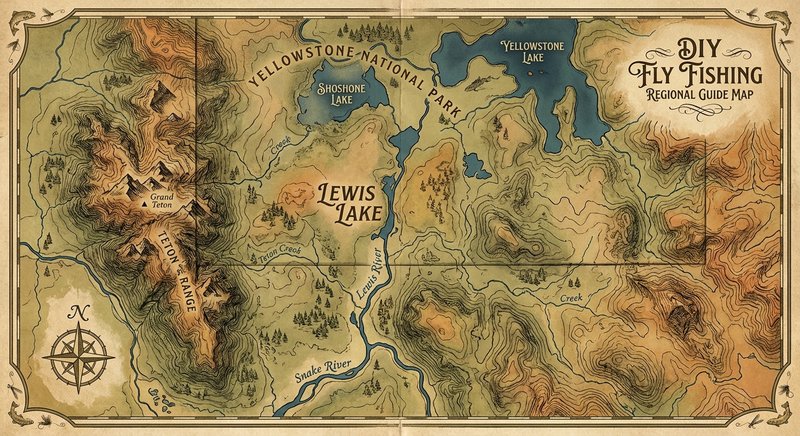
Lewis Lake
Fly fishing in Wyoming · Intermediate · Best seasons: Summer, Fall
Target Species
Brown Trout, Lake Trout
About This Water
Yellowstone backcountry lake with brown and lake trout. Scenic wilderness setting.
Fishing Recommendations
Greetings, angler. You’ve set your sights on one of the most unique stillwater gems in the entire Rocky Mountain West. Lewis Lake sits at approximately 7,800 feet within Yellowstone National Park and offers a rare opportunity for fly fishermen: the chance to land trophy-sized wild Brown Trout and Lake Trout in a high-alpine lake setting.
Here is your guide to mastering the waters of Lewis Lake.
🎣 Location Overview
Lewis Lake is the third-largest lake in Yellowstone, located in the south-central part of the park. What makes it special is its volcanic origin and its connectivity to the Lewis River. Unlike many high-altitude lakes that hold stunted fish, Lewis is a productive biomass factory.
The water is crystal clear and cold, with a shoreline characterized by fallen timber, steep drop-offs, and sandy flats. It is most famous among fly anglers for the Fall Brown Trout run, where massive spawners move from the depths of the lake toward the inlet and outlet, and for the accessibility of Lake Trout (Mackinaw) which, unlike in most lakes, can actually be caught on a fly rod here due to the lake’s structure.
🐟 Target Species & Behavior
Brown Trout
The Browns in Lewis are legendary. During the summer, they are often found cruising the drop-offs or holding near submerged timber. As autumn approaches, they become aggressive and territorial. They feed primarily on scuds, damselflies, and smaller forage fish (chubs and shiners).
Lake Trout (Mackinaw)
In most waters, Lake Trout stay at depths of 60–100 feet, making them unreachable for fly anglers. However, in Lewis Lake, during the "shoulders" of the season (late spring and late fall), the water temperature nears the surface allows these apex predators to move into the shallows (10–20 feet). They are aggressive piscivores; if it looks like a smaller fish, they will crush it.
📅 Best Times to Fish
Optimal Seasons
- Summer (July – August): Best for consistent action. Fish are found along the edges early in the morning and late in the evening. This is "match the hatch" season for Callibaetis and Damselflies.
- Fall (Late September – Early November): This is the Prime Window. As water temperatures drop, the big Browns prepare to spawn. The Lake Trout also move into the shallows. This is your best chance at a fish over 24 inches.
Best Times of Day
- The "Low Light" Rule: Lewis Lake is notorious for mid-day lulls. The best fishing is almost always from dawn until 10:00 AM and from 5:00 PM until dark.
- Windy Days: A light "chop" on the water is your friend. It breaks up the surface, making the fish less wary of your leader and boat shadow.
🪰 Recommended Flies & Techniques
Top Fly Patterns
- Streamers: Sculpzilla (Black or Olive), Peanut Envy, Sparkle Minnows, and JJ Specials.
- Nymphs/Scuds: Ray Charles (Grey or Pink), Flashback Pheasant Tails (#14-16), and Olive Scuds (#12-14).
- Dry Flies: Parachute Adams (during Callibaetis hatches), and large Foam Beetles or Ants in late summer.
Effective Techniques
- Sinking Line Streamer Stripping: Use a Type 3 or Type 5 sinking line. Cast toward the shore or over submerged logs, let it sink for 5-10 seconds, and use a "strip-strip-pause" retrieve.
- The "Slow-Roll" Nymphing: Using a long leader (12–15 feet) and a strike indicator, suspend a scud or damselfly nymph 6–10 feet deep along the drop-offs.
- Sight Casting: On calm summer mornings, you can often see Browns cruising the sandy flats. Use a weightless streamer or a large dry fly and lead the fish by 5 feet.
💡 Pro Tips & Local Knowledge
- Focus on the Drop-offs: Lewis Lake has "benches." The water will be 3 feet deep for a stretch, then suddenly drop to 20 feet. Large Browns patrol this transition zone. Position your boat over the deep water and cast into the shallow "shelf," stripping your fly back over the ledge.
- The Lewis River Inlet: The north end of the lake where the Lewis River enters is a massive magnet for fish. The moving water brings oxygen and food. Even in the heat of summer, this area stays cooler and more productive.
- The "Yellowstone Canoe" Strategy: Motorboats are allowed (with permits), but many experts prefer canoes or sea kayaks. They are quieter and allow you to sneak up on cruising fish in the shallows that a motor would spook.
- Go Big in the Fall: If you are fishing in October, don’t be afraid of 4-inch to 6-inch streamers. The fish are looking for a high-protein meal before winter.
⚠️ Important Information
Access
- Access is via the Lewis Lake Campground and Boat Dock, located off the South Entrance Road.
- A boat is highly recommended. While some shore fishing is possible near the outlet and the campground, 90% of the best water requires a vessel.
Regulations & Permits
- Yellowstone Fishing Permit: You MUST have a specific Yellowstone National Park fishing permit (a Wyoming state license is NOT valid inside the park).
- Boating Permits: If you bring a boat, kayak, or float tube, it must be inspected for aquatic invasive species (AIS) and permitted at a park ranger station.
- Lead-Free Zone: Yellowstone is a lead-free environment. Ensure your split shot and weighted flies are non-lead (tungsten or tin).
- Barbless Hooks Only: All hooks must be barbless or have the barbs pinched down.
Special Considerations
- Grizzly Bear Country: This is prime grizzly habitat. Always carry bear spray, even when you are just walking from the parking lot to the dock.
- Weather: Storms roll over the Pitchstone Plateau rapidly. If you see whitecaps or dark clouds, get off the water immediately; the lake can go from glass to dangerous 3-foot swells in minutes.
Tight lines, and enjoy the wild solitude of Lewis Lake!
Bug Hatches & Matching Flies
| Hatch | Type | Peak months | Time of day | Hook sizes | Matching flies |
|---|---|---|---|---|---|
| Chironomids Family Chironomidae | midge | June, July | All Day | #12-22 | Ice Cream Cone #14-18, Zebra Midge #16-20, Griffith's Gnat #18-22 |
| Callibaetis (Speckled Duns) Callibaetis spp. | mayfly | July, August, September | Late Morning/Afternoon | #12-16 | Callibaetis Spinner #14-16, Hare's Ear Nymph #12-16, Quigley’s Callibaetis Cripple #14-16 |
| Damselflies Enallagma spp. | terrestrial | July, August | Afternoon | #10-14 | Marabou Damsel Nymph #10-12, Adult Damsel #12-14 |
| Scuds Order Amphipoda | terrestrial | June, September, October | All Day | #12-16 | Ray Charles #14-16, Olive Scud #12-16 |
| Traveling Sedge Hesperophylax designatus | caddis | July, August | Evening | #8-12 | Godzilla Caddis #8-10, Mikulak Sedge #10-12 |
| Terrestrial Ants and Beetles Formicidae / Coleoptera | terrestrial | August, September | Afternoon | #12-18 | Black Foam Ant #14-18, Terrestrial Beetle #12-16 |
| Water Boatmen Family Corixidae | terrestrial | September, October | Afternoon | #14-16 | Water Boatman #14-16, Prince Nymph #14-18 |
| Little Black Caddis Chimarra spp. | caddis | June, July | Morning/Evening | #16-20 | Elk Hair Caddis (Black) #16-20, Z-Caddis #16-18 |