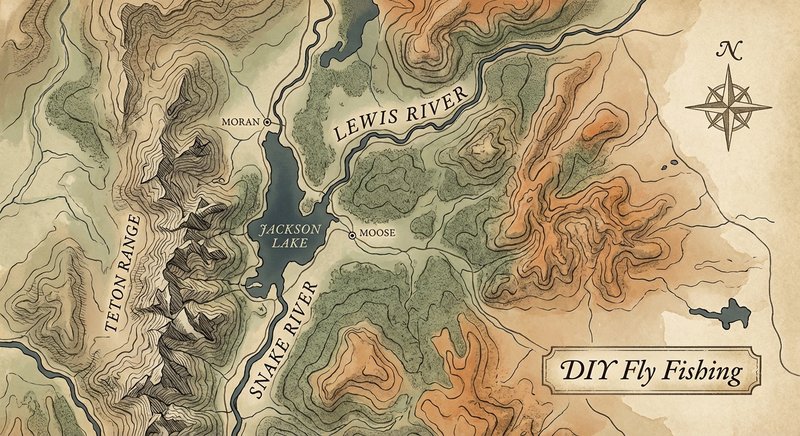
Lewis River
Fly fishing in Wyoming · Intermediate · Best seasons: Summer, Fall
Target Species
Brown Trout
About This Water
Yellowstone stream connecting Lewis and Shoshone lakes. Brown trout throughout.
Fishing Recommendations
The Lewis River, flowing through the heart of Yellowstone National Park, is one of the most unique and rewarding fisheries in the Rocky Mountain West. While much of the park is famous for Cutthroat trout, the Lewis is the kingdom of the Brown Trout. It offers a diverse range of water—from the placid, meadow-like sections near the lake to the rugged, pocket-water canyons below the falls.
🎣 Location Overview
The Lewis River is divided into two distinct sections by the massive Lewis Falls.
- The Upper Lewis: Connecting Lewis Lake to Shoshone Lake (the Channel), this is a flat, slow-moving stretch known for its "lake-to-river" migrations.
- The Lower Lewis: This section flows from Lewis Falls down to its confluence with the Snake River. It is characterized by steep canyons, plunge pools, and technical pocket water.
What makes this river special is the Fall Run. Every autumn, massive Brown trout move out of Lewis Lake and move into the river (both the Channel and the upper reaches of the lower river) to spawn. It is one of the best opportunities in the lower 48 to land a 20-inch+ Brown trout on a fly rod in a pristine wilderness setting.
🐟 Target Species & Behavior
While you will find Brook trout and some Rainbows, the Brown Trout is the undisputed king here.
- Behavior: In the summer, these fish are "resident" fish—they are wary, often holding in deep undercut banks or under the shade of heavy timber. As fall approaches (late September), the "run" begins. These are lake-dwelling fish that become aggressive and territorial as they move into the river.
- Holding Water: Look for "tail-outs" of long pools and deep slots near submerged logs. In the canyon sections, they hold in the soft water behind large boulders or in the deep "buckets" at the base of small waterfalls.
- Feeding: They are opportunistic. In summer, they look for terrestrial insects (hoppers/ants) and small mayflies. In the fall, their diet shifts toward aggression—they strike at smaller fish (streamers) or egg patterns.
📅 Best Times to Fish
Optimal Seasons
- Summer (July – August): Great for dry fly fishing and wading the canyon. The water is clear, and the fish are active on the surface.
- Fall (Late September – Early November): This is Prime Time. This is when the big lake-run Browns move into the river. Note: The park typically closes its fishing season on the Sunday after Thanksgiving, but weather usually dictates an earlier end.
Best Times of Day
- Summer: Early morning and late evening are best to avoid the high-altitude sun which makes the fish "spooky."
- Fall: Mid-day is actually very productive as the water warms slightly, making the fish more active. Overcast, drizzly days are "Brown Trout Weather"—this is when the biggest fish feel safe enough to move.
🪰 Recommended Flies & Techniques
Dry Flies (Summer)
- Terrestrials: Amy’s Ant (size 10-12), Chernobyl Ants, and Dave’s Hopper.
- Mayflies: Parachute Adams (14-18) and BWO patterns for those drizzly summer afternoons.
Nymphs (Summer/Fall)
- Attractors: Prince Nymphs (12-14), Pheasant Tails (14-16).
- The "Secret": Rubber-legged stones (Pat’s Rubber Legs) in black or brown are deadly in the deeper canyon pools.
- Fall specific: Glo-bugs (egg patterns) or soft hackles trailed behind a larger fly.
Streamers (The Fall Specialty)
- Patterns: Sex Dungeon (Olive or Black), Woolly Buggers (Black/Olive with flash), and the Sparkle Minnow.
- Technique: "Swing" your streamers through the tail-outs of pools or strip them aggressively through deep holes.
💡 Pro Tips & Local Knowledge
- The Stealth Factor: The Lewis is crystal clear. If you can see the fish, they have likely already seen you. Wear earthy colors, stay low, and avoid splashing when wading.
- The Canyon Hike: Most people fish near the road pullouts. If you are physically fit, hike a mile or two down into the canyon below the falls. The pressure drops significantly, and the fish are much less sophisticated.
- The Lewis-Shoshone Channel: If you have a canoe or drift boat (rowing only, no motors), the "Channel" between the lakes is a magical experience. It requires a grueling upstream paddle/tow, but the rewarded fishing for trophy Browns is world-class.
- Swing the Riffles: In the fall, don't just fish the deep holes. Big Browns often sit in surprisingly shallow, fast-moving riffles just above a pool.
⚠️ Important Information
- Permits: You must have a Yellowstone National Park Fishing Permit. A Wyoming state license is not valid inside the park. These can be purchased online or at visitor centers.
- Regulations: The Lewis is Catch and Release only for all trout. You must use barbless hooks (pinch your barbs with pliers). Lead weights/split shot are prohibited; use non-toxic tungsten or tin.
- Bear Safety: This is Grizzly Country. Always carry bear spray, keep it accessible (not in your pack), and make noise while hiking through thick brush near the river.
- Wading: The Lewis can be slippery and the canyon section has some "room-sized" boulders. A wading staff is highly recommended.
- Felt Soles: Felt-soled wading boots are prohibited in Yellowstone to prevent the spread of invasive species. Use rubber soles with studs.
Bug Hatches & Matching Flies
| Hatch | Type | Peak months | Time of day | Hook sizes | Matching flies |
|---|---|---|---|---|---|
| Midges Chironomidae | midge | June, July, August | All Day | #18-24 | Zebra Midge #18-22, Griffith's Gnat #20-22, Palomino Midge #20-24 |
| Pale Morning Dun Ephemerella excrucians | mayfly | July, August | Late Morning/Afternoon | #16-18 | Sparkle Dun #16-18, PMD Emerger #16-18, Pheasant Tail #16-18 |
| Blue Winged Olive Baetis tricaudatus | mayfly | May, September, October | Afternoon | #18-22 | BWO Parachute #18-20, RS2 #20-22, JujuBaetis #18-22 |
| Green Drake Drunella doddsi | mayfly | July | Afternoon | #10-12 | Hairwing Green Drake #10-12, Drake Emerger #12, Drunella Nymph #10-12 |
| Damselfly Enallagma | terrestrial | July, August | Morning/Afternoon | #10-14 | Marabou Damsel Nymph #12-14, Braided Butt Damsel #12-14 |
| Salmonfly Pteronarcys californica | stonefly | June, July | All Day | #4-8 | Rogue River Stone #4-8, Pat's Rubber Leg #6-10, Chubby Chernobyl #8-12 |
| Spotted Sedge Hydropsyche | caddis | July, August | Evening | #14-16 | Elk Hair Caddis #14-16, LaFontaine's Deep Sparkle Pupa #14-16, Godzilla Caddis #14-16 |
| Terrestrials (Ants and Beetles) Formicidae / Coleoptera | terrestrial | August, September | Midday | #12-18 | Cinnamon Ant #14-18, Black Flying Ant #14-16, Foam Beetle #12-16 |