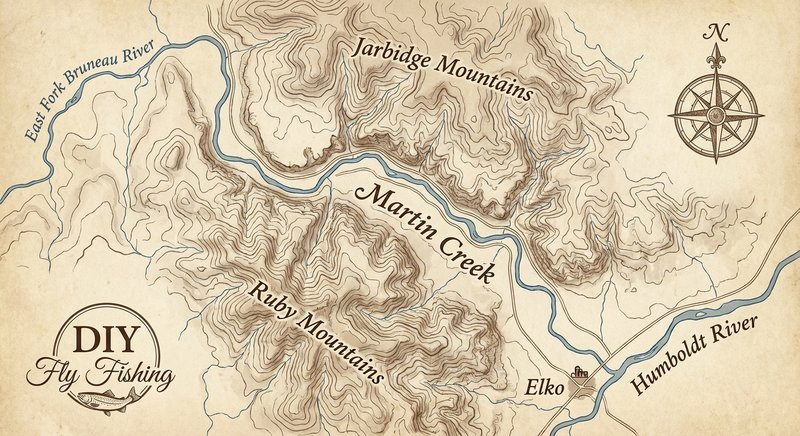
Martin Creek
Fly fishing in Nevada · advanced · Best seasons: summer, fall
Target Species
Lahontan Cutthroat Trout
About This Water
Santa Rosa Range stream with wild cutthroat. Quality fishing in remote setting.
Fishing Recommendations
Martin Creek, located in the Santa Rosa Range of Humboldt County, Nevada, is a hidden gem for anglers seeking solitude and the opportunity to catch a unique strain of trout in a rugged, high-desert environment.
🎣 Location Overview
Martin Creek is a small, high-gradient mountain stream flowing through the Santa Rosa-Paradise Peak Wilderness and the Humboldt-Toiyabe National Forest. What makes this water special is its isolation and its status as a stronghold for the Lahontan Cutthroat Trout (LCT).
The creek is characterized by cold, clear water, pocket water, small plunge pools, and willow-lined banks. It offers a classic "blue lining" experience where the scenery is as much a draw as the fishing. This is true high-desert riparian fishing—surrounded by sagebrush and granite peaks, the lush greenery of the creek corridor provides a stark and beautiful contrast. Anglers love it because you will rarely see another soul, and the fish are notoriously wild and aggressive.
🐟 Target Species & Behavior
The primary target here is the Lahontan Cutthroat Trout. Unlike the giants found in Pyramid Lake, the LCT in Martin Creek are stream-resident fish, typically ranging from 6 to 12 inches, with an occasional 14-incher hiding in a deep hole.
- Behavior: These fish are opportunistic feeders. Because the growing season in the high desert is short, they cannot afford to be picky. However, they are extremely "spooky." The water is crystal clear, and the fish have a high awareness of overhead predators (birds of prey).
- Holding Patterns: Look for them in the "heads" of pools where oxygen is high, and behind large boulders that break the current. During the heat of the day, they will tuck tight under overhanging willow branches.
- Feeding: Their diet consists heavily of terrestrial insects (ants, beetles, grasshoppers) and small aquatic invertebrates (mayflies and caddis).
📅 Best Times to Fish
While the creek is accessible in late spring, the high elevation and snowmelt make Summer and Fall the premier windows.
- Summer (July – August): This is the peak of the dry fly season. As the water levels drop and clear after runoff, the fish move into the faster ripples.
- Fall (September – October): This is arguably the best time. The air cools down, the willows turn gold, and the trout feed aggressively to bulk up for winter. The LCT often display their most vibrant spawning colors (crimson slashes and deep bronze bodies) during this time.
- Time of Day: In the heat of summer, the early morning and "golden hour" before sunset are best. In the fall, mid-day fishing is excellent as the sun warms the water and activates insect life.
🪰 Recommended Flies & Techniques
Since the fish are opportunistic, you don't need a massive fly box, but you do need a stealthy approach.
Top Fly Patterns
- Dry Flies: Stimulators (Orange or Yellow, #12-16), Royal Wulff (#14-16), Elk Hair Caddis (#14-18), and Parachute Adams (#14-18).
- Terrestrials: Dave’s Hopper (#10-12), Black Ants (#16), and Foam Beetles (#14). A hopper-dropper rig is deadly here.
- Nymphs: Bead-head Prince Nymphs (#14-16), Pheasant Tails (#16-18), and Hare’s Ears (#16).
- Streamers: Small Woolly Buggers (Olive or Black, #10-12) for the deeper pools.
Effective Techniques
- Dry-Fly Fishing: 90% of your fishing should be on the surface. These fish love to look up.
- Short Line Casting: The creek is tight and brushy. You’ll rarely make a cast longer than 20 feet. Focus on "bow-and-arrow" casts or short roll casts to get under the willows.
- Stealth: Wear drab colors (camo, tan, or olive) to blend in with the sagebrush and willows. Approach every pool from downstream and stay low.
💡 Pro Tips & Local Knowledge
- The "One-Cast" Rule: In these small pools, your first cast is your best chance. If you slap the water or line a fish, the pool is "blown," and you should move on to the next pocket.
- Focus on the North Fork: While the main stem is good, the North Fork of Martin Creek offers some of the most pristine habitats and can stay cooler during the peak of summer.
- Gear Selection: Use a 2-weight or 3-weight rod, 7 to 8 feet in length. A shorter rod is essential for navigating the brush. Use a 7.5-foot leader tapered to 5X or 6X tippet.
- Drought Awareness: In dry years, water levels can get critically low. Always check water temperatures; if the water is over 68°F, stop fishing to protect the LCT from heat stress.
⚠️ Important Information
- Access: Access is primarily via Forest Service Road 087 out of Paradise Valley, NV. High-clearance vehicles are strongly recommended, as the roads can be rugged and prone to washouts.
- Regulations: Nevada Department of Wildlife (NDOW) regulations apply. This is often managed as a wild trout fishery; check the current Nevada Fishing Guide for specific bag limits or catch-and-release mandates for LCT. Barbless hooks are highly recommended to ensure the survival of these native fish.
- Safety: This is remote country. There is zero cell service. Bring a spare tire, plenty of water, and bear spray (though rare, black bears and mountain lions inhabit the range). Watch for rattlesnakes in the tall grass near the water.
- Permits: A valid Nevada Fishing License with a trout stamp is required.
Guide’s Final Word: Martin Creek is not about trophy size; it is about the heritage of the Lahontan Cutthroat and the purity of the experience. Treat these rare fish with respect, and they will reward you with some of the most visual and rewarding fly fishing in the Silver State.
Bug Hatches & Matching Flies
| Hatch | Type | Peak months | Time of day | Hook sizes | Matching flies |
|---|---|---|---|---|---|
| Blue Winged Olive Baetis | mayfly | March, April, September, October | Mid-day | #18-22 | Parachute Adams #18-22, RS2 #20-22, Pheasant Tail #18-20 |
| Pale Morning Dun Ephemerella | mayfly | June, July | Late Morning/Afternoon | #14-18 | Sparkle Dun #16-18, PMD Emerger #16-18, Frenchie #14-16 |
| Golden Stonefly Hesperoperla pacifica | stonefly | May, June | Morning/Evening | #6-10 | Chubby Chernobyl #8-10, Pat's Rubber Leg #6-10, Golden Stone Nymph #8-10 |
| Spotted Sedge Hydropsyche | caddis | June, July, August | Evening | #14-18 | Elk Hair Caddis #14-16, LaFontaine's Deep Sparkle Pupa #14-16, Holy Grail #16 |
| Yellow Sally Isoperla | stonefly | June, July | Afternoon/Evening | #14-16 | Yellow Stimulator #14-16, Iron Lotus #16, Little Yellow Stone Nymph #14-16 |
| Grasshopper Orthoptera | terrestrial | July, August, September | Mid-day/Afternoon | #8-12 | Morrish Hopper #10-12, Dave's Hopper #8-12, Parachute Hopper #12 |
| Black Ant Formicidae | terrestrial | June, July, August | All Day | #16-20 | Cinnamon Ant #16-18, Black Foam Ant #16-20, Carpenter Ant #14 |
| Zebra Midge Chironomidae | midge | January, February, March, December | All Day | #18-24 | Zebra Midge #18-22, Griffith's Gnat #20-22, Top Secret Midge #20-24 |