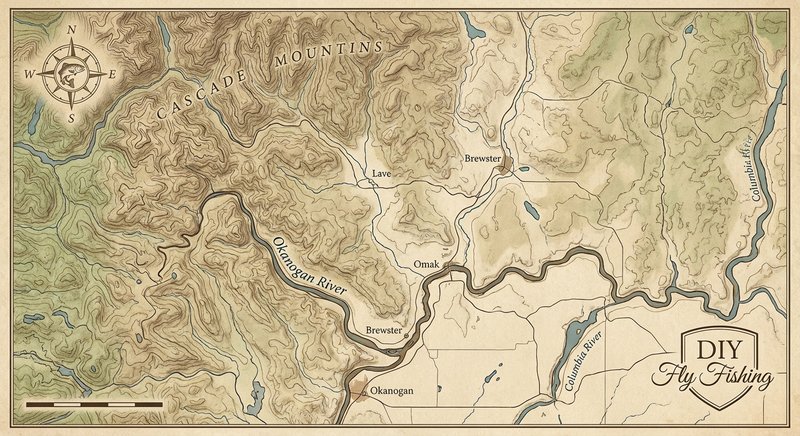
Okanogan River
Fly fishing in Washington · Intermediate · Best seasons: Summer, Fall
Target Species
Steelhead, Rainbow Trout
About This Water
North-central Washington river with steelhead and trout. Part of the Columbia River system.
Fishing Recommendations
As your guide to the Pacific Northwest, I can tell you that the Okanogan River (often spelled Okanagan in Canada) is one of the most unique and underrated fisheries in Washington State. Flowing south from the Canadian border to its confluence with the Columbia River near Brewster, it is a desert river that serves as a critical corridor for migratory fish.
While often overshadowed by the Methow or the Wenatchee, the Okanogan offers a rugged, uncrowded experience for anglers who know how to time its temperamental windows.
🎣 Location Overview
The Okanogan is a "high-desert" river. Unlike the crystalline, tumbling mountain streams nearby, the Okanogan is generally wider, slower, and carries more sediment. It flows through a landscape of sagebrush, basalt cliffs, and orchards.
What makes it special is its role as a major thermal barrier. During the summer, the water can become quite warm, pushing fish into specific "cold water refugia" near the mouths of tributaries. For the fly angler, this is a river of big water and broad runs. It feels like a "classic" steelhead river—perfect for long casts and swinging flies—but it requires a strategic approach to handle its fluctuating temperatures and clarity.
🐟 Target Species & Behavior
Steelhead (Summer-Run)
The Okanogan hosts a significant run of summer-run steelhead (which actually arrive in late summer and fall). These fish are headed for the upper reaches and tributaries like the Similkameen River.
- Behavior: They are "resting" migrants. They move when the water is cool and hold when it’s warm.
- Holding Water: Look for "walking pace" water. They love the heads of pools where oxygen is high, or deep slots behind large boulders.
Rainbow Trout
The river has a resident population of rainbows, often found in the swifter sections and near tributary mouths.
- Behavior: These fish are opportunistic. Because the Okanogan is a productive system with high insect biomass, they grow large and fight hard.
- Feeding: They key in on caddis, stones, and—crucially—salmon eggs or flesh during the spawning windows of other species.
📅 Best Times to Fish
The "Thermal Window" (September – November)
This is the prime time. In July and August, the water is often too warm for ethical catch-and-release. As temperatures drop in September, steelhead begin moving out of the Columbia and into the Okanogan.
- Optimal Months: October and November are the "Golden Months." The water clears, the temperatures hit the 45–55°F sweet spot, and the fish are aggressive.
- Best Time of Day: During early autumn, the morning and evening "grey light" hours are best. In late fall, wait for the sun to hit the water to wake up the fish.
🪰 Recommended Flies & Techniques
Steelhead Techniques: The Swing
This is a Spey angler’s river. The broad cobble runs are tailor-made for swinging flies.
- Patterns:
- Surface: Steelhead Bee, Foam Skaters (if water is >50°F).
- Sub-surface: Purple Perils, Green Butt Skunks, and Hoh Bo Speys in black/blue or pink/orange.
- Presentation: Cast 45 degrees downstream, mend to set the depth, and let the fly swing through the tension of the current.
Trout Techniques: Nymphing & Dries
- Nymphing: Use a heavy two-fly rig. A Pats Rubber Legs (Black or Olive) trailed by a Beadhead Prince Nymph or a Copper John.
- Dry Fly: In late summer evenings, look for massive caddis hatches. Use an Elk Hair Caddis or a Godzilla Caddis (Size 10-14).
- Streamers: For larger rainbows, swing or strip a Sculpzilla or a Wooly Bugger in olive/black near structure.
💡 Pro Tips & Local Knowledge
- Focus on the Confluences: The mouths of the Similkameen River and Salmon Creek are hotspots. The Similkameen provides cooler, clearer water that attracts fish like a magnet.
- Watch the "Thermal Block": If the Okanogan water temperature exceeds 70°F, steelhead will stall at the mouth near Brewster in the Columbia. They won't enter the river until a cold snap hits. Monitor the USGS gauges religiously.
- The "Similkameen Factor": Many anglers actually prefer the Similkameen (the Okanogan’s main tributary) for fly fishing, as it is more "classic" trout water—smaller, swifter, and clearer.
- Color Palette: In the Okanogan’s slightly murky water, black and blue combinations provide the best silhouette for steelhead. On bright days, try copper or pink.
⚠️ Important Information
Regulations & Permits
- Steelhead: You must check the WDFW (Washington Department of Fish and Wildlife) emergency rules. The Okanogan steelhead fishery is often opened or closed via "Emergency Rule Change" based on return counts.
- Barbless Hooks: Mandatory for all steelhead fishing in Washington.
- Selective Gear Rules: Many stretches require unscented artificial flies and lures only.
- Tribal Lands: Portions of the river run through the Colville Indian Reservation. Ensure you are on public access points or have the necessary permits if crossing tribal land.
Access
- Public access is available at various bridge crossings and WDFW water access sites between the towns of Okanogan and Oroville.
- A drift boat or raft is the best way to see the river, but be wary of low water levels in the fall which can make rowing a challenge over rocky bars.
Guide’s Final Word: The Okanogan is a reward for the patient angler. It doesn't give up its fish easily, but standing in a wide run at sunset with a Spey rod in hand and the desert hills turning purple is an experience every PNW angler should have at least once.
Bug Hatches & Matching Flies
| Hatch | Type | Peak months | Time of day | Hook sizes | Matching flies |
|---|---|---|---|---|---|
| Blue Winged Olive Baetis spp. | mayfly | March, April, October, November | Mid-day | #16-20 | Parachute Adams #16-20, RS2 #18-20, Pheasant Tail #16-20 |
| Salmonfly Pteronarcys californica | stonefly | May, June | All day | #4-8 | Chubby Chernobyl #6-10, Pat's Rubber Leg #4-8, Sofa Pillow #6-8 |
| Pale Morning Dun Ephemerella excrucians | mayfly | June, July | Late morning/Afternoon | #14-18 | Sparkle Dun #16-18, PMD Parachute #14-18, Split Case PMD #16-18 |
| Spotted Sedge (Caddis) Hydropsyche spp. | caddis | June, July, August | Evening | #14-16 | Elk Hair Caddis #14-16, LaFontaine's Deep Sparkle Pupa #14-16, Holy Grail #14-16 |
| Golden Stonefly Hesperoperla pacifica | stonefly | June, July | Morning/Afternoon | #8-12 | Goldie #8-12, 20 Incher #8-12, Clark's Stone #10-12 |
| Grasshoppers Acrididae | terrestrial | July, August, September | Mid-day/Afternoon | #8-12 | Morrish Hopper #8-12, Dave's Hopper #10-12, Charlie Boy Hopper #10-14 |
| October Caddis Dicosmoecus atripes | caddis | September, October | Afternoon/Evening | #8-12 | Orange Stimulator #8-12, Peeping Caddis #10-12, October Caddis Pupa #10-12 |
| Midges Chironomidae | midge | February, March, November | Morning/Mid-day | #18-24 | Griffith's Gnat #18-22, Zebra Midge #18-24, Smoke Jumper #20-22 |