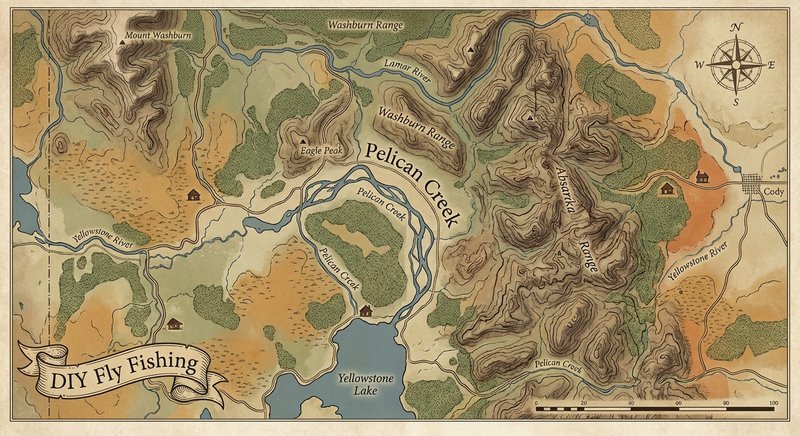
Pelican Creek
Fly fishing in Wyoming · Intermediate · Best seasons: Summer
Target Species
Cutthroat Trout
About This Water
Yellowstone Lake tributary with cutthroat trout. Bear management area with seasonal closures.
Fishing Recommendations
🎣 Location Overview
Pelican Creek is one of the most iconic "nursery" streams in Yellowstone National Park. Located on the north-northeast shore of Yellowstone Lake, this winding, meadow-style stream is a critical spawning tributary for the Yellowstone Cutthroat Trout.
What makes Pelican Creek special is its quintessential "meander" character. It flows through a wide, lush valley (Pelican Valley), offering classic spring-creek-style fishing with deep undercut banks, slow-moving glides, and sweeping oxbows. Anglers love it because it offers a true wilderness experience—you are often miles from the nearest road, surrounded by grizzly tracks and bison, fishing for wild, native trout that are as beautiful as the landscape itself.
🐟 Target Species & Behavior
The star of the show here is the Yellowstone Cutthroat Trout.
- Behavior: These fish are opportunistic but can be wary in the slow, clear water of the meadows. During the summer, they transition from their spawning runs back into a resident "feeding" mode.
- Where they hold: Look for them tight against the undercut banks, at the tail-outs of long pools, and in the deep "buckets" formed at the apex of the creek's many bends. They often hover just beneath the surface in the foam lines, waiting for terrestrial insects to fall from the overhanging grasses.
- Feeding: They are highly focused on surface activity during the summer. While they will eat nymphs, the Pelican Creek Cutthroat is famous for its willingness to rise to a well-presented dry fly.
📅 Best Times to Fish
- Optimal Seasons: Mid-July through August. Due to spawning closures and high water from snowmelt, the creek usually doesn't open until July 15th (always check current NPS dates).
- Best Times of Day:
- Late Morning (10:00 AM - 2:00 PM): This is prime time for terrestrial activity as the sun warms the meadow grasses and gets grasshoppers and beetles moving.
- Evening: If there is a caddis or mayfly hatch, the last two hours of light can be magical.
- Prime Windows: The "Golden Window" is typically the first two weeks of August when the water levels have dropped, the clarity is perfect, and the terrestrial fishing is at its peak.
🪰 Recommended Flies & Techniques
Top Fly Patterns
- Terrestrials (The Bread & Butter):
- Hopper Juan or Morrish Hopper (Size 10-14) in tan or yellow.
- Black Beetle (Size 14-16) with a high-vis spot.
- Ants (Size 16-18) – Cinnamon or Black foam ants are deadly here.
- Dry Flies:
- Parachute Adams (Size 14-18) for general hatches.
- Elk Hair Caddis (Size 14-16) for evening rises.
- Nymphs (Use as a dropper):
- Pheasant Tail (Size 16-18).
- Hare’s Ear (Size 14-16).
Effective Techniques
- Dry-Dropper: This is the most effective way to cover Pelican Creek. Use a buoyant hopper as your "indicator" and hang a small unweighted nymph about 18–24 inches below it.
- The "Sneak and Peak": Because the banks are often high and the water is slow, fish will see your silhouette easily. Approach the bank on your knees and stay back at least 5-10 feet from the edge before casting.
- Dead Drift: A drag-free drift is essential. Use a long leader (9ft to 12ft) tapered to 4X or 5X to avoid spooking fish in the glassy glides.
💡 Pro Tips & Local Knowledge
- Walk the Distance: Most anglers fish the section closest to the road. If you hike 2-3 miles into the Pelican Valley, the fishing pressure drops significantly, and the fish become much less "educated."
- Watch the Undercuts: Don't just cast to the middle. Many of the biggest Cutthroats are tucked inches away from the grass under the bank. Try to "plop" your hopper right against the dirt.
- The "Bison Effect": Bison frequent this valley. If you see them crossing the creek upstream, the water may get muddy. Conversely, they often kick insects into the water, which can trigger a feeding frenzy.
- Polarized Lenses: High-quality amber or copper lenses are mandatory. You will often sight-fish these Cutthroats before you ever make a cast.
⚠️ Important Information
- Grizzly Country: This is one of the most active grizzly bear areas in the lower 48 states. Pelican Valley is often under "Bear Management Area" restrictions.
- Always carry bear spray (and know how to use it).
- Fish with a partner.
- Make noise while walking through the tall meadow grasses.
- Permits & Regulations:
- A Yellowstone National Park Fishing Permit is required (State licenses from WY/MT/ID are not valid).
- Pelican Creek is strictly Catch and Release for Cutthroat Trout.
- Barbless hooks only. Lead weights/shot are prohibited.
- Access: The trailhead is located near the Fishing Bridge area on the east side of the park. Park at the Pelican Creek trailhead and follow the trail into the valley.
- Seasonal Closures: Parts of the creek may be closed until July 15th to protect spawning fish. Always check the Yellowstone Fishing Regulations booklet provided with your permit for the most up-to-date boundary and date information.
Bug Hatches & Matching Flies
| Hatch | Type | Peak months | Time of day | Hook sizes | Matching flies |
|---|---|---|---|---|---|
| Gray Drake Siphlonurus occidentalis | mayfly | June, July | Morning/Evening | #10-14 | Gray Drake Paradox #12-14, Siphlonurus Nymph #10-12, Hairwing Gray Drake #12 |
| Pale Morning Dun (PMD) Ephemerella excrucians | mayfly | July, August | Late Morning/Afternoon | #16-18 | Sparkle Dun #16-18, Pheasant Tail #16-18, Rusty Spinner #16-18 |
| Blue Winged Olive (BWO) Baetis tricaudatus | mayfly | May, September, October | Afternoon | #18-22 | RS2 #20-22, Parachute Adams #18-22, WD-40 #20-22 |
| Spotted Sedge Hydropsyche | caddis | July, August | Evening | #14-16 | Elk Hair Caddis #14-16, LaFontaine's Deep Sparkle Pupa #14-16 |
| Grasshopper Acrididae | terrestrial | August, September | Late Morning/Afternoon | #8-12 | Morrish Hopper #8-12, Parachute Hopper #10-12, Letort Hopper #12 |
| Black Ants and Beetles Formicidae / Coleoptera | terrestrial | July, August, September | All Day | #14-18 | Cinnamon Ant #16-18, Black Foam Beetle #14-16 |
| Callibaetis Callibaetis nigritus | mayfly | July, August | Morning/Afternoon | #14-16 | Callibaetis Spinner #14-16, Hare's Ear Nymph #14-16 |
| Chironomids Chironomidae | midge | June, July, August, September | Morning | #18-24 | Zebra Midge #18-22, Griffith's Gnat #20-24 |