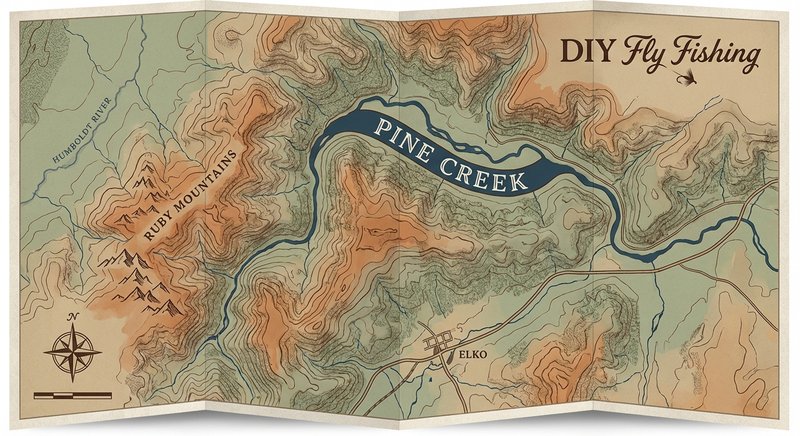
Pine Creek
Fly fishing in Nevada · advanced · Best seasons: summer, fall
Target Species
Lahontan Cutthroat Trout
About This Water
Toiyabe Range stream with native cutthroat. Wilderness fishing experience.
Fishing Recommendations
Pine Creek, located in the rugged Santa Rosa Mountains of northern Nevada (Humboldt County), is a hidden gem for the adventurous angler. This isn't your typical broad western river; it is a high-desert mountain stream that offers a rare opportunity to catch one of the most iconic fish of the West in its native environment.
Here is your comprehensive guide to fly fishing Pine Creek.
🎣 Location Overview
Pine Creek flows through the Santa Rosa-Paradise Peak Wilderness, north of Winnemucca. What makes this water special is its isolation and its role as a stronghold for the Lahontan Cutthroat Trout (LCT).
The water is classic "small blue line" territory: high-gradient, crystal clear, and boulder-strewn. It tumbles through narrow canyons and high-alpine meadows lined with aspens and willows. Anglers love Pine Creek because it offers a "backcountry" experience where you are more likely to see a mule deer or a mountain lion than another fisherman. It is technical, physical, and deeply rewarding for those who value wild fish over "trophy" sizes.
🐟 Target Species & Behavior
The primary draw here is the Lahontan Cutthroat Trout. Unlike the massive, lake-dwelling LCT found in Pyramid Lake, the Pine Creek variety are stream-resident fish, typically ranging from 6 to 12 inches, with a 14-incher being a "monster" for this water.
- Behavior: These fish are opportunistic but incredibly wary. In the clear, thin water, they have a 360-degree view of their surroundings. If they see your shadow or the flash of your rod, they will bolt.
- Holding Areas: Look for them in the "plunge pools" beneath small waterfalls, tucked tightly under undercut banks, or behind large boulders in the pocket water.
- Feeding: Due to a short growing season, they are not overly selective about hatch stages but are very sensitive to presentation. They feed heavily on terrestrial insects (ants, beetles, grasshoppers) and basic aquatic nymphs.
📅 Best Times to Fish
The window for Pine Creek is relatively short due to its high elevation and desert climate.
- Summer (Late June – August): This is the prime window. The spring runoff (which can be violent in the Santa Rosas) has usually subsided by late June. The fish are active, and the dry-fly fishing is at its peak.
- Fall (September – early October): This is the "magic hour" for Pine Creek. The water temperatures drop, and the fish become aggressive, feeding heavily to bulk up for the long winter. The changing colors of the aspens provide a stunning backdrop.
- Time of Day: In the heat of summer, early mornings and late evenings are best. In the fall, wait for the sun to hit the water (10 AM – 3 PM) to trigger insect activity.
🪰 Recommended Flies & Techniques
You don't need a massive fly box for Pine Creek, but you do need accurate casts.
Top Fly Patterns
- Dry Flies:
- Stimulators (Size 12-16): Orange or Yellow. Great for imitating stoneflies or grasshoppers.
- Royal Wulff (Size 14-16): High visibility in broken water.
- Parachute Adams (Size 16-18): The ultimate generalist.
- Ants and Beetles (Size 16-18): Essential for late summer.
- Nymphs:
- Pheasant Tail (Size 16-18): Bead-head versions help get down in deep plunge pools.
- Hare’s Ear (Size 14-16): Imitates a wide variety of "bugs."
Effective Techniques
- The Dry-Dropper: This is the gold standard for Pine Creek. Use a buoyant Stimulator as your "indicator" and hang a small Pheasant Tail nymph about 18–24 inches below it.
- Dapping: In heavily willow-lined sections, you may not be able to cast. Simply poke the rod tip through the brush and drop the fly onto the surface.
- Upstream Approach: Always fish moving upstream. Because the water is clear and shallow, approaching from behind the fish is the only way to stay undetected.
💡 Pro Tips & Local Knowledge
- The "Kneel and Cast": Experienced Pine Creek guides know that if you stand up, you’re done. Stay low—fish on your knees to keep your silhouette below the fishes' window.
- Focus on the Head of the Pool: In the summer, LCT will sit right at the "bubble line" where the oxygen is highest.
- Pack Light and Rugged: This is a hiking destination. Use a 2-weight or 3-weight rod (7'6" is ideal) to navigate the tight brush. Wear sturdy hiking boots rather than heavy waders; "wet wading" in quick-dry pants is often the best move in July and August.
- Be Bear/Lion Aware: The Santa Rosa Range is remote. Carry bear spray and let someone know your itinerary.
⚠️ Important Information
- Access: Access is via Highway 95 north of Winnemucca. Turn east toward Paradise Valley, then take Forest Road 087 (standard gravel, but can be rough) into the mountains. A high-clearance vehicle is recommended.
- Regulations: Pine Creek is managed by the Nevada Department of Wildlife (NDOW).
- Check current seasons; it is often Catch and Release only with artificial lures/flies and single barbless hooks to protect the native LCT genetics.
- A valid Nevada Fishing License is required.
- Sensitive Habitat: The Lahontan Cutthroat is a threatened species. Handle fish with extreme care: keep them in the water, use a rubber net, and ensure your hands are wet before touching them.
- Water Levels: In drought years, Pine Creek can get very low by late August. If the water feels too warm (above 68°F), stop fishing to avoid stressing the trout.
Bug Hatches & Matching Flies
| Hatch | Type | Peak months | Time of day | Hook sizes | Matching flies |
|---|---|---|---|---|---|
| Blue Winged Olive Baetis | mayfly | April, May, September, October | Late Morning/Afternoon | #18-22 | Parachute Adams #18-22, RS2 #20-22, Pheasant Tail Nymph #18-20 |
| Pale Morning Dun Ephemerella | mayfly | June, July | Late Morning | #14-18 | PMD Sparkle Dun #16-18, Quigley Cripple #14-16, Military May #16-18 |
| Spotted Sedge Hydropsyche | caddis | June, July, August | Evening | #14-18 | Elk Hair Caddis #14-18, LaFontaine's Deep Sparkle Pupa #14-16, Holy Grail #16-18 |
| Little Yellow Stonefly Isoperla (Yellow Sally) | stonefly | June, July | Afternoon/Evening | #14-16 | Yellow Sally Stimulator #14-16, Iron Lotus #16, Mercer's Poxyback Stone #14-16 |
| Grasshoppers Orthoptera | terrestrial | July, August, September | Midday | #8-14 | Parachute Hopper #10-12, Morrish Hopper #8-12, Dave's Hopper #10-14 |
| Midges Chironomidae | midge | March, April, September, October | Morning | #20-26 | Zebra Midge #20-22, Griffith's Gnat #20-24, Top Secret Midge #22-24 |
| Trico Tricorythodes | mayfly | August, September | Early Morning | #20-24 | Trico Spinner #22-24, Drowned Trico Spinner #20-22 |
| Black Ants Formicidae | terrestrial | July, August | All Day | #16-20 | Cinnamon or Black Ant #16-18, Transparant #18 |
| Golden Stonefly Hesperoperla pacifica | stonefly | June, July | Morning/Evening | #8-12 | Golden Stimulator #8-12, Pat's Rubber Legs #8-12 |