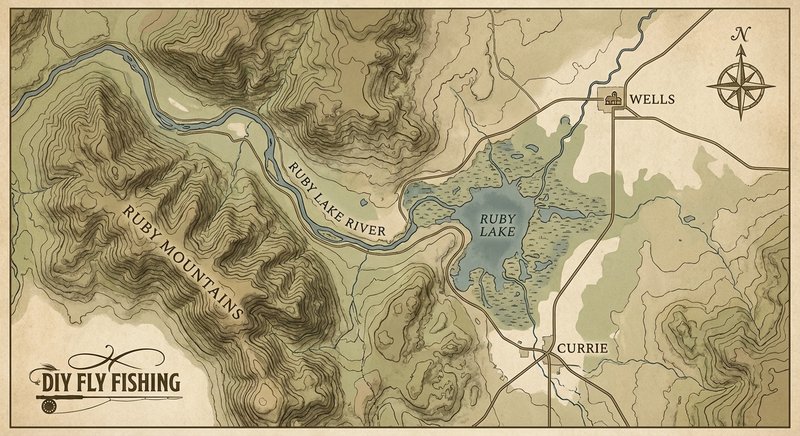
Ruby Lake
Fly fishing in Nevada · intermediate · Best seasons: spring, fall
Target Species
Rainbow Trout, Brown Trout
About This Water
National Wildlife Refuge marsh with trout fishing. Unique wetland ecosystem.
Fishing Recommendations
Tight lines, friend. You’re asking about one of the most unique and rewarding stillwater fisheries in the Great Basin. Ruby Lake National Wildlife Refuge, often called the "Rubies," is a high-desert oasis located at the base of the majestic Ruby Mountains.
As a guide, I consider this a "PhD level" fishery—it can be challenging, but the reward is some of the hardest-fighting, most beautiful trout in Nevada.
🎣 Location Overview
Ruby Lake is not a "lake" in the traditional sense; it is a massive 17,000-acre marsh and spring-fed wetland complex. It sits at an elevation of about 6,000 feet. What makes it special is the clarity and chemistry of the water. Fed by over 160 springs, the water is gin-clear and alkaline, which creates a massive biological engine.
Anglers love the Rubies for the "South Marsh" experience—navigating through a labyrinth of heavy bulrush and cattail channels. It feels more like fishing the Florida Everglades than the Nevada desert. It is a shallow-water fishery where stealth and observation are more important than long-distance casting.
🐟 Target Species & Behavior
- Rainbow Trout: These are the primary residents. Because of the high oxygen levels and abundant food, they are incredibly stout and powerful. They behave more like river fish, often holding near "moving" water where springs enter the marsh.
- Brown Trout: The "Kings of the Marsh." The Browns here grow large by feeding on smaller tui chub and damselfly larvae. They are notoriously wary and often hold tight against the shadows of the bulrush walls.
- Feeding Habits: The trout here are opportunistic but focused on high-protein sources. The "Holy Trinity" of Ruby Lake forage consists of Scuds (freshwater shrimp), Damselflies, and Dragonflies.
📅 Best Times to Fish
Optimal Seasons
- Spring (May – June): This is prime time. As the water warms, the damselfly migrations begin. Fish move out of the deeper spring holes and into the channels to intercept nymphs.
- Fall (September – October): The water cools, and the trout get a "second wind." The weeds begin to die back slightly, making navigation easier, and the fish feed aggressively to bulk up for winter.
Best Times of Day
- Morning/Evening: This is a shallow fishery (often 3–6 feet deep). Mid-day sun can drive fish deep into the weed beds where they are inaccessible. Low-light periods are essential for the big Browns.
Prime Windows
- The Damselfly Hatch: Late June is legendary. When the blue damsels start crawling toward the reeds, the marsh comes alive with "gulpers."
🪰 Recommended Flies & Techniques
Top Fly Patterns
- Scuds: Olive or Gray, sizes 12-16. (The #1 staple here).
- Damselfly Nymphs: Marabou tail versions with gold beads, sizes 10-14.
- Balanced Leeches: Olive, Black, or "Bruised" (purple/black), sizes 10-12.
- Dragonfly Nymphs: Large, olive, hairy patterns like the Gomphus or Bitch Creek.
- Dry Flies: Parachute Adams or Blue Winged Olives (during spring/fall hatches), and large Foam Damsels in mid-summer.
Effective Techniques
- The "Nymph & Twitch": Fish a damselfly or scud on a long leader (12ft+) with a slow, erratic strip.
- Indicator Fishing: Suspend a scud or balanced leech about 12-18 inches above the weed line. The slight chop on the water provides all the action you need.
- Sight Casting: In the clear channels, you can often spot fish cruising the edges. Lead the fish by 5 feet and let the fly settle.
💡 Pro Tips & Local Knowledge
- The Boat is Key: While there is some shore access near the "Collection Ditch," to truly fish Ruby, you need a boat. Note: Only internal combustion motors of 10hp or less are allowed, and many areas are electric-only or paddle-only. A canoe or a stable kayak is a lethal weapon here.
- Find the Springs: The "Collection Ditch" on the west side is where many springs enter. The water here stays cooler and more oxygenated.
- "The Bounce": If you feel your fly tickling the weeds, give it a sharp strip. This often triggers a reaction strike from a trout hiding in the vegetation.
- Stealth: Because the water is so clear, avoid wearing bright colors. Use 4X or 5X fluorocarbon tippet—the fish are smart and the water offers them a perfect view of your rig.
⚠️ Important Information
- Access: Located about 60 miles south of Elko, NV. Be prepared for long dirt roads (Harrison Pass can be tricky in inclement weather). Ensure you have a full tank of gas.
- Regulations: The Refuge has very specific zone-based regulations. The South Marsh is the primary fishing area. Always check the Official Ruby Lake NWR website for the current "Fishing & Boating" brochure.
- Permits: A valid Nevada Fishing License and Trout Stamp are required.
- Environment: This is a Wildlife Refuge. Be mindful of nesting birds. Also, be prepared for bugs—mosquitoes can be legendary in the early summer, so bring heavy-duty repellent.
Guide’s Final Word: Ruby Lake is a place of solitude. You might not see another soul all day, but you'll see plenty of canvasback ducks, sandhill cranes, and—if your presentation is right—a 20-inch Rainbow that thinks it's a freight train. Enjoy the silence!
Bug Hatches & Matching Flies
| Hatch | Type | Peak months | Time of day | Hook sizes | Matching flies |
|---|---|---|---|---|---|
| Giant Yellow Mayfly (Hex) Hexagenia limbata | mayfly | June, July | Evening/Dusk | #6-10 | Hexagenia Cripple #8-10, Paradrake Hex #6-8, Burk's Hex Nymph #8 |
| Speckled Dun Callibaetis spp. | mayfly | May, June, September | Morning/Afternoon | #12-16 | Callibaetis Spinner #14-16, Pheasant Tail Nymph #14-18, Parachute Adams #12-16 |
| Blue-Winged Olive (BWO) Baetis spp. | mayfly | April, May, September, October | Mid-day | #18-22 | RS2 #20-22, BWO Sparkle Dun #18-20, Micro Mayfly #20 |
| Chironomids (Midges) Chironomidae | midge | March, April, May, November | All Day | #16-24 | Zebra Midge #18-22, Ice Cream Cone #16-18, Griffith's Gnat #20-22 |
| Damselfly Enallagma spp. | terrestrial | June, July | Morning/Afternoon | #10-14 | Marabou Damsel Nymph #12-14, Adult Damsel #12, Braided Butt Damsel #10-12 |
| Trico Tricorythodes spp. | mayfly | August, September | Early Morning | #20-24 | Trico Spinner #22-24, Sunken Trico Spinner #22, Trico Drowned Spinner #20-22 |
| Dragonfly Anisoptera | terrestrial | July, August | Afternoon | #4-8 | Dragonfly Nymph #6-8, Gummi Dragonfly #8, Woolly Bugger (Olive) #6-10 |
| Long-Horned Caddis Oecetis spp. | caddis | July, August | Evening | #12-16 | Elk Hair Caddis #14-16, Pupa (Tan/Olive) #14, LaFontaine's Deep Pupa #16 |