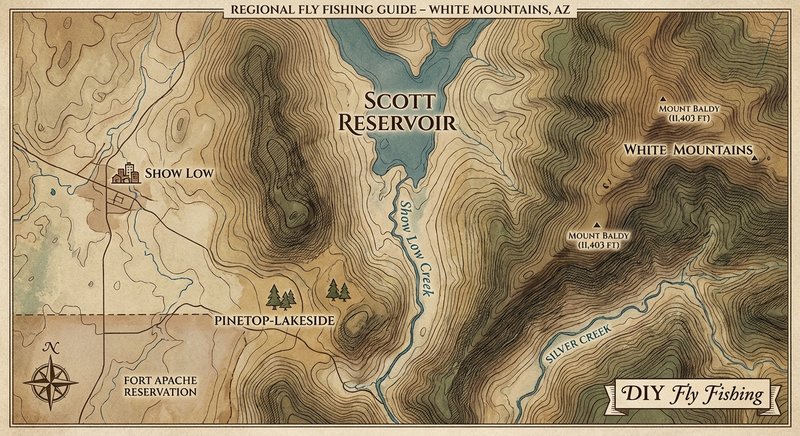
Scott Reservoir
Fly fishing in Arizona · intermediate · Best seasons: spring, summer, fall
Target Species
Rainbow Trout, Brook Trout
About This Water
Small White Mountains lake with wild trout. Quiet alternative to larger lakes.
Fishing Recommendations
Welcome to the White Mountains of Arizona. As a guide in this region, I can tell you that Scott Reservoir is one of the "hidden in plain sight" gems of the Pinetop-Lakeside area. While many anglers rush past it to reach the higher-elevation lakes like Big Lake or Crescent, Scott Reservoir offers a unique, accessible, and often highly productive fly fishing experience.
Here is your comprehensive guide to fly fishing Scott Reservoir.
🎣 Location Overview
Scott Reservoir is a mid-sized mountain impoundment located just outside of Pinetop-Lakeside at an elevation of approximately 6,800 feet. It is fed by Show Low Creek and is surrounded by a scenic mix of ponderosa pines and Gambel oaks.
What makes Scott Reservoir special is its productivity. Because it is slightly lower in elevation than the alpine lakes, the water is more nutrient-rich, leading to significant insect hatches—specifically damselflies and midges. It is a "working" reservoir, meaning water levels can fluctuate for downstream irrigation, but when the levels are stable, it provides some of the best stillwater fly fishing in the region.
🐟 Target Species & Behavior
- Rainbow Trout: These are the primary residents. The Arizona Game and Fish Department (AZGFD) stocks Scott heavily. You’ll find "stockers" (10–12 inches) as well as "holdovers" that have survived a season or two, reaching 16–18 inches. They are aggressive and cruise the shoreline edges looking for easy meals.
- Brook Trout: Generally found in smaller numbers than Rainbows, the Brookies here prefer the cooler water near the Show Low Creek inlet. They are most active during the spring and late fall.
- Secondary Species: You may occasionally hook into a Largemouth Bass or Channel Catfish here, especially in the warmer summer months.
Feeding Behavior: In this lake, fish are "bottom-to-middle" feeders. They focus heavily on the weed beds where scuds and damselfly nymphs live. During hatch cycles, they will look upward, but a sub-surface presentation is your "bread and butter" here.
📅 Best Times to Fish
- Spring (April – June): This is the prime window. As the ice thaws and the water warms, the trout become incredibly active. The Damselfly migration in June is legendary; fish will move into the shallows to gorge on nymphs crawling toward the shore.
- Summer (July – August): Early mornings and late evenings are mandatory. As the sun gets high, fish retreat to the deeper channels near the dam. Monsoonal rains in the afternoons can "turn on" the bite by cooling the surface water.
- Fall (September – November): This is the best time for Brook Trout, as they prepare to spawn and become more aggressive. The cooling water brings the Rainbows back into the shallows.
- Prime Window: 30 minutes before sunrise until 10:00 AM, and 2 hours before sunset.
🪰 Recommended Flies & Techniques
Top Fly Patterns
- Nymphs:
- Marabou Damsel Nymph (Size 10-14, Olive): A must-have in June.
- Zebra Midge (Size 18-22, Red or Black): Excellent under an indicator during the morning midge hatch.
- Gold-Ribbed Hare’s Ear (Size 14-16): A great generalist scout pattern.
- Streamers:
- Woolly Bugger (Size 8-12, Black or Olive): The most consistent producer. Use a bead-head version to get deep.
- Simi Seal Leech (Size 12, "Peacock" or "Blood Red"): A local Arizona favorite that kills on this lake.
- Dry Flies:
- Parachute Adams (Size 16-18): For evening rises.
- Foam Ants/Beetles (Size 14): Very effective in late summer when "terrestrials" fall from the overhanging oaks.
Techniques
- The "Slow Strip": Using a weighted leech or damsel nymph, cast toward the weed edges and use a very slow, 2-inch "hand-twist" retrieve.
- Indicator Nymphing: Suspend a midge or scud 4–6 feet below a small indicator. This is deadly when the wind is calm.
- The Hang: If fishing from a boat or float tube, let your fly hang vertically for a few seconds at the end of your retrieve; fish often follow the fly and strike when it "escapes" toward the surface.
💡 Pro Tips & Local Knowledge
- Bring a Float Tube: While you can fish from the bank near the dam and the boat ramp, Scott Reservoir is best fished from the water. A float tube or kayak allows you to reach the old creek channel and fish the edges of the heavy weed beds that are unreachable from shore.
- The Inlet Secret: Hike back toward where Show Low Creek enters the reservoir. This area has more moving water and oxygen, making it a magnet for Brook Trout, especially if the rest of the lake feels "slow."
- Watch the Wind: The wind usually picks up around 11:00 AM. If you are in a float tube, make sure you aren't blown to the far side of the lake, as it’s a long paddle back.
- Color Palette: In the clear morning light, use olive or natural tones. If the summer monsoons make the water "off-color" (turbid), switch to solid black or dark purple streamers to provide a better silhouette.
⚠️ Important Information
- Access: Located via Scott Reservoir Road off Highway 260. The road is generally well-maintained but can be muddy after a heavy rain.
- Regulations: An Arizona State Fishing License is required for all anglers 10 and older. You can purchase these online via the AZGFD website.
- Boating: Electric motors only. Internal combustion engines are prohibited, keeping the lake quiet and peaceful for fly anglers.
- Facilities: There are basic pit toilets and a developed boat ramp, but no potable water. Pack in what you need and "Pack It Out."
- Special Note: This lake can experience "turnover" or heavy algae blooms in late August. If the water looks like pea soup and smells earthy, head higher up the mountain to Big Lake.
Guide’s Final Word: Scott Reservoir is a "tactical" lake. It rewards the angler who pays attention to the weeds and the bugs. Match the size of the midges, stay quiet on the water, and you’ll find some of the hardest-fighting trout in the White Mountains. Tight lines!
Bug Hatches & Matching Flies
| Hatch | Type | Peak months | Time of day | Hook sizes | Matching flies |
|---|---|---|---|---|---|
| Chironomids Chironomidae | midge | April, May, June, September, October | All Day | #14-22 | Zebra Midge #16-20, Chironobone #14-18, Griffith's Gnat #18-22 |
| Speckled Duns Callibaetis ferrugineus hageni | mayfly | May, June, July, August | Late Morning/Afternoon | #12-16 | Adams #14-16, Hare's Ear Nymph #14-16, Callibaetis Spinner #14-16 |
| Blue-Winged Olive Baetis tricaudatus | mayfly | March, April, October, November | Late Morning/Afternoon | #18-22 | BWO Sparkle Dun #18-20, RS2 #20-22, Pheasant Tail #18-20 |
| Cinnamon Caddis Hydropsyche | caddis | June, July, August | Evening | #12-16 | Elk Hair Caddis #14-16, LaFontaine's Deep Sparkle Pupa #14-16, Godzilla Caddis #12-14 |
| Damselfly Enallagma | terrestrial | June, July | Mid-day/Afternoon | #10-14 | Marabou Damsel Nymph #10-12, Parachute Damsel #12-14 |
| Green Drake Drunella grandis | mayfly | June, July | Afternoon | #10-12 | Green Drake Hairwing #10-12, HBI Nymph #10-12 |
| Scuds Gammarus | terrestrial | April, May, June, October | All Day | #14-18 | Ray Charles Scud #14-16, Orange Scud #14-18 |
| Terrestrial Ants and Beetles Formicidae / Coleoptera | terrestrial | July, August, September | All Day | #12-18 | Cinnamon Ant #14-16, Foam Beetle #12-14 |
| Water Boatmen Corixidae | terrestrial | September, October | Afternoon | #14-16 | Water Boatman #14-16, Prince Nymph #14-16 |