Soda Butte Creek
Fly fishing in Wyoming · Beginner · Best seasons: Summer, Fall
Target Species
Cutthroat Trout
About This Water
Yellowstone stream flowing through Lamar Valley. Native cutthroat in scenic setting.
Fishing Recommendations
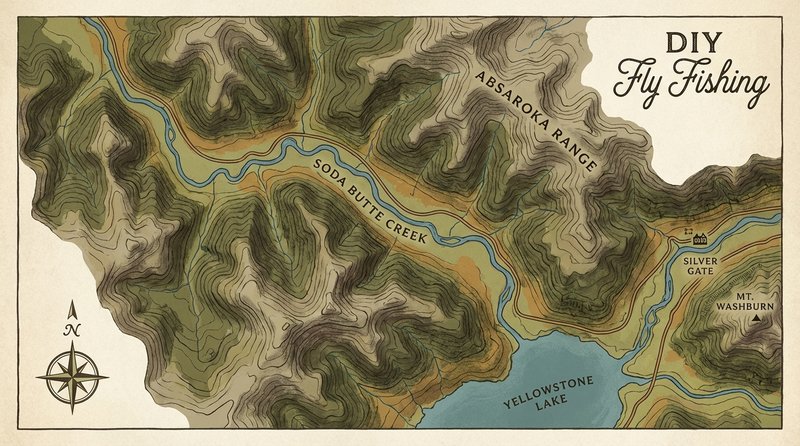
Soda Butte Creek is arguably one of the finest small-stream fly fishing destinations in the world. Located in the northeast corner of Yellowstone National Park, it offers a quintessential "big sky" meadow fishing experience set against the dramatic backdrop of the Absaroka Mountains.
🎣 Location Overview
Soda Butte Creek is a major tributary of the Lamar River. It flows from the mountains near Silver Gate, Montana, through a spectacular alpine valley before joining the Lamar.
What makes it special is its accessibility and visual beauty. The creek meanders through wide-open meadows where bison frequently roam, and the water is famously gin-clear. Unlike the larger Lamar River, Soda Butte is more manageable for wading and offers classic pool-riffle-run sequences. It is a "bucket list" destination for anglers seeking pure-strain Yellowstone Cutthroat trout in a pristine wilderness setting.
🐟 Target Species & Behavior
The primary target here is the Yellowstone Cutthroat Trout.
- Behavior: These fish are legendary for their willingness to rise to a dry fly. They are opportunistic feeders because of the short high-altitude growing season. However, because the water is so clear, they can be "spooky." If they see your shadow or a splashy line, they will bolt.
- Where they hold: Look for them in the "seams" (where fast and slow water meet), under cut banks, and at the very tail-ends of deep pools. In the heat of summer, they will also hold in the oxygenated "bubble curtains" at the head of pools.
- Feeding: They are highly keyed into surface activity. While they eat nymphs, they are known for the "lazy" Cutthroat rise—a slow, confident sip of a dry fly.
📅 Best Times to Fish
Due to its elevation, Soda Butte remains cold and high well into the early summer.
- Optimal Months:
- Mid-July to August: This is the prime window. The runoff has subsided, the water has cleared, and the terrestrial insects (hoppers, ants, beetles) are active.
- September to early October: Fall is magical. The crowds thin out, the bison are in the rut (be careful!), and the fish are aggressive, bulking up for winter.
- Best Time of Day: There is no need for an alpine start. The fishing usually picks up around 10:00 AM once the sun hits the water and wakes up the bugs. The "prime window" is typically 11:00 AM to 4:00 PM.
- Conditions: Overcast days can trigger spectacular Blue Winged Olive (BWO) hatches, but bright, breezy days are best for "Hopper" fishing, as the wind blows terrestrial insects into the water.
🪰 Recommended Flies & Techniques
Soda Butte is a dry-fly fisher's paradise.
Top Fly Patterns
- Terrestrials: Grasshoppers (size 8-12) like the Chubby Chernobyl, Morrish Hopper, or Joe’s Hopper. Ants (cinnamon or black) and Foam Beetles are deadly in August.
- Mayflies: Parachute Adams (12-18), Purple Haze, and Green Drakes (size 10-12) in July.
- Nymphs: If the surface is quiet, use a Pheasant Tail, Prince Nymph, or Hare’s Ear (size 14-16) as a dropper 18 inches below a foam dry fly.
Effective Techniques
- Dry-Dropper: This is the most effective rig. Use a buoyant hopper as your "indicator" and hang a small nymph off the back.
- Upstream Presentation: Always fish moving upstream. This allows you to approach the fish from behind (their blind spot) in the clear water.
- Long Leaders: Use a 9-foot to 12-foot leader tapered to 4X or 5X. The clarity of the water necessitates a stealthy delivery.
💡 Pro Tips & Local Knowledge
- The "Gulp" Pause: Cutthroats rise slower than Rainbows. When a fish takes your fly, wait one heartbeat ("One-Mississippi") before setting the hook. If you set too fast, you'll pull it right out of their mouths.
- Fish the "Skinny" Water: Many anglers walk right past the shallow riffles to get to the deep holes. Large Cutthroats will often sit in water barely deep enough to cover their backs if there is good bubble cover.
- Stealth is Key: Wear drab colors (tans and greens) to blend into the meadow. Avoid "shining" the water with your rod or fly line. If you see a fish, crouch down before you cast.
- The Confluence: The area where Soda Butte meets the Lamar River is a "fish highway." It holds some of the largest trout in the system but also sees the most fishing pressure.
⚠️ Important Information
- Access: The creek follows the Northeast Entrance Road. There are numerous pull-outs. The further you walk from the road, the better the fishing usually gets.
- Regulations:
- You must have a Yellowstone National Park Fishing Permit (available online or at visitor centers). A Wyoming state license is NOT valid inside the park.
- Barbless hooks only.
- No lead sinkers/weights.
- Catch and Release ONLY for all Cutthroat trout.
- Safety:
- Bears: This is prime Grizzly country. Always carry bear spray, know how to use it, and fish with a partner if possible.
- Bison: These animals are unpredictable and dangerous. Stay at least 25 yards away. If they are near the water where you want to fish, move to a different spot.
- Felt Soles: Felt-soled wading boots are prohibited in Yellowstone to prevent the spread of invasive species. Use rubber soles.
Bug Hatches & Matching Flies
| Hatch | Type | Peak months | Time of day | Hook sizes | Matching flies |
|---|---|---|---|---|---|
| Pale Morning Dun (PMD) Ephemerella excrucians | mayfly | July, August | Late Morning/Afternoon | #16-18 | Sparkle Dun #16-18, Pheasant Tail #16-18, RS2 #16-20 |
| Green Drake Drunella doddsi | mayfly | July | Midday | #10-12 | Hairwing Green Drake #10-12, Quigley Hackle Stacker #10-12, Picket Pin #10-12 |
| Grasshoppers Orthoptera | terrestrial | August, September | Midday/Afternoon | #8-12 | Morrish Hopper #8-12, Parachute Hopper #10-14, Dave's Hopper #10-12 |
| Yellow Sally Isoperla spp. | stonefly | July, August | Afternoon/Evening | #14-16 | Yellow Stimulator #14-16, Little Yellow Sloan #14-16, Iron Lotus #16 |
| Blue Winged Olive (BWO) Baetis spp. | mayfly | June, September, October | Midday | #18-22 | Parachute BWO #18-22, BWO CDC Emerger #20-22, JujuBaetis #18-22 |
| Flav / Lesser Green Drake Drunella flavilinea | mayfly | August, September | Afternoon | #14-16 | Flav Sparkle Dun #14-16, Mercer's Poxyback PMD #14-16, Hackle Stacker #14-16 |
| Spotted Sedge Hydropsyche spp. | caddis | July, August | Morning/Evening | #14-16 | Elk Hair Caddis #14-16, LaFontaine's Deep Sparkle Pupa #14-16, Iris Caddis #14-16 |
| Gray Drake Siphlonurus occidentalis | mayfly | July | Evening | #12-14 | Gray Drake Spinner #12-14, Hare's Ear #12-14, Parachute Adams #12-14 |
| Ants and Beetles Formicidae / Coleoptera | terrestrial | July, August, September | Midday | #12-18 | Cinnamon Ant #14-18, Black Foam Beetle #12-16, Chernobyl Ant #10-12 |