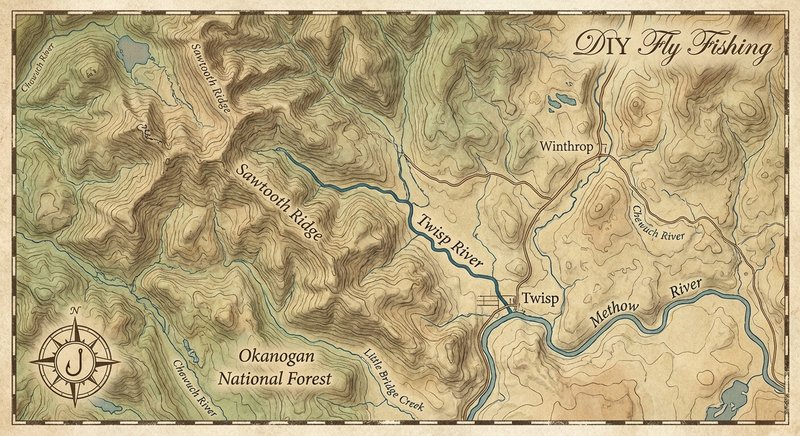
Twisp River
Fly fishing in Washington · Intermediate · Best seasons: Summer, Fall
Target Species
Rainbow Trout, Bull Trout
About This Water
Methow Valley stream with wild rainbow and bull trout. Clear mountain water with excellent hatches.
Fishing Recommendations
The Twisp River is a hidden gem of the North Cascades. A major tributary to the Methow River, it offers a more intimate, rugged, and classic "mountain stream" experience compared to the larger Methow. It is a quintessential freestone river characterized by crystal-clear water, steep gradients, and aggressive wild trout.
Here is your comprehensive guide to fly fishing the Twisp River.
🎣 Location Overview
The Twisp River flows out of the Sawtooth Wilderness, carving a path through a dramatic, forested valley before meeting the Methow River at the town of Twisp.
What makes it special is its wild character. Unlike the lower Methow, which can feel sprawling, the Twisp is high-energy. It is a playground of pocket water, deep plunge pools, and glassy runs beneath overhanging cedars. Anglers love it because it is rarely crowded, the fish are incredibly opportunistic, and the scenery is world-class. It feels like "frontier fishing" despite being relatively accessible from the town of Twisp.
🐟 Target Species & Behavior
- Rainbow Trout: These are the stars of the river. Most are wild, vibrant, and incredibly scrappy. While they average 8–12 inches, you will find "resident" rainbows up to 16 inches in deeper holes. They are fast-water specialists, holding in the "cushion" in front of boulders or in the tail-outs of pools.
- Westslope Cutthroat: Though your primary target is Rainbows, you will encounter many Cutthroats. They are often found in the softer "seams" and slower backwaters.
- Bull Trout: These are the apex predators of the Twisp. They are migratory and follow the whitefish and salmon. They hold in the deepest, darkest holes or at the base of major log jams. Note: Bull Trout are a protected species (ESA listed); while you may hook one, you should never specifically "target" them, and they must be released immediately without leaving the water.
📅 Best Times to Fish
The Twisp is highly dependent on snowpack runoff.
- July (Post-Runoff): Usually, the river becomes fishable in early to mid-July. This is "High Summer" fishing. The water is cold, the fish are hungry, and the hatches are prolific.
- August (Prime Time): This is the window for dry fly enthusiasts. Water levels drop, revealing perfect pocket water. The fish move into faster riffles to find oxygen and food.
- September – October (The Golden Window): As the air cools, the "October Caddis" begin to emerge. This is when the larger fish become less cautious. The colors of the valley turn gold, and the fishing can be spectacular.
- Time of Day: In mid-summer, the "Blue Winged Olive" hatches occur in the morning, but the best dry fly action is usually from 10:00 AM to 4:00 PM. In the heat of August, late evening "spinner falls" can be magic.
🪰 Recommended Flies & Techniques
Top Fly Patterns
- Dry Flies:
- Stimulators (Size 10-14, Orange or Yellow): The gold standard for the Twisp.
- Purple Haze (Size 12-16): Works when nothing else does.
- Chubby Chernobyl (Size 8-12): Great for high-floating visibility in rough water.
- Elk Hair Caddis (Size 14-16): Essential for evening hatches.
- Nymphs:
- Pat’s Rubber Legs (Size 8-12, Coffee/Black): Mimics the large stoneflies found in the Twisp.
- Prince Nymph (Size 14-16): A classic attractor.
- Pheasant Tail (Size 16-18): Perfect for technical runs.
- Streamers:
- Woolly Bugger (Size 6-10, Olive or Black): Effective for bigger fish in deep pools.
Techniques
- Dry-Dropper: This is the most effective way to fish the Twisp. Hang a weighted nymph (like a Beadhead Prince) 18–24 inches below a buoyant dry fly (like a Chubby Chernobyl).
- Pocket Picking: Don't spend too much time in one spot. Cast into the small pockets of calm water behind rocks, give it 3–5 seconds, and move on. These fish make up their minds quickly.
- Short Line Nymphing: In the high-gradient sections, use a tight-line approach to keep your flies from getting caught in competing currents.
💡 Pro Tips & Local Knowledge
- Focus on the "Upper" River: As you drive up Twisp River Road, the water becomes more braided. Look for Forest Service campgrounds (like War Creek or Mystery Campground)—these offer excellent public access to some of the most productive pocket water.
- The "Shadow" Cast: Because the water is so clear, these fish are easily spooked. Keep a low profile, wear earthy colors, and try to avoid casting your shadow directly over the holding water.
- Think Big for Big Fish: If you’re looking for a larger Rainbow, don’t be afraid to throw a large #8 Hopper or a heavy Stonefly nymph into the deepest, darkest "blue" water you can find.
- Wading Safety: The Twisp is "bouldery." Felt soles or studs are highly recommended, and a wading staff is a smart move, especially in July when the flow is still pushing hard.
⚠️ Important Information
- Regulations: The Twisp River is Selective Gear Rules (unscented artificial flies/lures only, single barbless hooks).
- Catch & Release: It is generally managed as a catch-and-release fishery for all trout to protect the delicate ecosystem. Always check the WDFW Sport Fishing Rules before heading out, as emergency closures due to low water or salmon returns are common.
- Bull Trout Alert: It is illegal to remove a Bull Trout from the water. If you hook one, keep it submerged while removing the hook and release it immediately.
- Access: Much of the lower river is private property. Respect "No Trespassing" signs. Stick to the upper river sections within the Okanogan-Wenatchee National Forest for the best legal access.
- Wildlife: This is Cougar and Bear country. Carry bear spray and keep your food secured if you are camping.
Bug Hatches & Matching Flies
| Hatch | Type | Peak months | Time of day | Hook sizes | Matching flies |
|---|---|---|---|---|---|
| Golden Stonefly Hesperoperla pacifica | stonefly | June, July | Morning/Afternoon | #6-10 | Chubby Chernobyl (Gold) #8-12, Pat's Rubber Leg #6-10 |
| Yellow Sally Isoperla sp. | stonefly | July, August | Afternoon/Evening | #14-16 | Little Yellow Sally #14-16, Iron Lotus (Yellow) #14-16 |
| Pale Morning Dun Ephemerella excrucians | mayfly | July, August | Late Morning/Afternoon | #14-18 | Sparkle Dun #14-18, Pheasant Tail #14-18 |
| October Caddis Dicosmoecus gilvipes | caddis | September, October | Afternoon | #8-12 | Orange Stimulator #8-12, Peahead Caddis #10-12 |
| Green Sedge Rhyacophila | caddis | July, August, September | Evening | #12-16 | Green Weenie #12-14, Elk Hair Caddis (Olive) #14-16 |
| Blue Winged Olive Baetis | mayfly | April, May, September, October | Mid-day | #18-22 | RS2 #20-22, Parachute Adams #18-22 |
| Salmonfly Pteronarcys californica | stonefly | June | All Day | #4-8 | Roger's Big Boy #4-8, Twenty Incher #6-10 |
| Grasshopper Melanoplus sp. | terrestrial | August, September | Late Morning/Afternoon | #8-12 | Morrish Hopper #8-12, Dave's Hopper #10-12 |
| Spotted Sedge Hydropsyche | caddis | July, August | Evening | #14-16 | LaFontaine's Deep Sparkle Pupa #14-16, Godzilla Caddis #14-16 |