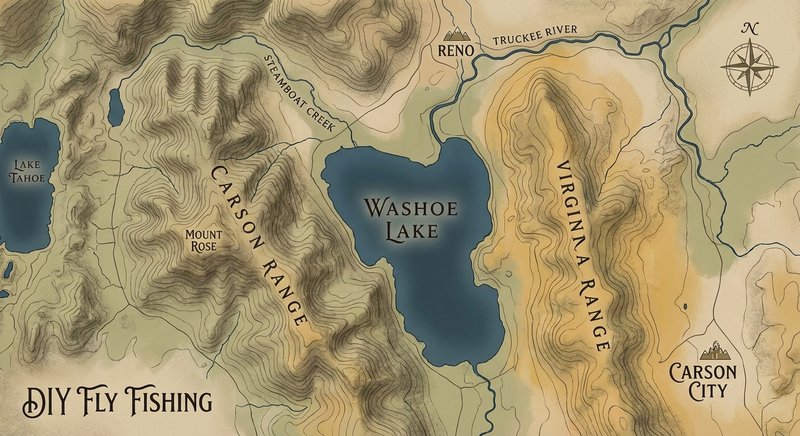
Washoe Lake
Fly fishing in Nevada · beginner · Best seasons: spring, fall
Target Species
Rainbow Trout
About This Water
State park lake between Reno and Carson City. Seasonal trout when conditions allow.
Fishing Recommendations
Greetings, angler. It’s a pleasure to help you navigate the waters of the High Desert.
Washoe Lake is a unique and often misunderstood fishery located in the valley between Reno and Carson City. While it is technically a "shallow desert sink," it offers a specific window of opportunity for fly fishermen that can be incredibly rewarding—if you know how to play the game.
Here is the professional breakdown for fly fishing Washoe Lake.
🎣 Location Overview
Washoe Lake sits in a dramatic basin with the granite peaks of the Sierra Nevada (specifically the Carson Range) looming to the west. It is a large, shallow, and alkaline lake. Unlike the deep, cold alpine lakes nearby, Washoe is average-depth of only 6 to 10 feet.
What makes it special: It is a highly productive biological factory. Because it is shallow and sun-drenched, it produces massive amounts of aquatic insects and baitfish. When water levels are high, the Nevada Department of Wildlife (NDOW) stocks it heavily with Rainbow Trout. Anglers love it for the wide-open vistas and the fact that, during the prime windows, the trout grow exceptionally fast and fight hard in the oxygenated shallows.
🐟 Target Species & Behavior
While Washoe contains White Bass, Catfish, and Perch, the Rainbow Trout are the primary draw for fly anglers during the cooler months.
- Behavior: Because the lake is so shallow, these trout are "cruisers." They do not hold in one spot like they would in a river; they roam the weed edges and sandy flats in search of food.
- Feeding: They are opportunistic. They key in on Chironomids (midges) which hatch in staggering numbers, as well as Damselfly nymphs and small forage fish like Tui Chub.
- Holding Water: Look for the "drop-offs" (which may only be a change from 2 feet to 5 feet) and areas with submerged vegetation.
📅 Best Times to Fish
Timing is everything at Washoe Lake. Because it is shallow, water temperature dictates everything.
- Spring (March – May): This is the prime window. As the ice thaws and the water hits the 45–55°F range, the trout become extremely active. This is when the largest midge hatches occur.
- Fall (October – November): As the summer heat dissipates and the water cools back down, the trout have a "second spring." They feed aggressively to bulk up for winter.
- Time of Day: Early morning (dawn until 10:00 AM) is critical. Washoe Valley is famous for high winds (the "Washoe Zephyr") that usually kick up by noon, making fly casting difficult and dangerous.
- Conditions: Overcast days are gold. The fish feel more secure in the shallow water and will cruise closer to the shoreline.
🪰 Recommended Flies & Techniques
Top Fly Patterns
- Chironomids (Sizes 12–16): Blood midge (red), zebra midge (black/silver), or "Ice Cream Cones" in white/olive.
- Balanced Leeches (Sizes 8–12): Olive, Peacock, or Bruised (black/blue). These are deadly under an indicator.
- Damselfly Nymphs (Sizes 10–14): Marabou damsels in olive with gold beads.
- Streamers: Woolly Buggers (Black or Olive) and small baitfish patterns to mimic Tui Chub.
Techniques & Presentation
- The "Static" Indicator Rig: This is the most effective method. Use a long leader (9–12 feet) and hang a Balanced Leech or Chironomid 1–2 feet off the bottom. The slight chop on the water provides all the movement you need.
- The Slow Strip: Use an intermediate (slow-sink) line with a Damselfly nymph or Woolly Bugger. Cast long, let it settle, and use very slow, 2-inch strips to mimic a swimming nymph.
- Bank vs. Boat: While you can wade fish the eastern shore, a float tube or kayak is the ultimate weapon here. It allows you to stay stealthy and reach the edges of the weed beds where the cruisers patrol.
💡 Pro Tips & Local Knowledge
- Watch the Wind: I cannot stress this enough. Check the forecast for "Washoe Valley." If gusts over 15 mph are predicted, reconsider. The lake turns into a muddy, white-capped mess very quickly.
- The "Mud Line": If there is a light breeze, look for areas where the clear water meets slightly turbid water. Trout use this "mud line" as cover to ambush prey.
- Focus on the State Park: The Washoe Lake State Park (East Side) offers the best access for anglers. The "South Beach" area is particularly good for wading and launching small craft.
- Little Washoe: Don't overlook "Little Washoe" (the smaller pond to the north). It stays deeper in some spots and can be a sanctuary if the main lake is too rough.
⚠️ Important Information
- Access: Use the main entrance at Washoe Lake State Park off Eastlake Blvd. There is a small vehicle entry fee.
- Regulations: A valid Nevada Fishing License is required. Nevada regulations are generally standard here, but always check the latest NDOW guide for seasonal limit changes.
- Safety: The bottom of the lake can be very silty/muddy. If wading, use caution as you can easily sink mid-calf into the muck. A wading staff is a smart move.
- Water Levels: Washoe is prone to drought. In low-water years, the trout fishing can disappear entirely due to alkalinity spikes or winter kills. Always check current water levels/reports before making the trip.
Tight lines, and enjoy the views of the Sierras!
Bug Hatches & Matching Flies
| Hatch | Type | Peak months | Time of day | Hook sizes | Matching flies |
|---|---|---|---|---|---|
| Chironomids (Midges) Chironomidae | midge | March, April, May, September, October | All Day | #12-22 | Zebra Midge #16-20, Chironobone #12-16, Griffith's Gnat #18-22 |
| Damselfly Enallagma | terrestrial | June, July, August | Morning/Afternoon | #10-14 | Marabou Damsel #12-14, Sheep Creek Special #10-12, Adult Damsel #12-14 |
| Callibaetis (Speckled Duns) Callibaetis | mayfly | May, June, September | Late Morning | #14-16 | Parachute Adams #14-16, Callibaetis Spinner #14-16, Hare's Ear Nymph #14-16 |
| Water Boatmen Corixidae | terrestrial | September, October | Afternoon | #14-18 | Prince Nymph #14-16, Water Boatman #16-18 |
| Dragonfly Anisoptera | terrestrial | July, August | All Day | #4-10 | Dragon Nymph #6-10, Gummi Bugger #8-10 |
| Grasshoppers Melanoplus | terrestrial | August, September | Afternoon | #8-12 | Dave's Hopper #10-12, Morrish Hopper #8-12 |
| Backswimmers Notonectidae | terrestrial | September, October | Afternoon | #12-16 | Backswimmer Pattern #12-14, Light Spruce Fly #12 |
| Black Ants Formicidae | terrestrial | June, July | Afternoon | #14-18 | Black Foam Ant #14-18, Cinnamon Ant #16-18 |