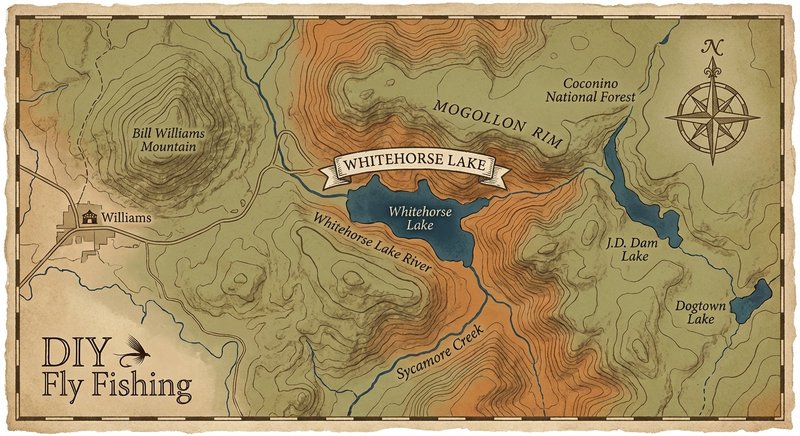
Whitehorse Lake
Fly fishing in Arizona · intermediate · Best seasons: spring, summer, fall
Target Species
Rainbow Trout
About This Water
Remote lake south of Williams. Less crowded alternative with good trout.
Fishing Recommendations
Welcome to the high country of the Kaibab National Forest. As your guide, I’m excited to break down Whitehorse Lake. Located just south of Williams, Arizona, near the base of Bill Williams Mountain, this is a "gem of the pines." It is a classic high-elevation trout lake that offers a serene escape from the desert heat and some of the most consistent stillwater fly fishing in Northern Arizona.
🎣 Location Overview
Whitehorse Lake is a 55-acre reservoir situated at approximately 7,000 feet elevation. What makes this water special is its setting—surrounded by a dense forest of Ponderosa pines, it feels much more remote than it actually is.
The water is generally clearer than many other Arizona "tanks," though it can develop some weed growth in the late summer. It is a no-gas-motor lake, meaning it is quiet, peaceful, and perfect for fly anglers in float tubes, kayaks, or pontoons. The shoreline is accessible, but the true magic happens when you get off the bank and into the deeper channels or along the dam face.
🐟 Target Species & Behavior
The primary draw here is the Rainbow Trout. The Arizona Game and Fish Department stocks this lake heavily with catchable-sized rainbows, but there are always "holdovers" that survive the winter and grow into the 16–18 inch range.
- Behavior: These trout are cruise-oriented. They follow the edges of weed beds and submerged structure looking for aquatic insects.
- Feeding: They focus heavily on Chironomids (midges), Damselflies, and Scuds. In the late summer, they become very opportunistic with terrestrials (grasshoppers and beetles) falling from the surrounding pines.
- Holding Spots: Look for them along the "drop-off" lines where the shallow shelf meets the deeper center channel, and near the structure by the dam.
📅 Best Times to Fish
Optimal Seasons
- Spring (Late April – June): This is prime time. As the ice melts and the water warms, the trout become extremely active in the shallows. The "ice-out" bite can be legendary.
- Summer (July – August): While the valley sizzles, Whitehorse stays cool. Focus on early mornings and late evenings. The fish will move deeper during the midday sun.
- Fall (September – October): My personal favorite. The trout feed aggressively to bulk up for winter. The crowds thin out, and the "Blue Winged Olive" hatches can be excellent.
Best Times of Day
- First Light: The first two hours of the day are often the most productive for surface activity.
- The Evening Rise: About an hour before sunset, the wind usually dies down, and the lake turns into a mirror. This is when you’ll see the "rings" of rising trout across the surface.
🪰 Recommended Flies & Techniques
Top Fly Patterns
- Nymphs/Midges: Zebra Midges (Red or Black, size 18-22), JujuBaetis (size 18-20), and Hare's Ear Nymphs (size 14-16).
- Streamers: Woolly Buggers (Olive, Black, or Brown with a bit of flash, size 8-12). The "Thin Mint" colorway is a local killer.
- Dries/Terrestrials: Parachute Adams (size 16-20), Griffith’s Gnat (size 20), and Foam Ants or Beetles (size 14).
- Stillwater Specials: Damselfly Nymphs (Olive, long tail, size 12) and Rickard’s Seal Buggers.
Effective Techniques
- The "Indicator Rig": Suspend a Zebra Midge or a Scud 4–8 feet below a small slip-indicator. Keep it near the weed edges and let the ripple of the water provide the action.
- Stripping Streamers: Using a weighted fly or an intermediate sinking line, cast toward the shore or weed lines and use a "strip-strip-pause" retrieve. Most hits happen on the pause.
- Dry-Dropper: In the summer, run a foam beetle on top with a small Pheasant Tail nymph tied 2 feet off the bend.
💡 Pro Tips & Local Knowledge
- The Float Tube Advantage: You can fish from the bank near the boat ramp or the dam, but 80% of the fish are unreachable from shore. Bring a float tube or a kayak. It allows you to fish the "back side" of the lake where foot access is difficult.
- Watch the Wind: The wind usually kicks up around 11:00 AM. If you are in a light watercraft, stay upwind so you can drift back toward your launch point when the breeze gets stiff.
- The Dam Wall: The deepest water is near the dam. On hot summer days, fish will hug the bottom here. Use a full-sinking line to get your flies down to the 15-20 foot range.
- Subtle Presentation: Because the water is relatively clear, use a long leader (9–12 feet) and 5x or 6x fluorocarbon tippet to avoid spooking the fish.
⚠️ Important Information
- Access: From Williams, take Fourth Street (FR 124) south for about 19 miles. The roads are mostly gravel/dirt but are generally well-maintained and accessible by passenger cars (though high clearance is always better).
- Regulations: Arizona fishing license is required. You can purchase one online via the AZGFD website.
- Boating: No internal combustion engines. Electric trolls or human power only.
- Amenities: There is a developed campground (seasonal) with toilets and water. It’s a popular spot, so if you plan to camp, book via Recreation.gov in advance.
- Bear Country: This is bear country. If you are camping or keeping fish, ensure you follow proper food storage protocols.
Guide’s Final Word: Whitehorse Lake isn't about trophy-sized monsters; it's about the experience of catching beautiful Rainbows in a stunning alpine setting. Bring your 4-weight or 5-weight rod, a box of midges, and enjoy the peace of the Kaibab. Tight lines!
Bug Hatches & Matching Flies
| Hatch | Type | Peak months | Time of day | Hook sizes | Matching flies |
|---|---|---|---|---|---|
| Chironomids (Midges) Family Chironomidae | midge | April, May, June, September, October | All Day | #16-24 | Zebra Midge #18-22, Chironobead #16-20, Griffith's Gnat #18-22 |
| Speckled Duns (Callibaetis) Callibaetis spp. | mayfly | May, June, July, August | Late Morning/Afternoon | #12-16 | Parachute Adams #14-16, Pheasant Tail Nymph #14-18, Callibaetis Spinner #16 |
| Damselflies Suborder Zygoptera | other | June, July | Morning/Mid-day | #10-14 | Marabou Damsel Nymph #10-14, Adult Damsel #12-14 |
| Scuds (Freshwater Shrimp) Order Amphipoda | other | April, May, October, November | All Day | #12-16 | Ray Charles #14-16, Scud (Olive/Orange) #12-16 |
| Cinnamon Caddis Family Leptoceridae | caddis | July, August | Evening | #14-18 | Elk Hair Caddis #14-16, LaFontaine's Emerger #16 |
| Dragonflies Suborder Anisoptera | other | June, July, August | Afternoon | #6-10 | Woolly Bugger (Olive) #6-10, Dragonfly Nymph #8-10 |
| Terrestrial Ants and Beetles Family Formicidae / Order Coleoptera | terrestrial | July, August, September | Afternoon | #12-18 | Black Foam Ant #14-18, Chernobyl Ant #10-12, Foam Beetle #14-16 |
| Water Boatmen Family Corixidae | other | September, October | Afternoon | #14-16 | Boatman #14-16, Prince Nymph #14-16 |