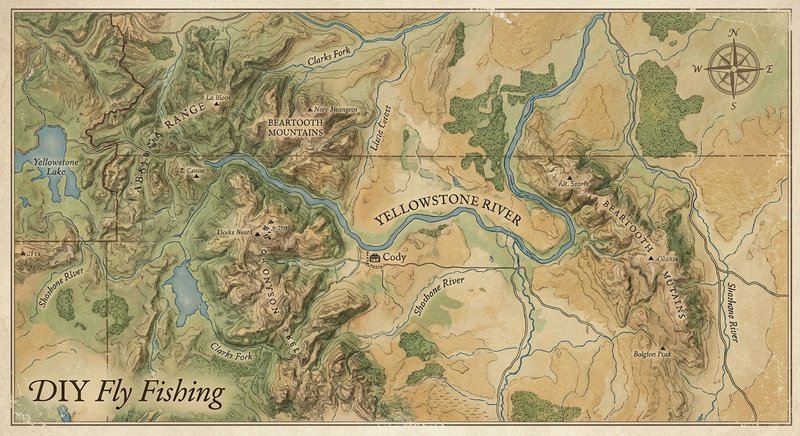
Yellowstone River
Fly fishing in Wyoming · Intermediate · Best seasons: Summer, Fall
Target Species
Cutthroat Trout, Rainbow Trout, Brown Trout
About This Water
The longest undammed river in the lower 48. Famous cutthroat fishing and salmonfly hatches.
Fishing Recommendations
The Yellowstone River in Wyoming is the crown jewel of the American West. As the longest undammed river in the lower 48, it remains a wild, powerful, and ever-changing ecosystem. Fishing here is more than just a pursuit of trout; it is an immersion into a landscape shared with grizzly bears, bison, and wolves.
Here is your comprehensive guide to fly fishing the Yellowstone River in Wyoming.
🎣 Location Overview
The Wyoming portion of the Yellowstone River is defined by two distinct sections: the Upper Yellowstone (above Yellowstone Lake in the remote Thorofare region) and the River between Yellowstone Lake and the Montana border.
What makes this water special is its "wildness." Because it is undammed, the river’s character is dictated entirely by snowpack and runoff. Anglers love it for the Yellowstone Cutthroat Trout, a beautiful native species that thrives in these high-elevation waters. The scenery ranges from the high-alpine meadows of the Hayden Valley to the dramatic, turbulent depths of the Grand Canyon of the Yellowstone.
🐟 Target Species & Behavior
- Yellowstone Cutthroat Trout: The undisputed star of the river. They are known for being opportunistic surface feeders. They hold in soft seams, behind boulders, and in the "nervous water" near banks. They are not typically as "tippet shy" as spring creek fish, but they require a drag-free drift.
- Rainbow Trout: Found primarily in the sections below the Grand Canyon (near Gardiner). They are harder fighters than the Cutthroats and tend to hold in faster, oxygenated riffles.
- Brown Trout: Predatory and elusive. Large Browns hold in the deep undercut banks and dark holes, particularly in the lower stretches of the park and into the Montana border. They become highly active during the fall spawn.
📅 Best Times to Fish
The fishing window on the Yellowstone in Wyoming is dictated by the Spring Runoff and Yellowstone National Park regulations.
- Summer (July - August): The river usually "clears" from runoff around July 1st–15th.
- July: Prime time for the Salmonfly and Golden Stonefly hatches. High-energy, exciting fishing.
- August: Hopper season. Terrestrials are king as the water levels drop and temperatures rise.
- Fall (September - October): Perhaps the most magical time. The crowds thin, the elk are bugling, and the fish are fattening up for winter.
- October: Excellent streamer fishing for Browns and late-season BWO (Blue Winged Olive) hatches on cloudy days.
- Best Time of Day: During mid-summer, the "morning "Trico" or "Spents" are great, but the hopper action usually peaks from 11:00 AM to 4:00 PM when the wind picks up.
🪰 Recommended Flies & Techniques
Top Fly Patterns
- Dry Flies: Chubby Chernobyl (Gold/Olive #8-12), Parachute Adams (#14-18), Royal Wulff (#12-14), Stimulators (Orange/Yellow #10-14), and Dave’s Hopper (#10-12).
- Nymphs: Pat’s Rubber Legs (Black/Brown #8-12), Pheasant Tail (#14-18), Zebra Midge (#18-20), and Prince Nymph (#12-16).
- Streamers: Black or Olive Woolly Buggers, Gold Beadhead Rubber Legged Buggers, and Sparkle Minnows.
Effective Techniques
- Dry-Dropper: This is the "bread and butter" of the Yellowstone. Use a high-visibility dry (like a Chubby) and hang a weighted nymph (like a Pheasant Tail) 2–3 feet below it.
- Matching the Hatch: If you see noses breaking the surface in slow water, switch to a technical dry fly presentation with a 9ft 5x leader.
- Bank Banging: In the Hayden Valley or below LeHardy Rapids, cast streamers or large dries inches from the grassy banks.
💡 Pro Tips & Local Knowledge
- The "Cutthroat Soft Spot": Cutthroats don't like heavy current as much as Rainbows. Look for "walking pace" water. If the water is moving too fast for you to walk comfortably, the Cutthroats are likely closer to the bank or behind a structure.
- Hayden Valley Strategy: This section is meadow-style water. It looks sleepy, but large Cutthroats cruise the undercut banks. Be stealthy; your shadow on the water will spook them before you even cast.
- The Salmonfly Craze: If you are there for the Salmonfly hatch (early July), look for the large orange insects on the riverside willows. If you see the bugs but no rises, fish a heavy stonefly nymph deep—the fish are likely gorging on them before they hatch.
- The Buffalo Factor: If a herd of bison is crossing the river upstream, the water will get muddy. However, the bison often kick up nymphs and crawfish. Don't stop fishing; switch to a larger, dark nymph or a streamer.
⚠️ Important Information
- Permits: You MUST have a Yellowstone National Park Fishing Permit. A standard Wyoming state license is not valid inside the Park boundaries.
- Regulations: The Yellowstone River inside the park is Catch and Release only for native Cutthroat trout. Felt-soled wading boots are banned in the park to prevent the spread of invasive species.
- Bear Safety: You are in high-density Grizzly country. Always carry Bear Spray, make noise when walking through willows, and never fish alone in remote stretches like the Thorofare.
- Wading Safety: The Yellowstone is a big, powerful river. The basalt rocks are incredibly slick. A wading staff is highly recommended, especially in the canyon sections.
Guide’s Final Thought: "Respect the river and the rhythm of the park. If the fishing is slow, look up—you're in the wildest place in the lower 48. But when that 20-inch native Cutthroat rises to a hopper in the Hayden Valley, there’s no better feeling in fly fishing."
Bug Hatches & Matching Flies
| Hatch | Type | Peak months | Time of day | Hook sizes | Matching flies |
|---|---|---|---|---|---|
| Salmonfly Pteronarcys californica | stonefly | June, July | All Day | #2-8 | Rogue River Stone #4-6, Pat's Rubber Leg #4-8, Cat Puke #4-6 |
| Pale Morning Dun (PMD) Ephemerella inermis/infrequens | mayfly | July, August | Late Morning/Afternoon | #16-18 | Sparkle Dun #16-18, RS2 #16-20, Pheasant Tail #16-18 |
| Blue Winged Olive (BWO) Baetis tricaudatus | mayfly | April, May, September, October | Midday | #18-22 | Parachute Adams #18-22, BWO CDC Emerger #20-22, JujuBaetis #18-22 |
| Golden Stonefly Hesperoperla pacifica | stonefly | July | Morning/Afternoon | #8-12 | Chubby Chernobyl (Gold) #8-12, Golden Twenty-Incher #8-12, Water Walker #10-12 |
| Mother's Day Caddis Brachycentrus occidentalis | caddis | May | Afternoon/Evening | #14-16 | Elk Hair Caddis (Dark) #14-16, LaFontaine's Deep Sparkle Pupa #14-16, Iris Caddis #14-16 |
| Grasshoppers Acrididae | terrestrial | August, September | Late Morning/Afternoon | #8-14 | Morrish Hopper #8-12, Parachute Hopper #10-14, Rainy's Grand Hopper #8-12 |
| Grey Drake Siphlonurus occidentalis | mayfly | June, July | Evening | #12-14 | Grey Drake Spinner #12-14, Hare's Ear Nymph #12-14, Parachute Drake #12-14 |
| Yellow Sally Isoperla spp. | stonefly | July, August | Afternoon/Evening | #14-16 | Little Yellow Sloan #14-16, Yellow Sally Foam #14-16, Iron Lotus #16 |