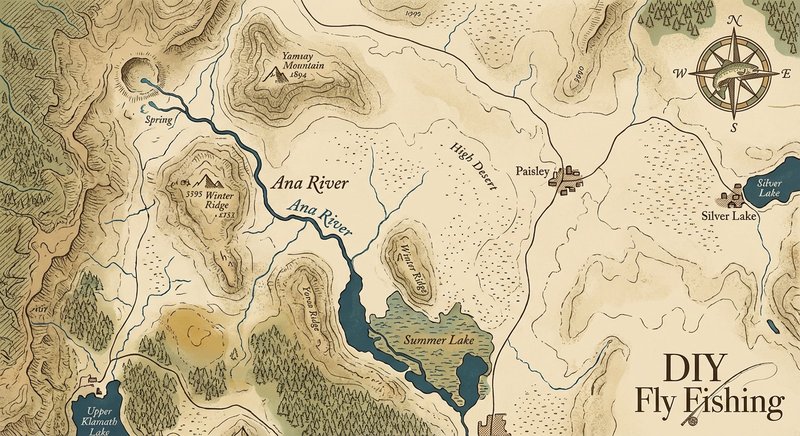
Ana River
Fly fishing in Oregon · Intermediate · Best seasons: Spring, Summer, Fall
Target Species
Redband Trout, Brown Trout
About This Water
Spring-fed high desert stream. Clear water and wild redband trout.
Fishing Recommendations
Welcome to one of Oregon’s most unique "secret" fisheries. As a guide, I often describe the Ana River as a high-desert oasis. Located in the remote Summer Lake basin of South-Central Oregon, it is a spring-fed system that defies the harsh environment surrounding it.
Here is your comprehensive guide to fly fishing the Ana River.
🎣 Location Overview
The Ana River is a short, spring-fed gem that flows for about seven miles from Ana Springs before emptying into the Summer Lake Wildlife Area. Because it is spring-fed, the water temperature remains remarkably stable—hovering around 52–54°F year-round.
What makes it special: Unlike the freestone rivers of the Cascades, the Ana is a "limestone-style" spring creek. The water is crystal clear, rich in minerals, and choked with aquatic vegetation. This creates a massive biomass of insects, allowing trout to grow quickly and fight hard. It is a technical, high-desert chalk stream that rewards stealth and precision.
🐟 Target Species & Behavior
The river is home to two primary species that offer very different experiences:
- Interior Redband Trout: These are the native stars of the river. They are incredibly hardy, acrobatic, and known for their brilliant crimson lateral stripes. They typically hold in the swifter riffles and along the edges of weed "lanes."
- Brown Trout: The Ana holds some surprisingly large Browns. These fish are elusive and highly predatory. They prefer the deeper pools, undercut banks, and the dark shadows beneath heavy weed mats. During the low light of dawn or dusk, they move into the shallows to hunt.
Behavior Note: Because the water is so clear, these fish are "spooky." If you can see them, they have likely already seen you. Long leaders and a low profile are mandatory.
📅 Best Times to Fish
While the Ana is open year-round, these seasons offer the best experience:
- Spring (March – May): This is prime time for Blue Winged Olives (BWO). As the high desert warms up, the hatches become consistent. This is also when the Redbands are most active before the heat of summer.
- Summer (June – August): Famous for the Trico hatches. You’ll need to be on the water at daybreak. Once the sun hits the water, the dry fly action usually dies down, and you’ll switch to terrestrials (beetles/ants) or deep scud patterns.
- Fall (September – November): My personal favorite. The Brown trout become aggressive as they prepare for the spawn. The BWO hatches return, and the crowds (which are already small) disappear completely.
🪰 Recommended Flies & Techniques
Top Fly Patterns
- Scuds & Sowbugs: This is the "bread and butter" of the Ana. (Sizes 14–18 in Olive, Gray, or Pink).
- Midges: Zebra Midges in black or red (Sizes 18–22).
- Dry Flies: RS2 (Grey), Griffith’s Gnat, and Sparkle Duns (BWO) for hatches. For summer, Trico Spinners (Size 20–24).
- Streamers: Small Woolly Buggers or Pine Squirrel Leeches in Olive or Black to mimic the small baitfish and leeches in the weed beds.
Effective Techniques
- The "Weed Lane" Drift: You aren't fishing the whole river; you are fishing the narrow channels of open water between thick plumes of aquatic vegetation. Use a weightless nymph or a very light split shot to keep your fly in the zone without snagging the weeds.
- Sight Nymphing: In the clear water, use polarized glasses to spot fish. Instead of using a bulky indicator, use a high-vis dry fly with a small nymph dropped 18-24 inches below it (Dry-Dropper).
- The Stealth Approach: Approach the bank from well back. Kneel if you have to. If you walk right up to the edge, the "push" of the water or your shadow will clear the pool.
💡 Pro Tips & Local Knowledge
- The Upper River vs. Lower River: The upper section near the dam/springs is more "pond-like" and great for float tubes. The middle and lower sections wind through the desert and are better for wade fishing.
- The "Scud Shake": If things are slow, find a patch of weeds and gently kick them (if legal/ethical in your spot) or observe the water nearby. The river is crawling with scuds. Your fly should mimic that erratic, darting motion.
- Mind the Wind: This is the high desert. Afternoon winds can be brutal. If the wind picks up, don't leave—switch to a heavier sink-tip line and swing small streamers. The chop on the water hides your presence from the fish.
- Leader Length: Use at least a 12-foot leader tapering to 5X or 6X fluorocarbon. The clarity of the water makes 4X look like a rope to these fish.
⚠️ Important Information
- Access: Much of the river is accessed via the Summer Lake Wildlife Area.
- Permits: You often need an ODFW Wildlife Area Parking Permit (daily or annual) to park at the access points. These must be purchased online or at a dealer beforehand; you usually cannot buy them at the river.
- Regulations: Always check the current ODFW Southwest Zone regulations. The river is generally open year-round, but specific harvest limits and gear restrictions (like barbless hooks) are highly recommended to protect the native Redband population.
- Safety: This is rattlesnake country in the summer. Wear gaiters or watch your step when walking through the sagebrush. Also, there is zero cell service in most of the canyon—download your maps for offline use.
Guide’s Final Word: The Ana River isn't about high fish counts; it’s about the quality of the hunt. Treat it like a spring creek, respect the native Redbands, and you’ll have a world-class experience in the middle of the Oregon desert.
Bug Hatches & Matching Flies
| Hatch | Type | Peak months | Time of day | Hook sizes | Matching flies |
|---|---|---|---|---|---|
| Midges Chironomidae | midge | January, February, March, December | All Day | #18-24 | Zebra Midge #18-22, Griffith's Gnat #20-24, Morgan's Midge #20-22 |
| Blue Winged Olive Baetis spp. | mayfly | March, April, October, November | Late Morning/Afternoon | #18-22 | RS2 #20-22, Parachute Adams #18-22, Pheasant Tail Nymph #18-20 |
| Callibaetis Callibaetis ferrugineus | mayfly | June, July, August | Morning/Afternoon | #14-16 | Callibaetis Spinner #14-16, Hare's Ear Nymph #14-16, CDC Callibaetis Emerger #16 |
| Trico Tricorythodes spp. | mayfly | July, August, September | Early Morning | #20-24 | Trico Spinner #22-24, Trico Dun #22-24 |
| Damselfly Enallagma spp. | terrestrial | June, July, August | Mid-day | #10-14 | Marabou Damsel Nymph #12-14, Adult Damsel #12-14 |
| Spotted Sedge Hydropsyche spp. | caddis | May, June, July | Evening | #14-18 | Elk Hair Caddis #14-18, LaFontaine's Deep Sparkle Pupa #16 |
| Terrestrials Orthoptera/Formicidae | terrestrial | July, August, September | Afternoon | #10-16 | Dave's Hopper #10-12, Black Foam Ant #14-16, Chernobyl Ant #10-12 |
| Pale Morning Dun Ephemerella excrucians | mayfly | June, July | Late Morning/Afternoon | #14-18 | PMD Sparkle Dun #16-18, Split Case PMD #16-18 |