Blitzen River
Fly fishing in Oregon · Intermediate · Best seasons: Summer, Fall
Target Species
Redband Trout
About This Water
Steens Mountain stream in Malheur Wildlife Refuge. Wild redband trout.
Fishing Recommendations
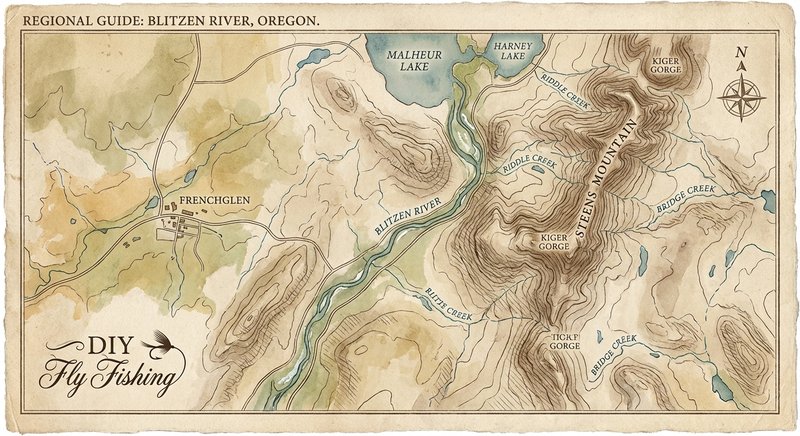
The Donner und Blitzen River (commonly called "The Blitzen") is one of the most iconic "desert" fly fishing destinations in the United States. Flowing off the western slopes of the Steens Mountain in Southeastern Oregon, it eventually meanders through the Malheur National Wildlife Refuge. This is a rugged, remote, and breathtakingly beautiful Wild and Scenic River.
🎣 Location Overview
The Blitzen is a true oasis in the high desert. It is famous for its Wild Great Basin Redband Trout, a resilient subspecies of rainbow trout that has adapted to the harsh, fluctuating temperatures of the desert.
The river character changes dramatically as it flows. The upper reaches (above Page Springs) are characterized by dramatic rimrock canyons, basalt boulders, and pocket water. As it moves toward the Malheur Refuge, it slows into a classic meadow stream with deep undercut banks and winding curves. Anglers love the Blitzen because it offers a "step back in time" experience—rugged solitude, no cell service, and native fish that have never seen a hatchery.
🐟 Target Species & Behavior
Great Basin Redband Trout
- Behavior: Redbands are known for being incredibly hardy and more aggressive than your average rainbow. In the fast water of the canyons, they are opportunistic feeders. In the slower meadow sections, they become more selective and wary.
- Holding Spots: In the summer, look for them in high-oxygen areas: the "bubbles" at the head of pools, riffles, and behind large basalt boulders. In the fall, they tend to drop into the deeper, slower pools and hang tightly against the undercut banks to avoid predators.
- Food Sources: Their diet consists heavily of caddis larvae, stoneflies, and midges. However, because this is a desert environment, terrestrials (grasshoppers, ants, crickets) play a massive role in their diet from July through September.
📅 Best Times to Fish
While the river is open year-round in certain sections, the "Prime Window" is narrow due to snowmelt and desert heat.
- Summer (Late June – August): This is the peak season. Once the spring runoff from Steens Mountain subsides (usually by late June), the dry fly fishing begins.
- Time of Day: Early morning and late evening. Mid-day heat can push fish into deep cover or the fastest oxygenated water.
- Fall (September – October): This is many guides' favorite time. The temperatures drop, the crowds (already small) vanish, and the fish feed aggressively to bulk up for winter.
- Time of Day: 10:00 AM to 4:00 PM. The "Hopper" window is wide open during these hours.
- Conditions: Watch the "Steens Loop" snowpack. If it was a heavy snow year, the river may be unfishable until July.
🪰 Recommended Flies & Techniques
Top Fly Patterns
- Dry Flies:
- Terrestrials: Morrish Hopper (Size 8-12), Fat Albert, Black Foam Ants, and Dave’s Hopper.
- Attractors: Orange or Yellow Stimulators (Size 10-14) — excellent for the canyon pocket water.
- Hatches: Elk Hair Caddis (Tan/Olive), Parachute Adams (Size 14-18), and Pale Morning Durs (PMDs).
- Nymphs:
- Bead-head Prince Nymph, Copper John (Red or Blue), and Pheasant Tails.
- Local Secret: Zebra Midges (Size 18-22) in red or black under a dry fly.
- Streamers:
- Olive or Black Woolly Buggers (Size 8-10). Strip these through the deep holes in the canyon sections.
Effective Techniques
- Hopper-Dropper: This is the bread and butter of the Blitzen. Use a large, buoyant grasshopper pattern as your indicator and hang a weighted nymph (like a Copper John) 18–24 inches below it.
- High-Sticking: In the canyon sections, the current is complex. Keep as much fly line off the water as possible to prevent drag, targeting the small "buckets" behind rocks.
- Stealth Approach: The water is often crystal clear. In the meadow sections, stay low (kneel if you have to) and avoid casting your shadow over the water.
💡 Pro Tips & Local Knowledge
- The "Page Springs" Hub: Most anglers start at Page Springs Campground. It offers easy access, but if you want the best fishing, you must hike. Walk upstream from the campground into the wilderness area. The further you hike, the better the fishing gets.
- Check the Water Temp: In late July and August, the desert sun can heat the water to dangerous levels for trout (above 68°F). Carry a thermometer; if the water is too warm, stop fishing to protect the native Redbands.
- Rattlesnakes and Ticks: This is wild country. Western Rattlesnakes are common along the rocky banks. Watch where you step and where you put your hands when climbing over boulders.
- Wind Factor: The Blitzen Valley is a wind tunnel. If the wind picks up, don't give up—this often blows grasshoppers into the water, triggering a feeding frenzy. Switch to a heavier leader and a larger hopper.
⚠️ Important Information
- Access: The primary access point is Frenchglen, Oregon. Ensure you have a full tank of gas before leaving Burns, OR. There is one pump in Frenchglen, but it isn't always reliable.
- Regulations:
- The Blitzen has specific "Special Provisions" under ODFW.
- Generally, it is catch and release only for trout in the mainstem, and artificial flies and lures only (no bait).
- Always check the current Oregon Sport Fishing Regulations before your trip.
- Permits: No special wilderness permits are required for day use, but if you plan on camping in the backcountry, check with the BLM office in Hines/Burns.
- Supplies: Frenchglen is a tiny outpost. The Frenchglen Hotel is a historic spot for a meal, but for tackle, flies, and significant groceries, you must stock up in Burns.
Bug Hatches & Matching Flies
| Hatch | Type | Peak months | Time of day | Hook sizes | Matching flies |
|---|---|---|---|---|---|
| Blue Winged Olive Baetis | mayfly | March, April, September, October | Late Morning/Afternoon | #18-22 | BWO Parachute #18-22, RS2 #20-22, Pheasant Tail #18-20 |
| Pale Morning Dun Ephemerella excrucians | mayfly | June, July | Morning/Mid-day | #14-18 | PMD Sparkle Dun #16-18, Split Case PMD #16-18, CDC PMD Emerger #16 |
| Golden Stonefly Hesperoperla pacifica | stonefly | June, July | All Day | #8-12 | Chubby Chernobyl (Gold) #8-12, Pat's Rubber Leg #8-12, Rogue Foam Stone #10 |
| Spotted Sedge Hydropsyche | caddis | June, July, August | Evening | #14-18 | Elk Hair Caddis (Tan) #14-16, LaFontaine's Deep Sparkle Pupa #14-16, X-Caddis #16 |
| Midges Chironomidae | midge | January, February, March, December | Morning/Afternoon | #18-24 | Zebra Midge #18-22, Griffith's Gnat #20-22, Morgan's Midge #20-24 |
| Trico Tricorythodes | mayfly | August, September | Early Morning | #20-24 | Trico Spinner #20-22, Sunken Trico Spinner #20-24 |
| Terrestrials (Hoppers/Ants) Orthoptera / Formicidae | terrestrial | July, August, September | Mid-day/Afternoon | #8-16 | Morrish Hopper #8-12, Cinnamon Ant #14-16, Amy's Ant #10-14 |
| Salmonfly Pteronarcys californica | stonefly | May, June | All Day | #4-8 | Stimulator (Orange) #6-8, Clark's Stone #6-10 |
| Yellow Sally Isoperla | stonefly | June, July | Afternoon/Evening | #14-16 | Yellow Sally Stimulator #14-16, Iron Sally #14-16 |