Applegate River
Fly fishing in Oregon · Beginner · Best seasons: Winter, Spring, Summer
Target Species
Steelhead, Rainbow Trout
About This Water
Rogue tributary with steelhead and resident trout. Beautiful southern Oregon scenery.
Fishing Recommendations
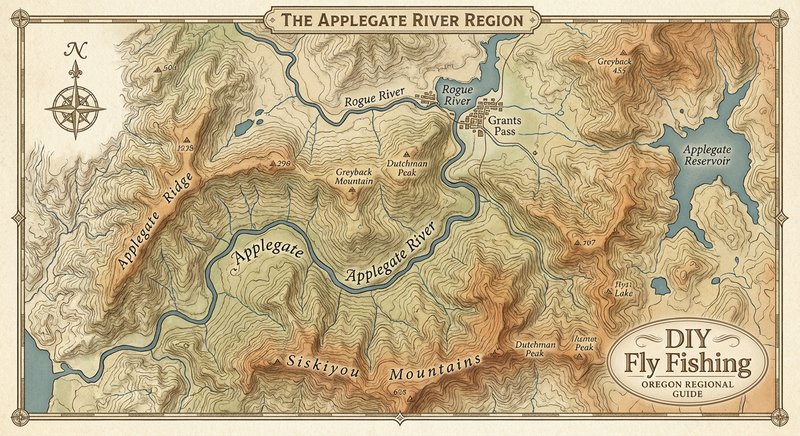
The Applegate River is one of Southern Oregon’s most technical and rewarding fisheries. A major tributary of the Rogue River, the Applegate winds through a stunning valley of vineyards and forest, offering an intimate, small-water experience that contrasts sharply with the massive flows of the main-stem Rogue or Umpqua.
Known primarily as a "winter sanctuary" for Steelhead, it provides some of the most consistent fly fishing opportunities in the Pacific Northwest when other rivers are blown out.
🎣 Location Overview
The Applegate is a "tailwater" of sorts, controlled by the Applegate Dam (Cranberry Lake). This regulation helps stabilize flows, though it remains a rain-fed system that reacts to coastal storms.
What makes it special is its intimacy. This is not a river for big "spey" casts; it is a river for "trout-style" Steelheading. The water is often crystal clear, requiring stealth, light tippets, and precise presentations. It feels like high-end trout water, but the fish at the end of the line are chrome-bright ocean-run powerhouses.
🐟 Target Species & Behavior
Winter Steelhead
These are the stars of the show. Applegate Steelhead are typically smaller than those in the Rogue (averaging 5–8 lbs), but they are incredibly feisty. Because the river is narrow, these fish can be very spooky. They hold in "classic" walking-speed water but often tuck into tight pockets behind boulders or under overhanging willow banks.
Rainbow Trout
The river holds a healthy population of resident Rainbows (often called "half-pounders" when they are immature Steelhead). They are opportunistic feeders, keyed into stoneflies and caddis. During the summer months, they provide excellent light-tackle action.
📅 Best Times to Fish
- Winter (January – March): This is the Prime Window for Steelhead. The run typically peaks in February. This is "spawning time," so look for fish moving into the gravel reaches.
- Spring (April – May): The tail end of the Steelhead run overlaps with increasing trout activity. Note: The river often closes for a period in the spring to protect smolts (check current ODFW regs).
- Summer (June – August): Excellent for resident trout. Focus on the early morning and late evening (the "magic hour") to avoid the valley heat.
- Prime Conditions: For Steelhead, you want the river "dropping and clearing" after a rain event. A flow rate between 400 and 900 CFS is generally considered the sweet spot for wading.
🪰 Recommended Flies & Techniques
For Steelhead (Winter)
Because the water is small and often clear, leave the giant "intruder" flies at home.
- Technique: Nymphing under an indicator is the most productive method here.
- Flies:
- Glo-Bugs / Beads: Mottled Roe, Oregon Cheese, or Dead Egg colors.
- Rubber Legs / Stoneflies: Black or Golden Stonefly patterns (Size 6-10).
- Prince Nymphs: Flashy variations work well in slightly turbid water.
- Small Swingers: If you must swing, use small, weighted "Low Water" patterns or Hoh Bo Speys in purple/black or pink/white.
For Rainbow Trout (Summer)
- Technique: Tight-line nymphing or dry-fly-dropper rigs.
- Flies:
- Dries: Parachute Adams, Elk Hair Caddis, or Stimulators (Size 12-16).
- Nymphs: Pheasant Tails, Zebra Midges, and Copper Johns.
💡 Pro Tips & Local Knowledge
- Stealth is Key: Because the river is narrow, your shadow can spook an entire hole. Avoid "wading deep." Stand on the bank or in the shallows and fish the near-side seams before stepping in.
- The "Tailwater" Advantage: If the Rogue River is running high and chocolate milk brown, check the Applegate. The dam helps settle the sediment, and the river often clears 24-48 hours faster than surrounding waters.
- Target the Wood: The Applegate is full of fallen timber. While it eats flies, Steelhead love the overhead cover. If you find a deep slot with a submerged log, there is almost certainly a fish there.
- Short Game: You rarely need to cast more than 30 feet. Focus on "high-sticking" and managing your line to prevent drag in the complex micro-currents.
⚠️ Important Information
Access
Access can be tricky as much of the river flows through private land.
- Cantrall Buckley Park: One of the most popular and productive public access points.
- Applegate Dam Spillway: Good access for the upper reaches.
- Bridge Crossings: Many anglers use public right-of-ways at bridge crossings (e.g., Murphy, Applegate, and Ruch), but always respect "No Trespassing" signs.
Regulations & Permits
- Strictly Catch & Release for Wild Steelhead: You must release all unclipped (wild) Steelhead. Only hatchery fish (clipped adipose fin) may be kept.
- Barbless Hooks: Highly recommended (and sometimes required—check the current ODFW Southwest Zone booklet).
- Closures: The Applegate has specific seasonal closures to protect spawning fish. Always check the ODFW website before heading out.
Special Considerations
The Applegate is a wading-only river for fishing. While you can float it in a small raft or drift boat for transportation, you generally cannot fish from the boat. This keeps the playing field level and protects the intimate nature of the water.
Bug Hatches & Matching Flies
| Hatch | Type | Peak months | Time of day | Hook sizes | Matching flies |
|---|---|---|---|---|---|
| March Brown Rhithrogena morrisoni | mayfly | March, April | Afternoon | #12-14 | Western March Brown #12-14, Hare's Ear #12-14, March Brown Emerger #14 |
| Blue Winged Olive Baetis spp. | mayfly | February, March, October, November | Mid-day | #16-20 | Parachute Adams #16-20, RS2 #18-20, Pheasant Tail #16-20 |
| Skwala Stonefly Skwala americana | stonefly | February, March | Afternoon | #8-12 | Skwala Stone #10-12, Pat's Rubber Leg (Olive) #8-12, Bullet Skwala #12 |
| Golden Stonefly Hesperoperla pacifica | stonefly | June, July | Morning/Evening | #6-10 | Chubby Chernobyl #8-10, Golden Stone Nymph #6-10, Clark's Stone #8-10 |
| Pale Morning Dun Ephemerella spp. | mayfly | June, July, August | Late Morning/Afternoon | #14-18 | PMD Sparkle Dun #16-18, Trigger Finger PMD #16, Mercer's Poxyback PMD #16-18 |
| Spotted Sedge Hydropsyche | caddis | June, July, August, September | Evening | #14-18 | Elk Hair Caddis #14-16, Pupa-tator #16, Hydropsyche Larva #14-16 |
| October Caddis Dicosmoecus gilvipes | caddis | September, October | All Day/Evening | #8-10 | Orange Stimulator #8-10, October Caddis Pupa #8-10, Morrish October Caddis #8-10 |
| Midges Chironomidae | midge | January, February, December | Mid-day | #18-24 | Zebra Midge #18-22, Griffith's Gnat #20-22, Top Secret Midge #20-22 |
| Grasshoppers Orthoptera | terrestrial | July, August, September | Afternoon | #8-12 | Morrish Hopper #10-12, Dave's Hopper #10-12, Parachute Hopper #12 |