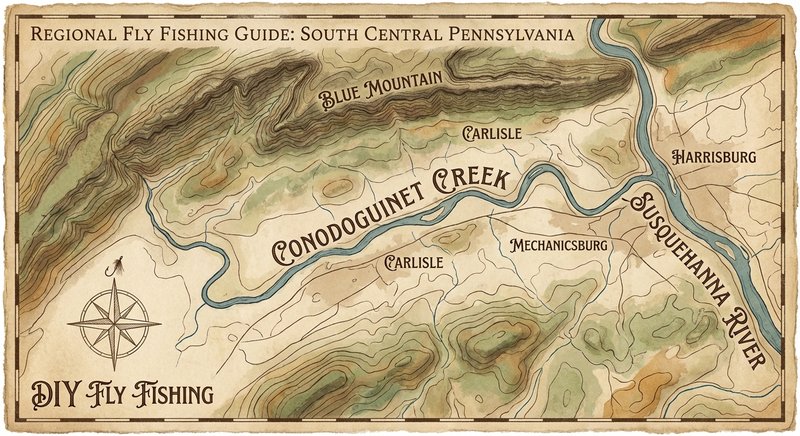
Conodoguinet Creek
Fly fishing in Pennsylvania · Intermediate · Best seasons: Spring, Summer, Fall
Target Species
Brown Trout
About This Water
Cumberland County limestone stream with wild brown trout. Good hatches throughout season.
Fishing Recommendations
Greetings, angler. It’s a pleasure to talk about the "Conny." The Conodoguinet Creek in South Central Pennsylvania is a unique, meandering limestone-influenced waterway. While many PA anglers head to the famous Letort or Yellow Breeches, the Conodoguinet offers a much different, more rugged experience.
It is important to set expectations: while it holds trout in specific sections, it is primarily world-class Smallmouth Bass water. However, for the dedicated Brown Trout angler, the "Upper Conny" and areas influenced by cold-water tributaries offer a "sleeper" fishery for those who know where to look.
🎣 Location Overview
The Conodoguinet Creek is a 104-mile-long tributary of the Susquehanna River. Its name comes from a Native American word meaning "A Long Way with Many Bends," which is an understatement—the creek is famous for its massive loops and slow, winding nature.
What makes it special is its limestone influence. It flows through the Cumberland Valley’s rich limestone shelf, providing high alkalinity and incredible biomass (bugs). While the lower stretches get too warm for trout in the summer, the upper reaches (near Shippensburg and Newburg) and the stretches immediately downstream from cold-water tributaries (like Big Spring or Letort Spring Run) create "thermal refuges" where large, wild-looking Brown Trout can thrive.
🐟 Target Species & Behavior
- Brown Trout: These are the primary prize. Because the Conodoguinet is larger and cloudier than its spring creek neighbors, the Browns here behave differently. They are opportunistic and predatory.
- Behavior: Unlike the "sippers" of the Letort, Conny Browns are often "prowlers." They hide under massive undercut banks, log jams, and limestone ledges during the day and move into the shallows to hunt at night or during high-water events.
- Feeding: They have a massive protein-rich diet consisting of Crayfish, Sculpins, and large White Suckers, supplemented by heavy hatches of Caddis and Mayflies.
📅 Best Times to Fish
Optimal Seasons
- Spring (April – June): This is the prime window. Water levels are usually stable, and the major hatches occur. The water temperature is perfect for trout metabolism.
- Fall (September – November): As water temperatures drop, Brown Trout become aggressive before their spawn. This is the best time for trophy hunters to throw large streamers.
- Summer: Only fish the Upper Conny or near cold-water tributary confluences. The main stem can get too warm for trout health in July and August.
Best Times of Day
- Low Light is King: Browns in the Conny are notoriously light-shy. Focus on the "Grey Ghosts" hours—30 minutes before sunrise and the 90 minutes leading into dusk.
- Overcast Days: A rainy, drizzly Tuesday is better than a blue-bird Sunday on this water.
🪰 Recommended Flies & Techniques
Top Fly Patterns
- Streamers: This is a "big fly, big fish" creek.
- White Belly Muddler Minnows (Size 4-8)
- Black or Olive Woolly Buggers (Size 6-10)
- Game Changers or Drunk & Disorderly (for larger Browns)
- Nymphs:
- Pheasant Tails (Size 14-18) - classic for a reason.
- Crayfish Patterns (Size 8-12) - dead-drifted along the bottom.
- Zebra Midges (Size 18-22) - effective in the slower, deeper pools.
- Dry Flies:
- Sulfurs (Size 14-16) in late May/June.
- Tan Caddis (Size 14-18) - very prevalent in the evenings.
Techniques
- Streamer Stripping: Cast toward the undercut banks or into the "root wads." Use a jerk-strip-pause retrieve to mimic a wounded baitfish.
- High-Stick Nymphing: Because the Conny has many limestone ledges, fish will hide in the "slots." Use heavy tungsten beads to get your nymph down into those dark crevices.
- Tributary Hunting: Fish the mouths where colder creeks enter. The "mixing zone" often holds the highest concentration of trout.
💡 Pro Tips & Local Knowledge
- Focus on the Upper Creek: Focus your trout efforts upstream of Orrstown. As you move downstream toward Carlisle and Camp Hill, it becomes a pure Smallmouth/Musky fishery.
- The "Shadow" Factor: Because the creek is deeply incised in many places, look for sections where the limestone cliffs cast a shadow over the water. Trout will hold in these shadows even mid-day.
- Wading Caution: The Conodoguinet is notorious for "slippery ledges." The limestone bottom can be like walking on greased glass, and it drops off unexpectedly. Use a wading staff and felt-soled boots (where legal) or studs.
- Smallmouth Bonus: Don't be disappointed if you hook a 15-inch Smallmouth while trout fishing. They inhabit the same runs and fight twice as hard.
⚠️ Important Information
- Access: Much of the Conny flows through private farmland. Look for bridge crossings and PA Fish & Boat Commission (PFBC) access points. Always respect "Posted" signs.
- Regulations: The Conodoguinet is generally under Statewide Regulations for trout, but check the PFBC Summary Book for any specific changes to the section you are fishing.
- Permit: You must have a valid Pennsylvania Fishing License and a Trout/Salmon Stamp.
- Conservation: In the summer months, carry a thermometer. If the water temp exceeds 68°F, please stop fishing for trout to avoid lethal stress on the fish. Switch to Smallmouth—they love the heat!
The Conny is a "thinking man's" trout stream. It won't give up its secrets easily, but for the angler who masters the streamer and the evening hatch, the rewards are some of the most beautiful, butter-colored Brown Trout in the state. Tight lines!
Bug Hatches & Matching Flies
| Hatch | Type | Peak months | Time of day | Hook sizes | Matching flies |
|---|---|---|---|---|---|
| White Mayfly Ephoron leukon | mayfly | August, September | Dusk/Evening | #12-14 | White Wulff #12-14, Ephoron Emerger #12-14, White Polywing Spinner #12-14 |
| White Miller Caddis Nectopsyche | caddis | July, August | Evening/Night | #14-16 | White Elk Hair Caddis #14-16, White Miller Larva #14-16 |
| Tricos Tricorythodes | mayfly | July, August, September | Morning | #20-24 | Trico Spinner #20-24, RS2 #20-22 |
| Hellgrammite Corydalus cornutus | stonefly | June, July | All Day | #4-8 | Murray's Hellgrammite #4-8, Bitch Creek Nymph #6-10 |
| Light Cahill Stenacron interpunctatum | mayfly | May, June | Evening | #12-14 | Light Cahill #12-14, Gold Ribbed Hare's Ear #12-14 |
| Blue-Winged Olive Baetis | mayfly | April, October, November | Afternoon | #18-22 | BWO Sparkle Dun #18-22, Pheasant Tail #18-20 |
| Damselfly Calopteryx | terrestrial | June, July, August | Afternoon | #10-12 | Adult Damselfly #10-12, Marabou Damsel Nymph #12 |
| Japanese Beetle Popillia japonica | terrestrial | July, August | All Day | #12-14 | Foam Beetle #12-14, Coffee's Sparkle Beetle #14 |