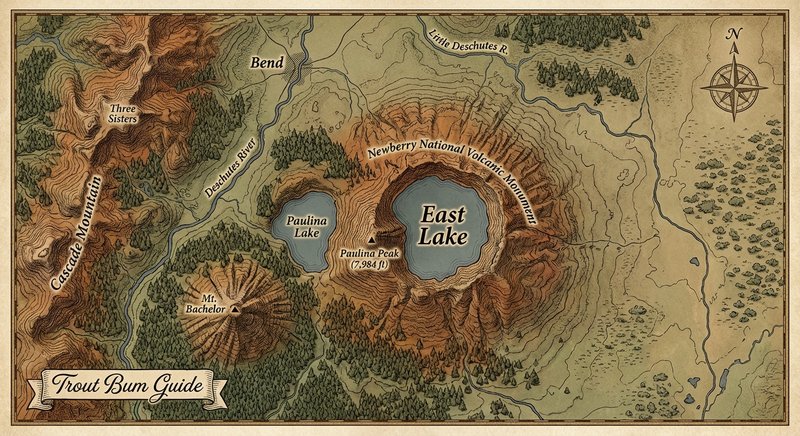
East Lake
Fly fishing in Oregon · Beginner · Best seasons: Spring, Summer, Fall
Target Species
Brown Trout, Rainbow Trout, Atlantic Salmon
About This Water
Volcanic lake in Newberry Crater. Trophy brown and rainbow trout and Atlantic salmon.
Fishing Recommendations
Welcome to the caldera. As a guide in the High Cascades, I consider East Lake to be one of the crown jewels of Oregon stillwater fishing. Nestled at 6,400 feet inside the Newberry National Volcanic Monument, this is a nutrient-rich, high-altitude lake that offers world-class opportunities for trophy fish.
Here is your comprehensive guide to fly fishing East Lake.
🎣 Location Overview
East Lake is a "closed" volcanic caldera lake, meaning it has no natural outlet. It is fed by snowmelt and underground springs, including subterranean thermal vents. The water is exceptionally clear, characterized by vast pumice flats, steep drop-offs, and dense weed beds that harbor an incredible biomass of insects.
What makes East Lake special is its diversity. You can spend the morning sight-casting to 10-pound Brown Trout in two feet of water, the afternoon matching a delicate Callibaetis hatch for Rainbows, and the evening stripping streamers for aggressive Atlantic Salmon. It is a technical lake that rewards patience and observation.
🐟 Target Species & Behavior
Brown Trout
The "Kings" of East Lake. These fish grow to massive proportions by feeding on chironomids, crawfish, and small tui chub.
- Behavior: They are notoriously wary. In the early morning and late evening, they cruise the shallow pumice flats to hunt. During the day, they retreat to the shadows of steep drop-offs or hold near the "gas shelf" (thermal vents).
Rainbow Trout
These are the acrobats of the lake. They are often found patrolling the edges of weed beds where oxygen and food are most abundant.
- Behavior: They are highly opportunistic and are the primary target during major hatches. They tend to hold in the 5–15 foot depth range.
Atlantic Salmon
Oregon’s landlocked Atlantic Salmon are unique. They are sleeker and more silver than the trout and are known for their explosive strikes and aerial displays.
- Behavior: They prefer slightly cooler, deeper water but will move into the upper water column to feed on emerging insects. They are often found near the center of the lake or off the steep banks of Cinder Hill.
📅 Best Times to Fish
- Spring (Late May – June): This is "Ice-Off" season. As the ice retreats, fish move into the shallows to soak up the sun and feed aggressively after winter. This is the best time for trophy Browns.
- Summer (July – August): Peak dry fly season. The Callibaetis (speckled-wing mayfly) hatches are legendary here.
- Fall (September – October): The most scenic time. Brown trout become aggressive and colorful as they prepare for their "spawn" (though they are mostly self-sustaining/stocked, the instinct remains). The crowds thin out, and the big fish return to the shallows.
Prime Window:
- Morning: 6:00 AM – 10:00 AM for sight-fishing flats.
- Mid-Day: 11:00 AM – 2:00 PM for the heat of the hatch.
- Evening: The "Magic Hour" before sunset for cruising streamers.
🪰 Recommended Flies & Techniques
The Chironomid Rig (The Bread & Butter)
East Lake is a chironomid factory.
- Technique: Use a long leader (15–20 feet) under a slip-indicator. Suspend your fly 6 inches to 1 foot off the bottom.
- Flies: Ice Cream Cones (black/red, silver/olive), Zebra Midges (size 14–18), and Blood Worms.
Dry Fly (The Match-the-Hatch)
When the Callibaetis are popping, the lake surface looks like it's raining.
- Technique: Target rising fish. Cast ahead of their cruising path. Keep your presentation delicate.
- Flies: Parachute Adams (size 14–16), Callibaetis Sparkle Dun, and Harrop’s CDC Last Chance Emerger.
Streamer Stripping
- Technique: Use an intermediate or Type 3 sinking line. Vary your retrieve—sometimes a slow "crawl" works best for Browns, while a fast "strip-strip-pause" triggers Atlantic Salmon.
- Flies: Balanced Leeches (olive or bruiser), Woolly Buggers, and small baitfish patterns (mimicking tui chub).
💡 Pro Tips & Local Knowledge
- The Gas Shelf: Look for bubbles rising from the lake floor near the south shore. These are thermal vents. The water is warmer here, and the minerals attract baitfish and insects, which in turn attract large predators.
- The "East Lake Lean": The wind usually kicks up from the west in the afternoon. Position your boat or float tube to drift along the weed lines on the east side (near Cinder Hill) to cover more water.
- Stalk the Flats: If you have a steady hand and a good pair of polarized glasses, you can wade the south-end pumice flats. It is essentially "Bonefishing for Trout." Crawl a dark leech or a damsel nymph slowly along the bottom when you spot a cruising shadow.
- Be Quiet: Sound travels incredibly well in this caldera. Dropping an oar or slamming a tackle box will spook a trophy Brown 30 feet away.
⚠️ Important Information
- Access: There are two main boat ramps: East Lake Resort and Cinder Hill. The lake is restricted to a 10 MPH speed limit, making it very friendly for kayaks and float tubes.
- Regulations: East Lake is open year-round, but snow usually blocks access from November to May. Always check the ODFW Central Zone regulations for current bag limits (usually 5 trout, but many anglers practice 100% catch and release here to preserve the trophy fishery).
- Supplies: East Lake Resort has a small shop with the "hot flies" of the week, gas, and basic rentals.
- Safety: The weather can change in minutes at 6,400 feet. Always carry a rain shell and be prepared for sudden wind gusts.
Tight lines, and enjoy one of the most beautiful volcanic fisheries in the world!
Bug Hatches & Matching Flies
| Hatch | Type | Peak months | Time of day | Hook sizes | Matching flies |
|---|---|---|---|---|---|
| Chironomids Family Chironomidae | midge | May, June, September | All day (peaks Morning/Afternoon) | #12-22 | Zebra Midge #16-20, Ice Midge #12-18, Griffith's Gnat #18-22 |
| Callibaetis Callibaetis ferrugineus | mayfly | June, July, August, September | Late Morning/Early Afternoon | #12-16 | Parachute Adams #14-16, Pheasant Tail Nymph #12-16, Callibaetis Spinner #14-16 |
| Damselfly Enallagma spp. | other | June, July | Morning/Afternoon | #10-14 | Marabou Damsel #10-14, Braided Butt Damsel #12-14, Sheep Creek Special #12-14 |
| Traveling Sedge Hesperophylax occidentalis | caddis | June, July | Evening | #8-12 | Mikulak Sedge #8-10, Godzilla Caddis #8-12, Elk Hair Caddis #10-12 |
| Scuds Gammarus lacustris | other | May, June, October | All day | #12-16 | Ray Charles #14-16, Olive Scud #12-16, Flashback Scud #14-16 |
| Dragonfly Nymph Anisoptera | other | June, July, August | All day | #6-10 | Carey Special #6-10, Gummer Bugger #8-10, Dragonfly Nymph (Olive/Brown) #8-12 |
| Terrestrials (Ants/Beetles) Formicidae / Coleoptera | terrestrial | August, September | Afternoon | #14-18 | Carpenter Ant #14-16, Foam Beetle #14-18, Chernobyl Ant #10-12 |
| Water Boatmen / Backswimmers Corixidae / Notonectidae | other | September, October | Afternoon | #12-16 | Water Boatman #14-16, Prince Nymph #12-16, Backswimmer #12-14 |