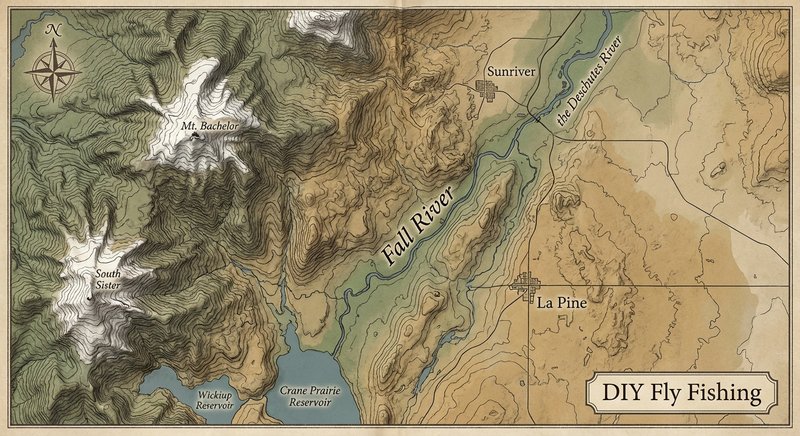
Fall River
Fly fishing in Oregon · Advanced · Best seasons: Summer, Fall
Target Species
Rainbow Trout, Brook Trout
About This Water
Spring creek with crystal clear water. Technical fishing for wild rainbows.
Fishing Recommendations
Welcome to one of the most unique and challenging spring creeks in the Pacific Northwest. As your guide, I can tell you that the Fall River is a gem of Central Oregon—a crystal-clear, spring-fed tributary of the Deschutes River that offers technical sight-fishing in a setting that looks like a postcard.
🎣 Location Overview
The Fall River is a classic "limnocrane" spring creek, meaning it bubbles directly out of the ground from an aquifer. Located about 30 miles south of Bend, Oregon, it flows through a lush forest of lodgepole and ponderosa pines.
What makes it special: The water is remarkably stable in temperature (roughly 42–48°F year-round) and clarity. It is gin-clear, allowing you to spot every pebble and, more importantly, every fish. However, this clarity is a double-edged sword; if you can see the fish, the fish can definitely see you. It is a "technical" fishery that rewards patience, light tippets, and perfect presentations.
🐟 Target Species & Behavior
- Rainbow Trout: These are the primary residents. The river is stocked periodically with "trophy" sized rainbows, but there is also a healthy population of wild, stream-born fish. They are notorious for being "PhD fish"—they will inspect your fly with the scrutiny of a diamond appraiser.
- Brook Trout: You’ll find these beautiful fish mostly in the upper reaches near the headwaters and in the slower, woodier sections. They are generally more aggressive than the rainbows but still cautious in the clear water.
- Behavior: Fish here hold in the "buckets" (deeper depressions in the sandy bottom), along the edges of aquatic weed beds, and tucked under overhanging banks or fallen timber. They don't move far for a meal; your fly needs to be right in their lane.
📅 Best Times to Fish
While the river is open year-round, you asked for the prime windows:
- Summer (June – August): This is the season of the Pale Morning Dun (PMD) and Caddis. Mornings and late evenings are best to avoid the high-sun glare and the crowds.
- Fall (September – November): My personal favorite time. The crowds thin out, the Brook Trout move into their vibrant spawning colors, and we get the legendary Blue Winged Olive (BWO) hatches.
- Prime Windows:
- 10:00 AM – 2:00 PM: Peak hatch time for mayflies.
- Last Light: Look for heavy Caddis activity and "spinner falls" (dying mayflies).
🪰 Recommended Flies & Techniques
Top Fly Patterns
- Dry Flies:
- BWO Sparkle Dun (#18-22): Essential for fall cloudy days.
- PMD Vis-A-Dun (#16-18): Great for summer mornings.
- Elk Hair Caddis (#16-18): Tan or Olive, best in the evenings.
- Hippie Stomper or Small Hoppers (#12-14): Late summer terrestrials.
- Nymphs:
- Zebra Midge (#18-22): Red or Black. The "bread and butter" of the Fall River.
- Two-Bit Hooker (#18-20): Heavy enough to get down fast in the slots.
- RS2 (#20): Perfect for fish feeding just under the surface film.
- Streamers:
- Egg-Eating Leech or Pine Squirrel Leech (#12): Small and olive or black. Use these in the deeper pools.
Techniques & Presentation
- Sight Fishing: Do not blind cast. Walk slowly, wear polarized glasses, and spot a specific fish. Observe its feeding rhythm before casting.
- The "Micro-Drag" Killer: Even the slightest drag will spook these fish. Use a Reach Cast or a Slack Line Cast to ensure a natural drift.
- Light Tackle: 3-weight or 4-weight rods are ideal. You must use long leaders (9–12 feet) tapering down to 6X or 7X fluorocarbon tippet.
💡 Pro Tips & Local Knowledge
- Stay Back from the Bank: The most common mistake is walking right up to the water. The fish see your silhouette against the sky and vanish. Kneel or stay 5–10 feet back from the bank.
- The Hatchery Stretch: The area around the Fall River Fish Hatchery is heavily stocked and popular. If you want a more "wild" experience, hike further downstream toward the Fall River Falls or upstream toward the headwaters.
- Downstream Dry Fly: If you can't get a drag-free drift from upstream, walk above the fish and cast downstream, shaking extra line out so the fly reaches the fish before the leader does.
- The "Beetle" Secret: During summer afternoons when nothing is hatching, a tiny black foam beetle (#18) dropped tight to the logs will often fool the biggest fish in the river.
⚠️ Important Information
- Regulations: The Fall River is Fly Fishing Only and Catch and Release Only. Barbless hooks are highly recommended to protect the fish.
- Access: There are several well-marked access points:
- The Headwaters: Shallow, clear, and great for Brookies.
- The Hatchery: Easy access, very crowded.
- The Falls: Beautiful scenery and deeper water.
- Permits: You need a valid Oregon Angling License.
- Special Note: This is a fragile environment. Please stay on established trails to avoid eroding the soft volcanic soil banks and damaging the riparian vegetation.
Guide's Final Word: The Fall River will test your patience and your knots. Don't get frustrated if you get refused ten times in a row—that’s just part of the "Fall River Handshake." When you finally land that 18-inch rainbow on a size 22 midge, you'll know why we keep coming back.
Bug Hatches & Matching Flies
| Hatch | Type | Peak months | Time of day | Hook sizes | Matching flies |
|---|---|---|---|---|---|
| Blue Winged Olive (BWO) Baetis | mayfly | March, April, September, October, November | Late Morning/Afternoon | #18-22 | BWO Sparkle Dun #18-22, RS2 #20-22, Pheasant Tail #18-20 |
| Pale Morning Dun (PMD) Ephemerella excrucians | mayfly | June, July, August | Late Morning/Early Afternoon | #16-18 | PMD Parachute #16-18, Last Chance Emerger #16-18, Mercer's Poxyback PMD #16-18 |
| Midges Chironomidae | midge | January, February, December | All Day | #20-24 | Zebra Midge #20-24, Griffith's Gnat #20-22, Palomino Midge #22-24 |
| Western Green Drake Drunella doddsi | mayfly | May, June | Afternoon | #10-12 | Hairwing Green Drake #10-12, Drake Cripple #12, 20 Incher Stone #10-12 |
| Spotted Sedge Hydropsyche | caddis | July, August, September | Evening | #14-18 | Elk Hair Caddis #14-18, Pupa Sili Leg #16, LaFontaine's Deep Sparkle Pupa #14-16 |
| Little Black Stonefly Capniidae | stonefly | February, March | Mid-day | #16-18 | Little Black Sloppy Joe #16-18, Black Copper John #16-18 |
| Terrestrials (Ants/Beetles) Formicidae / Coleoptera | terrestrial | July, August, September | All Day | #14-20 | Cinnamon Ant #16-18, Black Foam Beetle #14-16, Carpenter Ant #12-14 |
| Mahogany Dun Paraleptophlebia | mayfly | September, October | Afternoon | #16-18 | Mahogany Sparkle Dun #16-18, Parachute Mahogany Dun #16-18 |