Hosmer Lake
Fly fishing in Oregon · Intermediate · Best seasons: Summer, Fall
Target Species
Atlantic Salmon, Brook Trout
About This Water
Fly fishing only lake near Bend. Atlantic salmon and brook trout in scenic setting.
Fishing Recommendations
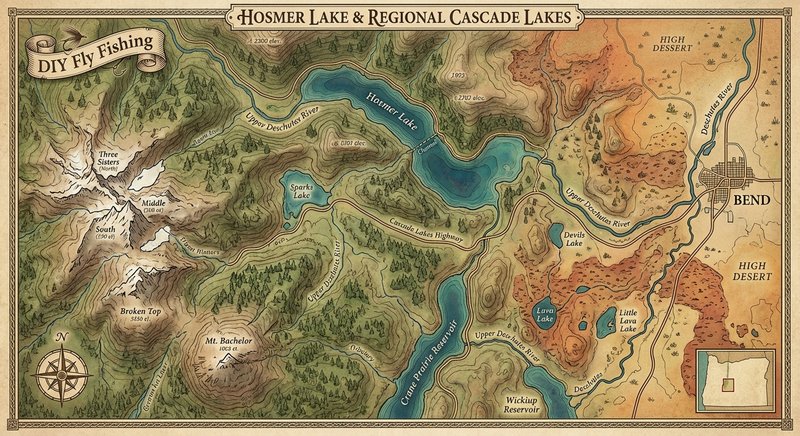
Greetings, angler. It is a pleasure to share some intelligence on one of the crown jewels of the Cascade Lakes. Hosmer Lake is not just a fishing destination; it is a sensory experience. Nestled at the base of Mt. Bachelor and South Sister, this is "aquarium fishing" at its finest.
Here is your guide to mastering the technical and breathtaking waters of Hosmer.
🎣 Location Overview
Hosmer is a natural lake famous for its crystal-clear, spring-fed waters and its unique history as a sanctuary for Atlantic Salmon. It is a "no-motors" (electric only) lake, which preserves a hauntingly quiet atmosphere.
What makes it special is the visibility. The bottom is a mix of white pumice sand, lush weed beds, and submerged timber. You can often see the fish from 20 feet away, which turns every cast into a high-stakes game of sight fishing. The lake is divided into three main sections: the Upper Lake, the Channel (connecting the two), and the Lower Lake. Each requires a slightly different approach.
🐟 Target Species & Behavior
- Landlocked Atlantic Salmon: These are the stars of the show. They are sleek, powerful, and notoriously fickle. They don't behave like trout; they often cruise in "pods" or schools. They are known for their spectacular leaps when hooked.
- Brook Trout: Hosmer holds some of the largest Brookies in Oregon. They are beautifully colored, often found hugging the edges of the weed beds or tucked under submerged logs.
- Cutthroat Trout: Recently introduced in larger numbers, these are often the most aggressive feeders in the lake and provide great surface action.
Behavior: Because the water is so clear, these fish are "PhD educated." They have incredible eyesight and are very sensitive to shadow and surface disturbance. Stealth is your most important piece of gear.
📅 Best Times to Fish
- Seasons:
- Early Summer (June - July): This is prime time. The famous Callibaetis hatch begins, bringing fish to the surface.
- Fall (September - October): The Brook Trout enter their spawning colors and become more aggressive. The crowds thin out, and the Salmon often congregate near the inlet.
- Time of Day:
- Morning (Dawn to 10:00 AM): Best for calm water and sight fishing before the wind kicks up.
- Evening: The "spinner fall" of the Callibaetis can create a feeding frenzy in the last hour of light.
- Prime Conditions: Overcast days are a godsend on Hosmer. The lower light makes the fish less spooky and hides your leader's silhouette.
🪰 Recommended Flies & Techniques
Top Patterns
- Callibaetis: This is the primary food source. Carry nymphs (Size 14-16), emergers, and cripples. The Quigley’s Hackle Stacker is a local favorite.
- Damselflies: In mid-summer, bright blue adult damsels and olive nymphs (Size 10-12) are deadly. Try a braided-butt damsel for surface takes.
- Scuds: Since it’s a spring-fed lake, scuds are always on the menu. Olive or Tan (Size 14-18) worked slowly near the weeds.
- Midges: Small black or zebra midges (Size 18-22) under a tiny indicator for the "tough" days.
Techniques
- Sight Casting: This is the Hosmer standard. Position your boat (kayak/SUP/float tube) so the sun is at your back. Spot a cruising fish, lead them by 5-10 feet, and let the fly settle.
- The "Slow Strip": For Atlantic Salmon, use a long leader (12-15 feet) and an intermediate sinking line. Strip a damselfly or small streamer with erratic, short tugs.
- The "Dangle": If you see fish cruising in the channel, sometimes just hanging a midge or scud stationary near a weed edge is more effective than moving it.
💡 Pro Tips & Local Knowledge
- The Channel is Key: While many people head straight for the open water of the Upper Lake, the narrow channels connecting the pools often hold the highest density of fish. Use the reeds as a blind to hide your profile.
- Go Long and Fine: Because of the clarity, 5x or 6x fluorocarbon tippet is mandatory. If you aren't getting hits on your nymphs, drop down a size in tippet before changing the fly.
- The "Hosmer Twitch": When fishing a Callibaetis dry, give it a micro-twitch just as a fish approaches. Sometimes that tiny movement triggers the predatory instinct of the Atlantic Salmon.
- Look for "The Bubbles": Salmon often cruise in the deeper troughs of the Upper Lake. Look for subtle rises or bubbles; they often travel in a straight line, allowing you to intercept them.
⚠️ Important Information
- Access: There are two main boat launches: the Mallard Marsh campground (Lower Lake) and the South Boat Ramp. A Northwest Forest Pass is required for parking.
- Regulations: Hosmer is Fly Fishing Only (barbless hooks) and Catch and Release Only for all species. Check the current ODFW central zone regulations before heading out.
- Vessel Choice: A paddleboard (SUP) is arguably the best way to fish Hosmer. The standing position gives you a massive advantage for spotting fish against the white sandy bottom.
- Environment: The lake is fragile. Avoid anchoring directly in the weed beds to protect the insect habitat.
Hosmer is a place that rewards patience over power. Slow down, watch the water, and enjoy the sight of a 20-inch Atlantic Salmon turning on your fly in crystal-clear water. Tight lines!
Bug Hatches & Matching Flies
| Hatch | Type | Peak months | Time of day | Hook sizes | Matching flies |
|---|---|---|---|---|---|
| Callibaetis (Speckled Duns) Callibaetis ferrugineus | mayfly | June, July, August | Late Morning/Afternoon | #12-16 | Callibaetis Cripple #14-16, Parachute Callibaetis #14-16, Hare's Ear Nymph #12-16 |
| Chironomids Family Chironomidae | midge | May, June, September | All Day | #14-22 | Ice Cream Cone #16-20, Zebra Midge #18-22, Griffith's Gnat #18-22 |
| Damselflies Enallagma spp. | terrestrial | June, July | Afternoon | #10-14 | Marabou Damsel Nymph #12-14, Adult Damsel #12-14, Braided Butt Damsel #12 |
| Traveling Sedge Hesperophylax occidentalis | caddis | July, August | Evening | #8-12 | Goddard Caddis #10-12, Mikulak Sedge #8-10, Caddis Pupa #10-12 |
| Dragonflies Anisoptera | terrestrial | July, August | Afternoon | #4-10 | Gomphus Nymph #6-10, Dragonfly Adult #8-10, Woolly Bugger (Olive) #6-10 |
| Scuds Gammarus lacusris | terrestrial | April, May, October | All Day | #12-18 | Ray Charles #14-16, Flashback Scud #12-18, Olive Scud #14-16 |
| Carpenter Ants Camponotus spp. | terrestrial | June, August | Afternoon | #12-16 | Black Foam Ant #14-16, Chernobyl Ant #12-14, Transparant #16 |
| Water Boatmen Family Corixidae | terrestrial | September, October | Afternoon | #14-16 | Water Boatman #14-16, Prince Nymph #14-16, Backswimmer #12-14 |