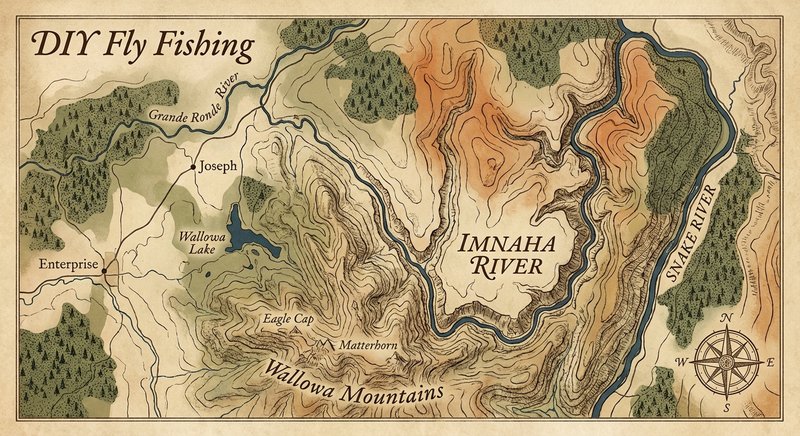
Imnaha River
Fly fishing in Oregon · Advanced · Best seasons: Fall, Spring
Target Species
Steelhead, Rainbow Trout
About This Water
Remote northeast Oregon river. Wild steelhead and rainbow trout in wilderness setting.
Fishing Recommendations
The Imnaha River is one of Oregon’s best-kept secrets, tucked away in the remote northeastern corner of the state. Flowing through a dramatic, rugged canyon within the Hells Canyon National Recreation Area, it offers a "step back in time" experience. This is a river for the angler who prizes solitude, wild scenery, and hard-fighting fish over easy access and manicured banks.
🎣 Location Overview
The Imnaha is a designated "Wild and Scenic River," and for good reason. It originates in the high peaks of the Wallowa Mountains and carves its way through deep basalt canyons before joining the Snake River.
The river is characterized by pocket water, classic cobblestone runs, and deep, emerald-green pools. Unlike the broader, more famous Deschutes, the Imnaha is relatively intimate. It is a high-gradient river with cold, oxygen-rich water. Because of its remoteness—hours away from any major city—you will often have miles of water to yourself. It is the quintessential "hike-in" destination for those willing to put in the work.
🐟 Target Species & Behavior
Summer-run Steelhead
While they are called "summer-run" because they enter the Columbia River in the summer, they don't reach the Imnaha until late fall. These are primarily "A-run" fish, typically weighing between 4 and 9 pounds. They are incredibly resilient, having traveled over 500 miles and climbed eight dams to reach these spawning grounds.
- Behavior: In the fall, they are aggressive and will often rise to a swung fly. In the spring, they settle into deeper holding water and tailouts, waiting for the right temperatures to move onto gravel.
Redband (Rainbow) Trout
These are the native "Redbands" of the Columbia Basin. They are brilliantly colored, hardy, and punch well above their weight class.
- Behavior: They are opportunistic feeders. In the spring, they gorge on eggs from spawning steelhead and early insect hatches. In the fall, they focus on October Caddis and terrestrials.
📅 Best Times to Fish
Spring (Late February – April)
This is the "Prime Time" for Steelhead. As water temperatures rise from the 30s into the low 40s, the fish become much more active.
- Conditions: Watch the snowmelt. You want a stabilizing river. If the "blue-green" clarity returns after a rain, the fishing can be lights-out.
Fall (October – December)
This is the best time for a "combo" trip. You can catch the first wave of Steelhead while the Rainbow Trout fishing is at its peak.
- Conditions: Crisp mornings and sunny afternoons. The water is usually at its clearest.
The "Prime Window"
- Steelhead: Mid-March is often the sweet spot.
- Time of Day: In the spring, wait for the sun to hit the water and warm it a few degrees; the afternoon bite is usually superior. In the fall, the "magic hour" before sunset is legendary for trout.
🪰 Recommended Flies & Techniques
For Steelhead
- Swinging (Spey/Switch): This is classic Imnaha fly fishing. Use a Skagit head with a variety of sink tips (T-8 to T-14).
- Patterns: Hobo Speys (Black/Blue or Purple), Intruders (Pink/Orange), and Dirty Hoes.
- Nymphing (Indicator): Often the most productive method in cold spring water.
- Patterns: Lifters (bead-head silk yarn eggs), Glo-bugs, and Rubber Legs (Stonefly patterns).
For Rainbow Trout
- Nymphing: Pheasant Tails (#14-18), Copper Johns, and Prince Nymphs.
- Dry Flies: October Caddis (#8-10) in the fall; Blue Winged Olives (BWO) and March Browns in the spring.
- Streamers: Small Sculpin patterns or Wooly Buggers swung through deep pockets.
💡 Pro Tips & Local Knowledge
- The "Gumboot" Stretch: The area near Gumboot Creek is famous for its accessibility and classic holding water. It’s a great starting point for those new to the river.
- Temperature is King: Carry a stream thermometer. If the water is below 36°F, Steelhead will be lethargic and tucked into the deepest, slowest slots. Once it hits 40°F, they move into the "swingable" tailouts.
- Wading Safety: The Imnaha is notoriously slippery. The rocks are "greased" with fine silt and algae. Studded wading boots and a wading staff are non-negotiable here.
- The "Steelhead/Bull Trout" Rule: You may hook into a massive Bull Trout (they can reach 25+ inches here). They are federally protected. Do not take them out of the water. Keep them wet, pop the hook, and release them immediately.
⚠️ Important Information
- Access: Follow Forest Service Road 3960 out of the town of Imnaha. This road parallels the river for miles. Note: The road can be rough and is often snowed in during early spring—check conditions before heading out.
- Regulations:
- You must have an Oregon Angling License and a Steelhead Tag.
- The Columbia Basin Endorsement is also required.
- Barbless hooks only for Steelhead.
- Wild Steelhead (intact adipose fin) must be released unharmed. Only hatchery fish (clipped fin) may be retained.
- No Cell Service: Once you leave Joseph or Enterprise, you are off the grid. Bring a spare tire, extra fuel, and plenty of water.
- Private Property: While much of the upper river is National Forest, there are sections of private ranch land in the lower canyon. Respect all "No Trespassing" signs and stick to high-water marks.
The Imnaha isn't a river that gives up its secrets easily, but for the angler who enjoys the hike and the hush of the canyon, there is no place better in the Pacific Northwest. Tight lines!
Bug Hatches & Matching Flies
| Hatch | Type | Peak months | Time of day | Hook sizes | Matching flies |
|---|---|---|---|---|---|
| Salmonfly Pteronarcys californica | stonefly | May, June | All Day | #4-8 | Chubby Chernobyl #6-8, Pats Rubber Legs #4-8, Clark's Stone #6-10 |
| Golden Stonefly Hesperoperla pacifica | stonefly | June, July | Morning/Evening | #8-12 | Norm Wood Special #8-10, Golden Twenty-Incher #8-12 |
| Blue-Winged Olive Baetis spp. | mayfly | March, April, September, October | Late Morning/Afternoon | #18-22 | RS2 #18-22, Parachute Adams #18-22, Pheasant Tail Nymph #18-20 |
| Pale Morning Dun Ephemerella excrucians | mayfly | June, July, August | Late Morning/Early Afternoon | #14-18 | Sparkle Dun #14-16, PMD Emerger #16-18, Military May #16 |
| Grannom Caddis Brachycentrus occidentalis | caddis | April, May | Afternoon/Evening | #14-16 | Peacock Caddis #14-16, Deep Sparkle Pupa #14-16 |
| Spotted Sedge Hydropsyche spp. | caddis | July, August, September | Evening | #12-16 | Elk Hair Caddis #14-16, LaFontaine's Emergent Pupa #14-16 |
| Grasshoppers Orthoptera | terrestrial | August, September | Afternoon | #8-12 | Dave's Hopper #10-12, Morrish Hopper #8-12 |
| Yellow Sally Isoperla spp. | stonefly | June, July | Afternoon/Evening | #14-16 | Yellow Sally Foamstone #14-16, Iron Lotus #16 |