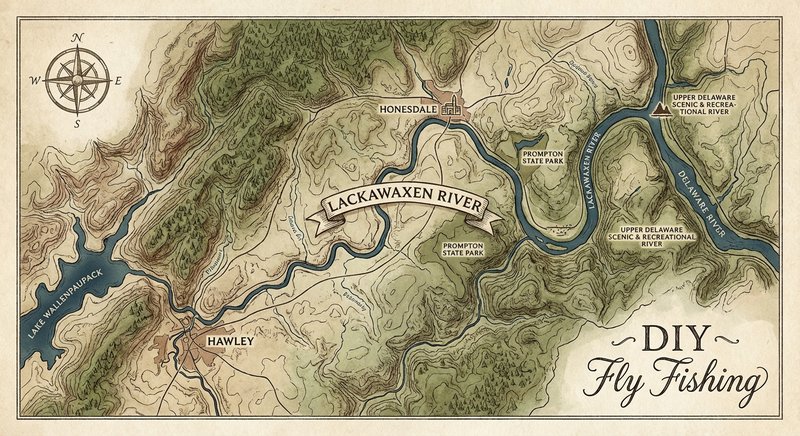
Lackawaxen River
Fly fishing in Pennsylvania · Intermediate · Best seasons: Spring, Summer, Fall
Target Species
Brown Trout, Rainbow Trout
About This Water
Pike County river with wild brown trout. Scenic fishing in northeastern PA.
Fishing Recommendations
The Lackawaxen River, or "the Lacky" as locals call it, is one of Pennsylvania’s premier tailwater-influenced fisheries. Flowing through the scenic Pocono Mountains before joining the Delaware River, it offers a unique blend of big-river feel and technical trout fishing. Because it is fed by the cold bottom-release waters of Lake Wallenpaupack (via the PPL hydro plant), it maintains fishable temperatures when other freestone streams in the state are too warm.
🎣 Location Overview
The Lackawaxen is a large, powerful river characterized by massive boulders, deep pools, and long, slick glides. It is primarily a "tailwater" fishery, meaning its flows and temperatures are heavily dictated by the hydroelectric discharge from the Brookfield Renewable (Lake Wallenpaupack) dam.
What makes it special is the biomass. The river is exceptionally fertile, supporting massive hatches of aquatic insects and a healthy population of both stocked and holdover trout. Anglers love it because it offers a "big water" experience—requiring long casts and careful wading—similar to the main stem of the Delaware, but often with less boat traffic and more accessible shoreline.
🐟 Target Species & Behavior
- Brown Trout: The kings of the Lacky. While the state stocks heavily, there are significant numbers of holdover browns that grow large and buttery. They tend to hold in the "shadows" of the massive boulders and in the deep, oxygenated troughs at the heads of pools.
- Rainbow Trout: Known for their aerial acrobatics, the rainbows here are often found in faster water—the riffles and "pockets" where the current is broken.
- Behavior: During high-release periods, fish move to the edges to escape the heavy current. When the water is low and clear, they become extremely wary and require fine tippets and perfect presentations.
📅 Best Times to Fish
Optimal Seasons
- Spring (April – June): This is the "Golden Era" on the Lacky. The hatches are prolific, and the water temperatures are perfect.
- Summer (July – August): While other PA rivers shut down, the Lackawaxen stays cool if the dam is generating. You must check the release schedule.
- Fall (September – October): The Brown trout become aggressive as they prepare to spawn. The foliage is world-class, and the crowds thin out.
Prime Windows
- Early Morning/Late Evening: Especially in the summer, the "spinner fall" at dusk can provide some of the best dry fly fishing of the year.
- The "Release Window": The transition period when the water begins to rise or fall after a dam release often triggers a feeding frenzy.
🪰 Recommended Flies & Techniques
Top Fly Patterns
- Dry Flies: Hendrickson (Spring), Sulphurs (May/June), Isonychia (Summer/Fall), and Blue Winged Olives (overcast days). Don't forget the Elk Hair Caddis (Size 14-18) and Rusty Spinners.
- Nymphs: Pheasant Tails, Prince Nymphs, and Zebra Midges. For high water, use heavy Stonefly nymphs (Size 8-12).
- Streamers: Black or Olive Wooly Buggers, and articulated patterns like the Kelly Galloup style streamers for targeting trophy browns during high water.
Effective Techniques
- Nymphing: A "high-stick" or European nymphing style works wonders in the boulder gardens. Use plenty of weight to get down in the deep pockets.
- Dry Fly: Use long leaders (12ft+) and 5x or 6x fluorocarbon tippets. The fish have a lot of time to inspect your fly in the long, slow pools.
- Streamer Stripping: On the swing or with an aggressive strip-and-pause near the banks during a rising river.
💡 Pro Tips & Local Knowledge
- The "Wallenpaupack Factor": Always check the hydroelectric release schedule (Brookfield Renewable). If they are running two turbines, the river becomes dangerous to wade. If they are running zero, the upper sections can get low. Ideally, you want a "one turbine" release or to fish the "falling" water after a release.
- Wading Safety: The rocks in the Lacky are notoriously slick and often move underfoot. Kool-Studes or felt soles and a wading staff are mandatory.
- The Confluence: The last mile of the river before it hits the Delaware is a "trophy alley." Big fish move up from the Delaware into the Lackawaxen to find cooler water or to spawn. Focus on the deep holes near the mouth.
⚠️ Important Information
Access Information
The river is paralleled by Route 590. Good access points include:
- Zane Grey Access: Located at the mouth where the Lackawaxen meets the Delaware.
- Glen Eyre: Offers good mid-river access.
- Bingaman’s Bridge: A popular spot for those looking to fish the upper stretches.
Regulations & Permits
- A valid Pennsylvania Fishing License and a Trout/Salmon Permit are required.
- Parts of the river are managed under standard statewide regulations, but always check the PA Fish and Boat Commission (PFBC) handbook for any "Special Regulation" sections that may change annually.
Special Considerations
- Cell Service: It is spotty at best in the river valley. Download your maps before you go.
- Eagle Watching: The Lackawaxen is a major wintering ground for Bald Eagles. Keep your eyes on the trees as much as the water!
Bug Hatches & Matching Flies
| Hatch | Type | Peak months | Time of day | Hook sizes | Matching flies |
|---|---|---|---|---|---|
| Blue-Winged Olive Baetis | mayfly | April, May, September, October | Afternoon | #18-22 | RS2 #18-22, BWO Sparkle Dun #18-20, Pheasant Tail #18-22 |
| Hendrickson Ephemerella subvaria | mayfly | April, May | Afternoon | #12-14 | Red Quill #12-14, Hendrickson Emerger #12-14, Gold Ribbed Hare's Ear #12-14 |
| Grannom Caddis Brachycentrus | caddis | April | Morning/Afternoon | #14-16 | LaFontaine's Deep Sparkle Pupa #14-16, Elk Hair Caddis (Dark) #14-16, Peacock Caddis #16 |
| Sulphur Ephemerella invaria/dorothea | mayfly | May, June | Evening | #14-18 | Sulphur Parachute #14-18, Sulphur Cripple #16-18, Pheasant Tail #16-18 |
| March Brown Maccaffertium vicarium | mayfly | May | Afternoon | #10-12 | March Brown American #10-12, Hare's Ear Nymph #10-12 |
| Slate Drake Isonychia bicolor | mayfly | June, September, October | Late Afternoon/Evening | #10-12 | Isonychia Parachute #10-12, Zug Bug #10-12, Prince Nymph #10-14 |
| Tan Caddis Hydropsyche | caddis | June, July, August | Evening | #14-16 | Elk Hair Caddis (Tan) #14-16, Hydropsyche Larva #14-16, Pupa Emerger #14-16 |
| Trico Tricorythodes | mayfly | July, August, September | Morning | #22-26 | Trico Spinner #22-26, Trico Parachute #22-24 |
| Ants and Beetles Formicidae / Coleoptera | terrestrial | July, August, September | All Day | #12-18 | Black Foam Ant #16-18, Chernobyl Ant #10-12, Crowe Beetle #14-16 |