Lehigh River
Fly fishing in Pennsylvania · Intermediate · Best seasons: Spring, Summer, Fall
Target Species
Brown Trout, Rainbow Trout
About This Water
Tailwater section below Francis E. Walter Dam. Excellent trout fishing in scenic gorge.
Fishing Recommendations
The Lehigh River in Northeastern Pennsylvania is often called the "Delaware of the West" by local anglers. It is one of the most underrated big-river fly fishing destinations in the Mid-Atlantic, offering a rugged, Western-style experience in the heart of the Coal Region.
Here is your comprehensive guide to fly fishing the Lehigh River.
🎣 Location Overview
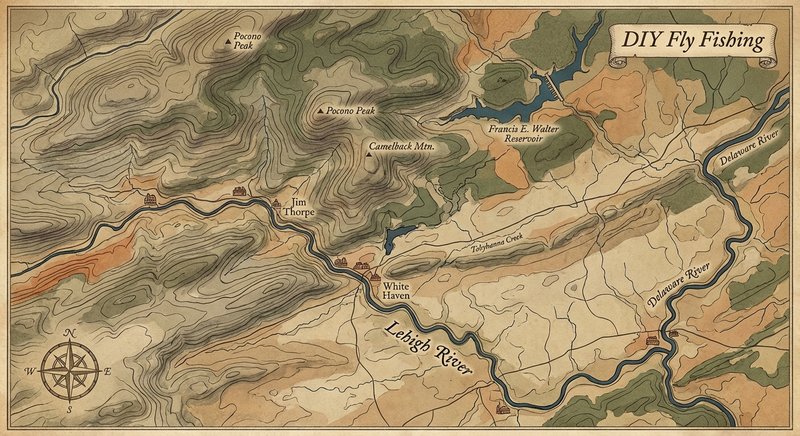
The Lehigh River is a large, high-gradient river that transforms from a small stream in the Poconos into a powerful tailwater/freestone hybrid below the Francis E. Walter Dam. The most prized section for fly anglers is the Lehigh Gorge, stretching from White Haven down to Jim Thorpe.
What makes the Lehigh special is its character. Unlike the slow, silty limestone streams of Central PA, the Lehigh is a brawling river filled with "pocket water," massive boulders, deep plunges, and long, heavy riffles. It feels like a piece of Montana dropped into Pennsylvania. Because it is a tailwater (bottom-release dam), the upper sections stay cooler longer into the summer than most regional rivers, though it still behaves much like a freestone river regarding its insect life.
🐟 Target Species & Behavior
- Brown Trout: The king of the Lehigh. You will find both stocked fish and a surprising population of wild, "river-hardened" browns. They are exceptionally strong due to the heavy current. They hold tight to the "cushion" in front of large boulders and in the deep, dark slots of the Gorge.
- Rainbow Trout: Generally stocked, but they thrive in the highly oxygenated riffles and faster "white water" sections. They are often more opportunistic than the browns and will move further to chase a fly.
- Behavior: These fish are athletes. Because they live in high-velocity water, they don't have time to inspect a fly forever—they have to react. However, during low-clear water periods, they can become extremely "technical" and leader-shy.
📅 Best Times to Fish
- Spring (Mid-April to June): This is the prime window. The river comes alive with massive hatches. If the dam releases are stable, this is the best dry fly fishing of the year.
- Summer (July to August): Focus on the upper reaches near White Haven where the water is coldest. Terrestrial fishing (ants/beetles) near the banks of the Gorge is productive. Tip: Always carry a thermometer; if water temps hit 70°F, stop fishing to protect the trout.
- Fall (September to November): My personal favorite. The crowds vanish, the foliage in the Gorge is world-class, and the Brown Trout become aggressive pre-spawn. Look for Isonychia hatches and use big streamers.
- Best Time of Day: In the spring/fall, the 11:00 AM to 4:00 PM window is best. In the heat of summer, it is strictly an "early bird or night owl" game—be on the water at dawn or stay until the last bit of light.
🪰 Recommended Flies & Techniques
Top Fly Patterns
- Dries:
- Caddis: Elk Hair Caddis (Tan or Charcoal) #14-18.
- Mayflies: Hendrickson #12-14, Light Cahill #14, and the famous Isonychia (Slate Drake) #10-12.
- Terrestrials: Foam Ants (Black/Cinnamon) and Dave's Hopper.
- Nymphs:
- The Staples: Pheasant Tail #14-18, Hare’s Ear #12-16.
- Attractors: Sexy Walt’s Worm, Frenchie, or a Mop Fly (in high/stained water).
- Stoneflies: Large Golden Stonefly nymphs #8-12 work year-round here.
- Streamers:
- Olive or Black Wooly Buggers, Kelly Galloup’s Dungeon (for trophy browns), and Sculpin patterns.
Techniques
- High-Stick Nymphing / Euro Nymphing: This is the most effective way to fish the Lehigh. The river is full of conflicting currents. Getting your flies down into the "pockets" behind boulders is key.
- Dry-Dropper: Excellent for summer. Use a buoyant Chubby Chernobyl or a large Hopper as your indicator and hang a bead-head nymph 2–3 feet below it.
- The "Swing": On a big river like this, swinging wet flies or small streamers through the tail-outs of pools is a classic and very effective Lehigh method.
💡 Pro Tips & Local Knowledge
- The "Lehigh Lean": The rocks in the Lehigh are notoriously slippery and often unstable. Use a wading staff. I cannot emphasize this enough. If you don't have one, find a sturdy stick on the bank.
- Watch the Gauge: Before you drive, check the USGS gauge at White Haven.
- Under 500 cfs: Excellent wading.
- 500–800 cfs: Wading becomes difficult; stay near the edges.
- Over 1,000 cfs: Dangerous for wading; better for float fishing from a raft or drift boat.
- The Lehigh Gorge Trail: There is a 26-mile rail-trail that runs right along the river. Bring a mountain bike to reach spots that are miles away from the parking lots—this is how you find the unpressured "honey holes."
- Target the "Seams": On a river this wide, don't just cast into the middle. Look for where fast water meets slow water (the seam). That is the conveyor belt of food for the trout.
⚠️ Important Information
- Access: Main access points are at White Haven, Rockport, and Glen Onoko (Jim Thorpe). These are all part of the Lehigh Gorge State Park.
- Regulations: Most of the river is managed under general statewide regulations, but parts are "Stocked Trout Waters." You must have a Pennsylvania Fishing License and a Trout Stamp.
- Safety (Dam Releases): The Lehigh is subject to planned recreational releases for whitewater rafters (usually on weekends). During these releases, the water rises significantly and can become un-wadeable. Check the Francis E. Walter Dam release schedule online before planning your trip.
- Stay Hydrated: If you hike into the Gorge, you are miles from your car with no cell service in many spots. Bring plenty of water and a basic first-aid kit.
The Lehigh is a "big shoulder" river. It will test your wading, your casting, and your stamina, but the reward of a wild 18-inch Brown Trout in one of the most beautiful canyons in the East is well worth the effort. Tight lines!
Bug Hatches & Matching Flies
| Hatch | Type | Peak months | Time of day | Hook sizes | Matching flies |
|---|---|---|---|---|---|
| Blue-Winged Olive Baetis / Pseudocloeon | mayfly | April, October, November | Mid-day/Afternoon | #18-24 | RS2 #20-22, BWO Sparkle Dun #18-22, Pheasant Tail #18-24 |
| Quill Gordon Epeorus pleuralis | mayfly | April | Afternoon | #12-14 | Quill Gordon Dry #12-14, Gold Ribbed Hare's Ear #12-14 |
| Hendrickson Ephemerella subvariabilis | mayfly | April, May | Afternoon | #12-14 | Hendrickson Paradun #12-14, Hendrickson Wet Fly #12-14 |
| Sulphur Ephemerella invaria / dorothea | mayfly | May, June | Evening | #14-18 | Sulphur Parachute #14-18, Sulphur Snowshoe Emerger #16-18, Pheasant Tail #14-18 |
| March Brown Maccaffertium vicarium | mayfly | May, June | Afternoon | #10-12 | March Brown Western Style #10-12, March Brown Spun Dun #10-12 |
| Slate Drake Isonychia bicolor | mayfly | June, September, October | Afternoon/Evening | #10-14 | Isonychia Parachute #10-12, Zug Bug #10-14, Isonychia Wet Fly #12 |
| Tan Caddis Hydropsyche | caddis | May, June, July | Evening/Night | #14-18 | Elk Hair Caddis (Tan) #14-18, LaFontaine Sparkle Pupa #14-18, Hydropsyche Larva #14-16 |
| Grannom Caddis Brachycentrus | caddis | April, May | Morning/Afternoon | #14-16 | Grannom Pupa #14-16, Peacock Caddis #14-16 |
| Golden Stonefly Acronuria | stonefly | June, July | Evening/Morning | #6-10 | Pat's Rubber Legs (Tan/Orange) #6-10, Stimulator (Yellow) #8-12 |
| Trico Tricorythodes | mayfly | July, August, September | Early Morning | #22-26 | Trico Spinner #22-26, Trico Parachute #22-24 |