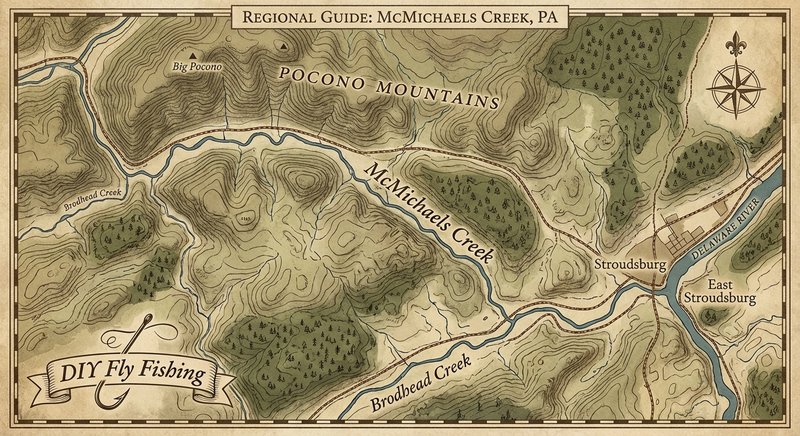
McMichaels Creek
Fly fishing in Pennsylvania · Beginner · Best seasons: Spring, Summer, Fall
Target Species
Brown Trout, Brook Trout
About This Water
Pocono freestone with good populations of wild trout. Scenic mountain fishing.
Fishing Recommendations
McMichaels Creek, located in Monroe County in the heart of the Pennsylvania Poconos, is a quintessential Pocono freestone stream. While it often sits in the shadow of its more famous neighbor, the Brodhead Creek, "The McMichaels" offers a diverse angling experience ranging from pocket water and riffles to deep, slow-moving silted pools. It is a cornerstone of the local fly fishing culture, offering a mix of stocked fish, hearty holdovers, and wild gems.
🎣 Location Overview
McMichaels Creek originates on the Pocono Plateau and winds its way through a mix of forested glens, suburban backyards, and public parks before joining Pocono Creek and ultimately the Brodhead Creek in Stroudsburg.
What makes this creek special is its accessibility combined with its technical variety. In the upper reaches, it feels like a secluded mountain stream. As it flows through McMichaels Creek Nature Preserve and Hickory Valley Park, it widens and takes on the characteristics of a classic limestone-influenced freestone. Anglers love it because it is manageable—you can wade most of it easily—and it rewards both the beginner and the seasoned "match-the-hatch" specialist.
🐟 Target Species & Behavior
- Brown Trout: These are the kings of McMichaels. The Pennsylvania Fish & Boat Commission (PFBC) stocks them heavily, but the creek has excellent "holdover" potential. These older browns become wary and nocturnal, often tucking into undercut banks and under fallen logs during the day.
- Brook Trout: You will find wild, native Brookies in the higher elevation headwaters and the cold-water tributaries. In the main stem, you’ll mostly encounter stocked Brook Trout which tend to be more aggressive but less selective than the Browns.
Behavior: During high sun, fish hold tight to the shadows and the "bubble line" (the current seam carrying bubbles and foam). In the evening, they move into the tail-outs of pools to sip emerging insects.
📅 Best Times to Fish
- Spring (Mid-April – June): This is the "Prime Time." Water levels are usually ideal, and the major hatches occur. Late May is the sweet spot for dry fly action.
- Summer (July – August): Focus on the early morning (6 AM – 10 AM) or the last hour of light. Caution: This creek can get low and warm (over 70°F). If the water is warm, give the trout a break and head to the cooler headwaters or stay home.
- Fall (September – October): A spectacular time to be on the water. Brown trout become aggressive as they prepare to spawn. The foliage is world-class, and the crowds have thinned.
Optimal Conditions: Overcast days are your best friend here. It keeps the fish from being "spooky" in the relatively clear water.
🪰 Recommended Flies & Techniques
Top Fly Patterns
- Dries:
- Early Season: Quill Gordon (#14), Hendrickson (#12-14), Blue Winged Olive (#18).
- Late Spring: Sulphurs (#14-18) — This is the most important hatch on the creek.
- Summer: Terrestrials! Dave’s Hopper (#10-12), Black Ants (#16-18), and Beetle patterns.
- Nymphs:
- Pheasant Tail (#14-18), Hare's Ear (#14-16), and the "Sexy Walt’s Worm" (a local favorite).
- Use heavy tungsten beads to get down in the deeper holes near the parks.
- Streamers:
- Wooly Buggers in Olive or Black (#8-10). Small "Muddler Minnows" are deadly during the evening.
Techniques
- Nymphing: A "Dry-Dropper" rig is highly effective in the riffles. In the deeper pools, use a tactical European Nymphing setup or a small indicator to detect subtle takes from pressured fish.
- Dry Fly: Use long, 9ft to 12ft leaders tapered to 5X or 6X. The fish in the slower pools have plenty of time to inspect your tippet.
- Streamers: Swing them through the undercut banks and "strip-pause" through the deeper runs.
💡 Pro Tips & Local Knowledge
- The "Sulphur" Strategy: When the Sulphurs hatch in late May, don't just fish the duns. The "Emerger" phase is where the biggest fish are caught. Fish a wet fly or unweighted nymph just under the surface film.
- Stealth is Key: McMichaels isn't a massive river. If you wade in splashing, the fish will shut down for an hour. Approach pools from downstream and stay low.
- Target the "Ledges": There are many shale ledges in the creek bed. Fish often sit right in the crevices of these rocks rather than in the deep centers of pools.
- Local Spot: Check out Hickory Valley Park. It offers great public access and has a mix of water types that allow you to practice different techniques within a half-mile stretch.
⚠️ Important Information
- Access: Much of McMichaels Creek runs through private land. Always respect "Posted" signs. Public access is excellent at:
- McMichaels Creek Nature Preserve (Brodhead Trust).
- Hickory Valley Park.
- Glenbrook Park (Stroudsburg).
- Regulations: Most of the creek falls under general Pennsylvania inland water regulations. However, always check the PFBC website for any specific "Delayed Harvest" or "Catch and Release" updates that may be implemented.
- Permits: A valid Pennsylvania Fishing License and a Trout/Salmon Stamp are required for all anglers 16 and older.
- Safety: The rocks here can be incredibly slippery (shale and slime). Felt-soled boots or studs are highly recommended.
Guide’s Final Word: McMichaels Creek is a "moody" stream. One day it fishes like a dream, and the next, it requires every trick in your box. Take your time, watch the water before you cast, and enjoy the beauty of the Poconos. Tight lines!
Bug Hatches & Matching Flies
| Hatch | Type | Peak months | Time of day | Hook sizes | Matching flies |
|---|---|---|---|---|---|
| Blue-Winged Olive (BWO) Baetis | mayfly | April, May, September, October | Late Morning/Afternoon | #18-22 | RS2 #18-22, Parachute Adams #18-22, Pheasant Tail #18-22 |
| Hendrickson Ephemerella subvaria | mayfly | April, May | Afternoon | #12-14 | Red Quill #12-14, Hendrickson Emerger #12-14, Gold Ribbed Hare's Ear #12-14 |
| Grannom Caddis Brachycentrus | caddis | April, May | Morning/Afternoon | #14-16 | Grannom Pupa #14-16, Elk Hair Caddis (Olive) #14-16, Peacock Caddis #14-16 |
| March Brown Maccaffertium vicarium | mayfly | May | Late Morning/Afternoon | #10-12 | March Brown Dry #10-12, March Brown Wet #10-12 |
| Sulphur Ephemerella invaria/dorothea | mayfly | May, June | Evening | #14-18 | Sulphur Parachute #14-18, Sulphur Spinner #14-18, Pheasant Tail (Flashback) #14-18 |
| Green Drake Ephemera guttulata | mayfly | May, June | Late Evening/Twilight | #8-10 | Coffin Fly #8-10, Green Drake Nymph #8-10 |
| Light Cahill Stenacron/Stenonema | mayfly | June, July | Evening/Dusk | #12-14 | Light Cahill Dry #12-14, Cream Variant #14 |
| Tan Caddis Hydropsyche | caddis | June, July, August | Morning/Evening | #14-18 | Elk Hair Caddis (Tan) #14-18, LaFontaine's Deep Sparkle Pupa #14-16 |
| Trico Tricorythodes | mayfly | July, August, September | Early Morning | #22-26 | Trico Spinner #22-24, Zebra Midge #20-24 |
| Ants and Beetles Formicidae/Coleoptera | terrestrial | July, August, September | All Day | #12-20 | Black Foam Ant #14-18, Crowe Beetle #12-16 |