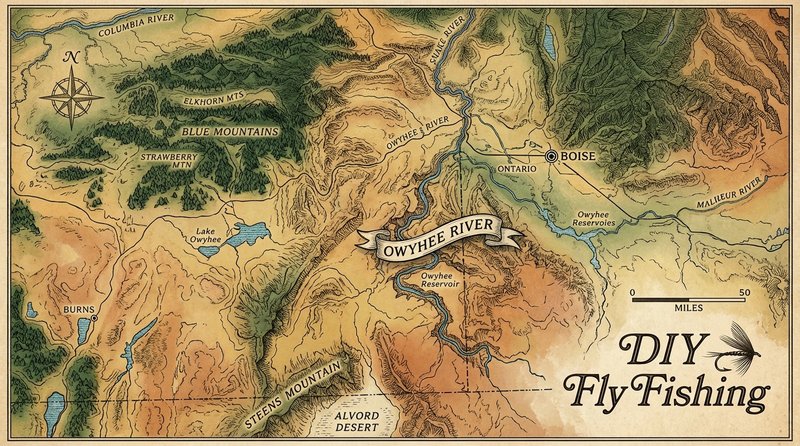
Owyhee River
Fly fishing in Oregon · Intermediate · Best seasons: Spring, Fall
Target Species
Brown Trout, Rainbow Trout
About This Water
Remote desert canyon with excellent brown trout. Below the dam offers quality fishing.
Fishing Recommendations
The Owyhee River in Southeastern Oregon is a world-class tailwater fishery often referred to as a "desert oasis." Tucked away in a dramatic, red-rock canyon, the lower Owyhee (below the Owyhee Dam) is a technical angler’s paradise, famous for its dense population of trophy-sized Brown Trout.
🎣 Location Overview
The Owyhee is a high-desert tailwater that flows through a stunning volcanic canyon. Because it is fed from the bottom of the Owyhee Reservoir, the water remains cold and consistent throughout the year, creating a biological factory for aquatic insects.
What makes it special is the clarity and pace of the water. It is often slow, glassy, and crystal clear. This isn't "blind casting" water; it is a "hunter’s river" where you often spot a specific fish and spend an hour trying to trick it. The contrast of the lush green riverbanks against the stark, towering orange cliffs creates one of the most beautiful backdrops in the American West.
🐟 Target Species & Behavior
- Brown Trout: The Owyhee is legendary for its Browns. They are thick-bodied, brilliantly colored, and can reach sizes exceeding 24 inches. They are highly predatory but also remarkably selective during hatches.
- Rainbow Trout: While Browns dominate the lower stretches, you will find hard-fighting Rainbows, particularly closer to the dam.
Behavior: These fish are highly "educated." Due to the clear water and high fishing pressure, they have excellent vision. They often hold in very shallow water—sometimes in just 6 to 10 inches of depth—right against the weed lines or undercut banks. They are famous for "sipping" midges and mayflies with barely a ripple.
📅 Best Times to Fish
While the Owyhee is fishable year-round, the Spring and Fall are the golden windows.
- Spring (March – May): This is the season of the Skwala Stonefly (March/April) and massive Blue Winged Olive (BWO) hatches. The fish are hungry after winter and will often look up for larger dries.
- Fall (September – November): Perhaps the best time for trophy Browns. As temperatures cool, the BWO hatches return, and the Brown Trout prepare for their spawn. (Note: Please avoid fishing for trout on active spawning redds in late fall).
- Time of Day: In the desert, the "mid-day" hatch is king. On cloudy days, the BWO hatches can be prolific from 11:00 AM to 3:00 PM.
- Prime Conditions: Overcast, drizzly days are best. The low light makes the fish less spooky and triggers massive mayfly emergences.
🪰 Recommended Flies & Techniques
Top Fly Patterns
- Dries:
- BWO Sparkle Dun (#18-22)
- Parachute Adams (#18-24)
- Griffith’s Gnat (#18-22) for midge clusters.
- Skwala Stonefly patterns (#10-12) in early spring.
- Nymphs:
- Zebra Midge (Red, Black, or Olive #18-22) - A staple here.
- Scuds & Sowbugs (Pink or Olive #16-18) - The river is carpeted in these.
- Pheasant Tail (Flashback or Slim #18-20).
- Streamers:
- Sculpzilla or Junior Mint in olive/black. Large Browns eat small trout and sculpins.
Techniques
- The "Technical Dry": Use long leaders (12–15 feet) tapered down to 6X or 7X fluorocarbon. Accuracy and a drag-free drift are more important than the specific fly pattern.
- Sight Nymphing: Instead of using a giant plastic indicator, use a small piece of yarn or "dry-dropper" rig. Many anglers fish "naked" (no indicator) to avoid spooking fish in the shallows.
- Streamer Stripping: On high-water days or low-light evenings, swing streamers through deep holes or strip them tight to the banks.
💡 Pro Tips & Local Knowledge
- Stealth is Mandatory: Do not wade out into the middle of the river immediately. Many trophy Browns sit within two feet of the bank. Walk slowly and stay low; if you can see the fish, they can likely see you.
- The "Owyhee Shuffle" is a No-No: While some people kick up rocks to stir up nymphs, it is considered poor etiquette here and can damage the fragile ecosystem.
- The Wall: There are famous stretches like "The Wall" (the large cliff face section). These areas hold massive fish but receive the most pressure. Don't be afraid to hike further downstream where the canyon opens up to find less-pressured pods of fish.
- Match the Size, Not Just the Color: Owyhee bugs are often smaller than you think. If you’re getting "refusals" on a #18, drop down to a #22 before changing colors.
⚠️ Important Information
- Access: The fishing is primarily on the Lower Owyhee below the dam. Access is excellent, with a paved/gravel road (Owyhee Lake Road) running parallel to the river for several miles.
- Regulations: The Owyhee has specific regulations. It is generally Catch and Release only for Brown Trout. Always check the current Oregon Department of Fish and Wildlife (ODFW) regulations before heading out.
- Cell Service: There is zero cell service in the canyon. Let someone know where you are going and when you expect to be back.
- Desert Hazards: The canyon is home to Western Rattlesnakes. Watch your step when walking through tall grass or over rimrock. Also, bring plenty of water; the high desert sun can dehydrate you quickly even in the spring.
- Permits: An Oregon Angling License is required. If you are coming from Boise (the nearest major city), remember that you must have an Oregon license, even though you are very close to the Idaho border.
Bug Hatches & Matching Flies
| Hatch | Type | Peak months | Time of day | Hook sizes | Matching flies |
|---|---|---|---|---|---|
| Midges Chironomidae | midge | January, February, March, December | All Day | #18-24 | Zebra Midge #18-22, Griffith's Gnat #18-22, Morgan's Midge #20-24 |
| Blue Winged Olive (BWO) Baetis | mayfly | March, April, October, November | Late Morning/Afternoon | #18-22 | RS2 #18-22, Parachute BWO #18-20, Pheasant Tail #18-20 |
| Skwala Stonefly Skwala americana | stonefly | March, April | Midday | #8-12 | Skwala Stone Dry #10-12, Pat's Rubber Leg #8-12, Bullet Head Skwala #10-12 |
| Pale Morning Dun (PMD) Ephemerella excrucians | mayfly | June, July, August | Morning/Early Afternoon | #16-18 | PMD Sparkle Dun #16-18, Split Case PMD #16-18, Last Chance Emerger #16-18 |
| Tricos Tricorythodes | mayfly | July, August, September | Early Morning | #20-24 | Trico Spinner #20-24, Sunray Trico #22-24, Trico Dun #20-22 |
| Caddis Hydropsyche | caddis | May, June, July | Evening | #14-18 | Elk Hair Caddis #14-18, LaFontaine Sparkle Pupa #16-18, Godzilla Caddis #14-16 |
| Callibaetis Callibaetis | mayfly | June, July, August | Morning | #14-16 | Callibaetis Cripple #14-16, Parachute Adams #14-16 |
| Terrestrials Orthoptera/Formicidae | terrestrial | July, August, September | All Day/Windy Afternoons | #8-18 | Chubby Chernobyl #8-12, Morrish Hopper #10-14, Cinnamon Ant #16-18 |