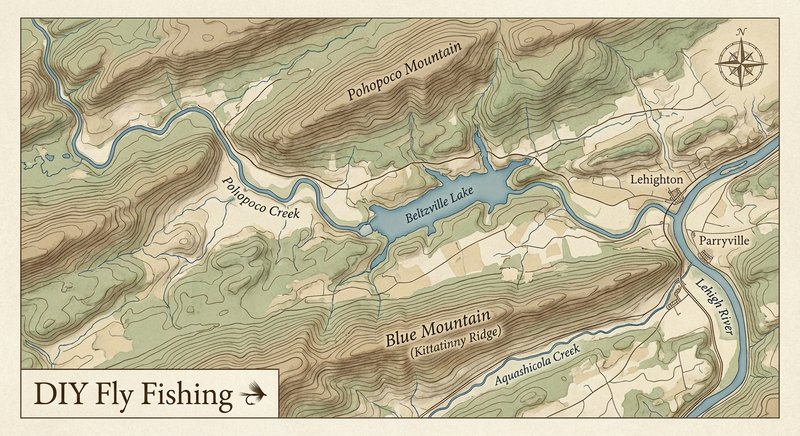
Pohopoco Creek
Fly fishing in Pennsylvania · Beginner · Best seasons: Spring, Summer, Fall
Target Species
Brown Trout, Brook Trout
About This Water
Carbon County stream with wild brown trout. Less pressured Pocono alternative.
Fishing Recommendations
As an expert guide who has spent years dissecting the technical waters of the Keystone State, I can tell you that Pohopoco Creek (or "The Po," as locals call it) is one of Pennsylvania’s most rewarding—and occasionally frustrating—tailwater fisheries. Located in Carbon County, just downstream from Beltzville Lake, it offers a unique environment that defies the typical warming trends of Mid-Atlantic summers.
Here is your comprehensive guide to fly fishing Pohopoco Creek.
🎣 Location Overview
The Pohopoco is a classic tailwater fishery, meaning its flow and temperature are regulated by the bottom-release dam at Beltzville Lake. This keeps the water cold (usually in the 50s and low 60s) year-round, creating a sanctuary for wild trout even in the heat of July.
The creek is relatively small to medium-sized, characterized by a mix of long, glassy pools, tight pocket water, and undercut banks draped with rhododendrons. It has a "limestone" feel due to the rich biomass and steady temperatures, though it flows through the rugged terrain of the Poconos. Anglers love it because it offers high-quality wild brown trout fishing in a technical environment that rewards stealth and precision.
🐟 Target Species & Behavior
- Wild Brown Trout: These are the primary residents. They are exceptionally wary and have PhDs in detecting drag. They hold tightly to cover—think downed timber, undercut banks, and the "dark water" under overhanging branches.
- Brook Trout: While less common than the browns in the main tailwater section, wild brookies inhabit the cooler headwaters above the lake and small tributary feathers.
- Behavior: Because it is a tailwater, the fish are very "clock-oriented" regarding hatches. During non-hatch periods, they are opportunistic nymph feeders, hugging the bottom. In the summer, they become highly focused on terrestrials and tiny "trico" mayflies.
📅 Best Times to Fish
- Spring (April – June): This is prime time for major hatches. The water levels are usually stable, and the fish are active after the winter doldrums.
- Summer (July – August): This is when "The Po" shines. While other PA freestone streams are too warm to fish safely, the tailwater release keeps the Pohopoco icy cold. Look for the "Trico" hatches in the early morning.
- Fall (September – October): A beautiful time to be on the water. Brown trout become aggressive and territorial as they prepare for the spawn. Streamer fishing picks up significantly.
- Prime Windows:
- Morning: Early morning (6 AM – 10 AM) for Trico spinner falls in the summer.
- Evening: The last two hours of light for Sulfur and BWO hatches.
🪰 Recommended Flies & Techniques
Top Fly Patterns
- Nymphs:
- Scuds & Sowbugs (Size 16-20): These are the bread and butter of this creek due to the lake's biomass. Gray or Olive.
- Pheasant Tail (Size 18-22): Mimics the prolific Blue Winged Olives.
- Zebra Midge (Size 20-24): Black or Red with a silver bead.
- Dry Flies:
- Sulfurs (Size 16-18): Massive hatches in late May/June.
- Tricos (Size 22-26): Essential for summer mornings.
- Ants and Beetles (Size 14-18): High-floating foam versions work wonders in the summer "leaf-drop" zones.
- Streamers:
- Wooly Buggers (Size 8-12): Black or Olive. Fish them tight to the banks during higher flows.
Techniques & Presentation
- Micro-Nymphing: Use long, 12-foot leaders tapering to 6X or 7X tippet. Small indicators or "Euro-style" tight-lining is very effective in the riffles.
- The "Reach Cast": Essential for the long, flat pools. You must defeat the micro-currents to get a drag-free drift, or the wild browns will snub your fly.
- Stealth is Mandatory: Because the water is often crystal clear, avoid wading deep. Stay on the bank where possible, wear drab clothing, and move slowly.
💡 Pro Tips & Local Knowledge
- Focus on the "Class A" Section: The stretch from the gauging station (near the dam) downstream to the bridge on SR 2001 is where you'll find the highest density of wild fish.
- Check the Discharge: Before you drive, check the USGS gauge for "Pohopoco Creek at Parryville." If the dam is releasing heavily (over 400-500 cfs), the creek becomes difficult and dangerous to wade. The sweet spot is usually 150–250 cfs.
- The "Shadow" Factor: Because of the steep valley and heavy tree canopy, the sun hits the water later and leaves earlier. Use this to your advantage—fish the shaded margins even in the middle of the day.
- Mind the "Snot": Like many tailwaters, the rocks can be covered in didymo or slick algae. Studded boots and a wading staff are highly recommended.
⚠️ Important Information
- Access: Much of the best water is accessed via Beltzville State Park or bridge crossings along Route 209. Always respect "Posted" signs on private property stretches downstream.
- Regulations: A large portion of the upper Pohopoco is designated as Class A Wild Trout Water. While much of the creek allows harvest under general regulations, most serious anglers practice 100% Catch and Release here to protect the wild brown trout population.
- Permits: A valid Pennsylvania Fishing License and a Trout Stamp are required for all anglers 16 and older.
- Care: During the fall (late Oct - Nov), please watch your step and avoid walking on redds (trout spawning nests), which appear as clean, light-colored gravel patches.
The Pohopoco is a "chess match" creek. It doesn't give up its secrets easily, but landing a buttery-yellow wild brown trout in the middle of a Pennsylvania July is an experience few other East Coast waters can offer. Tight lines!
Bug Hatches & Matching Flies
| Hatch | Type | Peak months | Time of day | Hook sizes | Matching flies |
|---|---|---|---|---|---|
| Blue-Winged Olive Baetis tricaudatus | mayfly | April, May, September, October | Mid-day to Afternoon | #18-22 | RS2 #18-22, Parachute BWO #18-22, Pheasant Tail #18-20 |
| Sulphur Ephemerella invaria/dorothea | mayfly | May, June | Evening | #14-18 | Sulphur Parachute #14-18, Sulphur Emerger #16-18, Rusty Spinner #14-18 |
| Tan Caddis Hydropsyche | caddis | April, May, June | Morning/Evening | #14-18 | Elk Hair Caddis #14-16, LaFontaine's Deep Sparkle Pupa #14-18, Holy Grail #14-16 |
| Zebra Midge Chironomidae | midge | January, February, March, December | All Day | #20-24 | Zebra Midge #20-24, Griffith's Gnat #20-22, Top Secret Midge #22-24 |
| Trico Tricorythodes | mayfly | July, August, September | Early Morning | #22-26 | Trico Spinner #22-26, Black Sunsets #22-24 |
| Light Cahill Stenacron candadense | mayfly | June, July | Evening | #12-14 | Light Cahill #12-14, Gold Ribbed Hare's Ear #12-14 |
| Little Black Stonefly Capniidae | stonefly | February, March | Mid-day | #14-18 | Early Girl Stonefly #16-18, Black Copper John #14-18 |
| Terrestrials Formicidae / Coleoptera | terrestrial | July, August, September | All Day | #12-18 | Cinnamon Ant #14-18, Black Foam Beetle #12-16 |