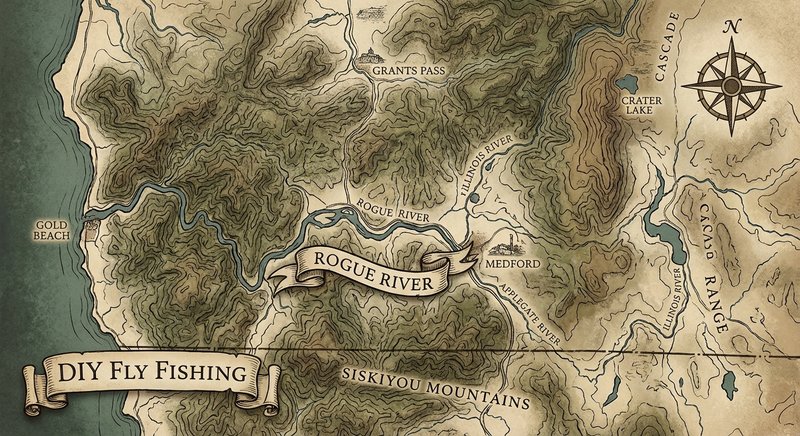
Rogue River
Fly fishing in Oregon · Intermediate · Best seasons: Summer, Fall, Winter
Target Species
Steelhead, Chinook Salmon, Rainbow Trout
About This Water
Famous steelhead and salmon river. Wild and scenic section offers wilderness fishing experience.
Fishing Recommendations
The Rogue River is one of the crown jewels of the American West. Flowing 215 miles from the Cascade Range near Crater Lake to the Pacific Ocean at Gold Beach, it was one of the original eight rivers designated by the Wild and Scenic Rivers Act of 1968. For a fly angler, the Rogue is a "bucket list" destination, famous for its historic lodges, rugged canyons, and the legendary "half-pounder" steelhead runs.
🎣 Location Overview
The Rogue is a diverse river that changes character significantly as it flows toward the sea.
- The Upper Rogue (above Gold Hill): Characterized by colder water released from the bottom of Lost Creek Dam. This is a primary spawning area and offers the most consistent trout fishing and summer steelhead holding water.
- The Middle Rogue (Grants Pass area): Wider and warmer, this section serves as a major migration corridor and offers excellent "half-pounder" action in the fall.
- The Lower Rogue (The Wild & Scenic Canyon): Accessible mostly by multi-day float trips, this is world-class wilderness fishing where you swing flies for aggressive, fresh-from-the-salt fish.
What makes it special is the history. This is the river of Zane Grey and Glen Wooldridge. It is a "working" river where the traditional "down-and-across" wet fly swing was perfected.
🐟 Target Species & Behavior
Steelhead (Summer & Winter)
- Summer Steelhead: These are the stars of the Rogue. They enter the river from July through October. They are aggressive, often willing to rise to a surface skater, and famous for their acrobatic fights.
- Winter Steelhead: Larger and more elusive, these fish arrive December through March. They hold deep and require heavy tips and large flies to provoke a strike in colder water.
- Half-Pounders: Unique to the Rogue and Klamath, these are immature steelhead (12–16 inches) that return to the river after only a few months at sea. They travel in schools and are incredibly fun on light tackle.
Chinook Salmon
- While primarily a gear-target, fly anglers target "Springers" in the upper river using heavy sink tips and large, bright streamers. They are the hardest-fighting fish in the river.
Rainbow Trout
- Native "Redband" trout reside primarily in the upper reaches. They feed on aquatic insects (caddis, stones) and salmon eggs during the spawn.
📅 Best Times to Fish
- Summer (July – September): Prime time for Summer Steelhead and the beginning of the "half-pounder" run. Focus on the early morning and late evening.
- Fall (October – November): The "Golden Month." Steelhead are spread throughout the system, and the "Egg Feed" begins as Chinook start to spawn. This is the most productive time for both numbers and size.
- Winter (January – March): The window for big Winter Steelhead. Conditions are highly dependent on rain and river clarity (the "green gold" tint).
🪰 Recommended Flies & Techniques
The Swing (Spey or Single Hand)
The Rogue is a classic swinging river.
- Summer/Fall Patterns: Rogue Foam Spider (for surface waking), Green Butt Skunk, Signal Light, and Brindle Bug.
- Winter Patterns: Intruders in black/blue or pink/orange, Leech patterns, and Prom Dress.
Nymphing
Often more productive when fish are holding in deep pockets or during the egg hatch.
- Patterns: Possie Bugger (a local legend), Prince Nymph, Golden Stonefly nymphs, and various Glo-Bugs or Beads (October–November).
Dry Fly (Trout)
- Patterns: Elk Hair Caddis, Stimulators, and Parachute Adams. The "Holy Grail" caddis pupa is a must-have for the Upper Rogue.
💡 Pro Tips & Local Knowledge
- The "Possie Bugger": If you only carry one fly on the Rogue, make it a Possie Bugger. Developed by local guides, this "everything" nymph mimics scuds, mayflies, and small stones. It is deadly on both trout and steelhead.
- Cover Water: Rogue steelhead are travelers. If you don't get a pluck in 15–20 minutes, move down the bar. Don't get married to a single hole.
- Low Light is Key: Especially for Summer Steelhead, the bite often turns off the moment the sun hits the water. Be on the water at "O-Dark-Thirty."
- The "Half-Pounder" Twitch: When swinging for half-pounders, adding a slight twitch to your fly at the end of the swing can trigger aggressive strikes from these competitive schoolie fish.
⚠️ Important Information
Access
- Upper Rogue: Excellent bank access via the Upper Rogue Regional Park and various boat ramps (Dodge Bridge, TouVelle).
- Wild Section: Requires a permit through the BLM lottery system for floating, though many guides offer lodge-to-lodge trips.
Regulations & Permits
- Oregon Angling License: Required for all anglers 12 and older.
- Combined Angling Tag: Required if you intend to harvest or even "catch and release" Salmon or Steelhead.
- Barbless Hooks: Generally recommended and required in certain sections/seasons. Always check the current ODFW Recreation Report before heading out, as emergency closures due to water temperature are common in late summer.
Safety
The Rogue has dangerous whitewater (Rainie Falls, Blossom Bar). Unless you are an expert oarsman, hire a guide for drifting the canyon sections. The "slippery Rogue" is also famous for its slick basalt bedrock—studded wading boots are non-negotiable.
Bug Hatches & Matching Flies
| Hatch | Type | Peak months | Time of day | Hook sizes | Matching flies |
|---|---|---|---|---|---|
| Salmonfly Pteronarcys californica | stonefly | May, June | All Day | #4-8 | Rogue River Stone #4-8, Kaufmann's Stone #4-8, Chubby Chernobyl #6-10 |
| Golden Stonefly Hesperoperla pacifica | stonefly | June, July | Morning/Evening | #8-12 | Golden Rogue Foam #8-10, Pat's Rubber Legs #8-12, Norm Wood Special #8-12 |
| October Caddis Dicosmoecus gilvipes | caddis | September, October, November | Afternoon/Evening | #8-12 | Orange Stimulator #8-12, Peaked Peep Pah #10-12, Morrish's October Caddis Adult #10 |
| Pale Morning Dun Ephemerella spp. | mayfly | June, July, August | Late Morning/Afternoon | #14-18 | Sparkle Dun #14-16, Pheasant Tail #14-18, PMD Emerger #16-18 |
| Blue Winged Olive Baetis spp. | mayfly | March, April, October, November | Afternoon | #18-22 | Parachute Adams #18-22, RS2 #20-22, Frenchie #18-20 |
| Green Sedge Rhyacophila spp. | caddis | April, May, June | Evening | #12-16 | Green Weenie #12-16, Elk Hair Caddis #14-16, LaFontaine Sparkle Pupa #14-16 |
| Yellow Sally Isoperla spp. | stonefly | June, July | Afternoon/Evening | #14-16 | Yellow Sally Stimulator #14-16, Little Yellow Sloan #14-16 |
| Mother's Day Caddis Brachycentrus occidentalis | caddis | April, May | Afternoon | #14-16 | Peacock Caddis #14-16, Holy Grail #14-16, Z-Wing Caddis #14-16 |